
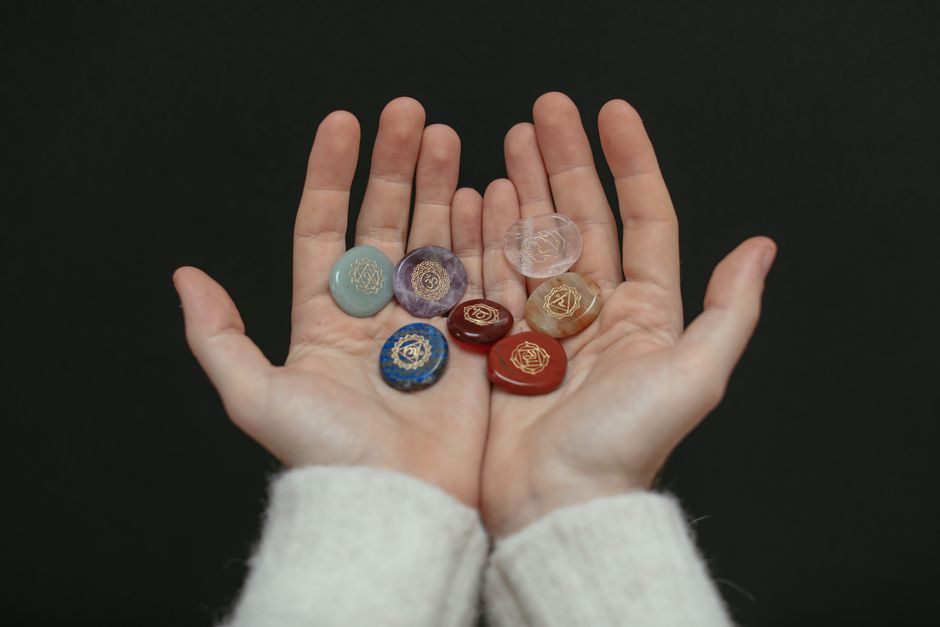
Chakra stones are crystals or gemstones linked to the seven energy centers in the body. For beginners, the basic practice is simple: choose a stone that matches a specific chakra, hold it or place it on that area of the body, and set a clear intention while breathing steadily. There is no scientific proof that these stones affect the body’s energy, but many people use them as a tool for mindfulness and relaxation.
What Are Chakra Stones and Where Did They Come From?
Chakra stones come from an ancient Indian spiritual tradition. The word “chakra” means “wheel” in Sanskrit. The tradition describes seven main energy centers running from the base of the spine to the top of the head. Each center is linked to different physical, emotional, and spiritual aspects of life.
Modern use of chakra stones pairs these ancient concepts with the popularity of crystals. Each stone is assigned to a chakra based on its color. For example, red stones connect to the root chakra, while purple stones connect to the crown chakra. This color-matching system is a modern practice, not an ancient one.
The scientific community does not recognize chakras as physical structures. No study has confirmed that stones emit energies that change the body. However, the practice of focusing attention on the body while holding an object can have real psychological effects. This is similar to how a worry stone or a stress ball works.
Which Stone Matches Which Chakra?
The seven chakras each have a standard color and a commonly recommended stone. This list reflects the most widely used associations in crystal healing communities.
- Root chakra (base of spine): Red stones like red jasper or garnet
- Sacral chakra (lower belly): Orange stones like carnelian or orange calcite
- Solar plexus chakra (upper belly): Yellow stones like citrine or yellow tiger’s eye
- Heart chakra (center of chest): Green or pink stones like rose quartz or green aventurine
- Throat chakra (throat): Blue stones like lapis lazuli or blue lace agate
- Third eye chakra (between eyebrows): Indigo or purple stones like amethyst or sodalite
- Crown chakra (top of head): Clear or violet stones like clear quartz or amethyst
Amethyst appears on two lists because it is commonly used for both the third eye and crown chakras. Clear quartz is often called a “master healer” in crystal communities because it is believed to amplify other stones. These are traditional associations, not scientific facts.
How To Use Chakra Stones For Beginners What To Know About Preparation
Before using a chakra stone, clean it. Crystals can collect dust and oils from handling. Wash most stones with mild soap and warm water. Some stones, like selenite and malachite, can be damaged by water. For these, wipe with a dry cloth instead.
Some people “charge” their stones by placing them in sunlight or moonlight. This practice has no scientific basis, but it can help create a ritual. A ritual can make the experience feel more meaningful, which may improve the mindfulness benefits.
Set an intention before you start. An intention is a simple statement of what you want to focus on. Examples include “I want to feel more grounded” or “I want to release tension.” You do not need to believe the stone causes the change. The intention is for your mind, not the stone.
Find a quiet space where you will not be interrupted. Sit or lie down in a comfortable position. Have your stone within reach. Turn off your phone or put it on silent. The goal is to reduce distractions so you can focus inward.





How To Use Chakra Stones For Beginners What To Know About the Basic Practice
The most common beginner method is simple meditation with the stone. Hold the stone in your hand or place it on the chakra location. Close your eyes and breathe slowly. Focus your attention on the area where the stone rests. If your mind wanders, gently bring it back to your breath and the stone.
Start with five minutes. You can increase the time as you get comfortable. There is no required length of time. Some people use stones for one minute during a busy day. Others sit for twenty minutes. Both approaches are valid.
Another method is to carry the stone with you. Keep it in a pocket or wear it as jewelry. This works best as a reminder to check in with yourself during the day. When you notice the stone, take a deep breath and return your attention to your intention.
A third method is to place stones around your living space. Some people put stones on their desk, nightstand, or meditation area. This is more about creating a calming environment than about direct contact with the body.
How To Use Chakra Stones For Beginners What To Know About Common Mistakes
The biggest mistake beginners make is expecting an instant physical change. Chakra stones will not cure an illness or fix a medical condition. If you feel a physical symptom, see a doctor. Do not delay medical care while waiting for a crystal to work.
Another mistake is using too many stones at once. Beginners often buy a full set of seven stones and try to use them all in one session. This can feel overwhelming. Start with one stone that matches the area you want to focus on.
Some people worry they are “doing it wrong” if they do not feel anything. There is no wrong way. If you feel nothing during a session, that is normal. The practice is about attention, not about feeling a specific sensation.
Be cautious about where you buy stones. Some sellers charge high prices by making unproven claims about a stone’s power. A plain stone from a reputable shop works the same as an expensive one. The value of the practice comes from your attention, not the price tag.
What the Evidence Says About Chakra Stones
No scientific study has demonstrated that chakra stones affect energy, health, or healing. The concept of chakras comes from a spiritual tradition, not from measurable biology. When researchers study meditation and mindfulness, they find real benefits for stress and well-being. The stone itself is not the active ingredient.
Some research suggests that holding a smooth object can reduce stress in certain situations. This is likely related to sensory grounding, not to any property of the stone. If you find that holding a stone helps you relax, that benefit is real even if the explanation is psychological rather than physical.
Be honest with yourself about what the practice is. Chakra stones are a mindfulness tool. They are not medicine. This distinction matters. Using a stone to focus your attention is harmless. Believing a stone will treat a medical condition can be dangerous if it delays proper care.
How To Build a Routine That Works
Consistency matters more than duration. A five-minute daily practice is more effective than a one-hour session once a month. Choose a time of day that works for you. Many people prefer mornings or evenings, when the house is quiet.
Pair the stone practice with an existing habit. For example, use your stone right after brushing your teeth or before your morning coffee. This makes it easier to remember and builds a sustainable routine.
Keep a simple journal if you want to track your experience. Write one or two sentences after each session. Note how you felt before and after. Over time, you may notice patterns in your mood or stress levels. This is observational data, not scientific proof, but it can help you understand whether the practice is useful for you.
If the practice does not help you, stop. There is no obligation to use chakra stones. Some people find them calming. Others do not. Both responses are normal. The goal is to find tools that genuinely support your well-being, not to follow a trend.
Frequently Asked Questions
Do chakra stones actually work?
No scientific evidence confirms that chakra stones affect the body’s energy or health. They can still be useful as a focus tool for meditation and mindfulness, which do have documented benefits for stress reduction.
How long should I hold a chakra stone?
There is no required duration. Beginners often start with five minutes of focused attention, and sessions can be extended as comfort grows.
Can I use chakra stones while sleeping?
Some people place stones under their pillow or on their nightstand, but no evidence shows this has any effect. If it helps you relax, it is safe to do so.
Do I need to cleanse my chakra stones?
Washing stones with mild soap and water removes dirt and oils, which is practical hygiene. Rituals like moonlight charging have no proven effect but can add meaning to your practice.
