
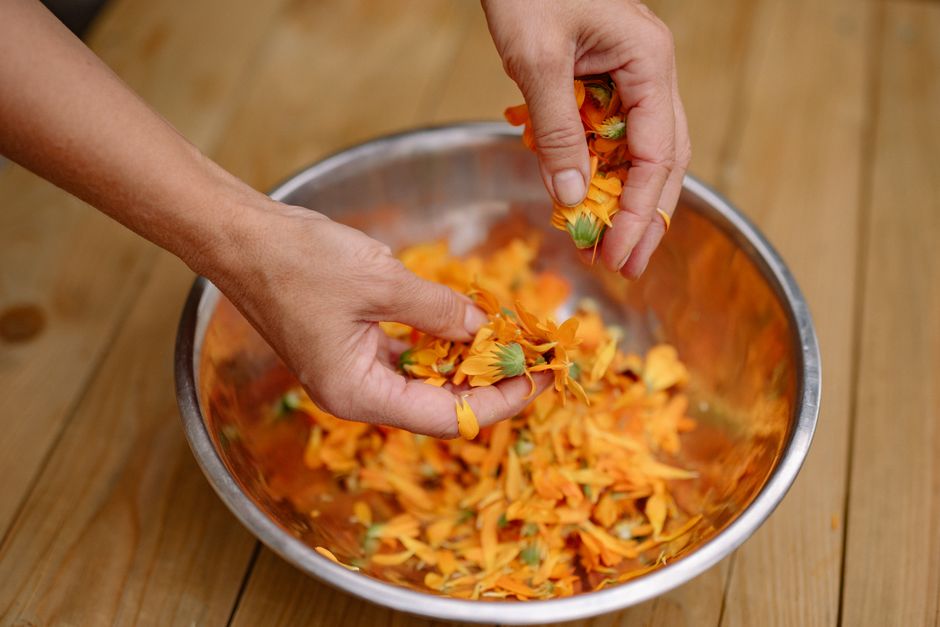
Calendula (Calendula officinalis) is a flower that has been used on skin for centuries, and it is one of the better-studied botanical ingredients for minor wound care. You can use it safely on small cuts, scrapes, and superficial burns by applying a clean calendula ointment, cream, or diluted infusion to intact or lightly broken skin, keeping the area clean, and covering it lightly. The key safety rules are simple: never put it on a deep or infected wound, never use it as a substitute for medical care, and always patch-test first if you have sensitive skin or plant allergies.
What follows is an honest look at what calendula can and cannot do, how to use it correctly, and when to stop and see a clinician.
What Does Calendula Actually Do to Skin?
Calendula contains compounds called triterpenoids, flavonoids, and carotenoids, and these are the molecules most often studied for their effects on skin. In laboratory and animal studies, extracts of the flower show anti-inflammatory and antimicrobial activity. Some human studies suggest calendula preparations can support the healing of minor wounds and reduce inflammation in irritated skin.
Here is the part that matters: laboratory activity does not automatically translate into a proven clinical benefit in people. The human evidence is real but modest. It is strongest for minor skin irritation and superficial wound healing, and much weaker for anything serious. Calendula is not a disinfectant. It does not sterilize a wound, and it will not treat an infection that has already started.
One clarification worth making: calendula is sometimes confused with other “marigolds.” The ornamental French and African marigolds in the genus Tagetes are different plants and are not the same as the medicinal calendula. If you are buying a product, check that the label says Calendula officinalis.
How To Use Calendula For Wounds Safely And Effectively
Start by cleaning the wound, because no topical botanical replaces basic first aid. Rinse a minor cut or scrape with clean running water, gently remove any dirt, and pat the surrounding skin dry. Then apply a thin layer of a calendula product to the wound surface.
The form you choose matters. Ointments and salves stay in place and keep the wound moist, which supports healing. Creams are lighter. Calendula-infused oils and diluted tinctures are also used, but tinctures often contain alcohol, which can sting and dry the skin, so they are a poor choice for open wounds.
- Use a product labeled for topical use and follow its directions.
- Apply a thin layer — more is not better.
- Cover with a clean bandage if the wound is in an area that rubs or gets dirty.
- Change the dressing and reapply as needed, generally once or twice a day for minor wounds.
- Stop using it if the skin becomes more red, itchy, or irritated.
Do not apply calendula to a wound that is deep, gaping, bleeding heavily, or showing signs of infection such as spreading redness, warmth, pus, or increasing pain. Those need medical attention, not a salve.
Is There Real Evidence That Calendula Heals Wounds?
The evidence is encouraging but not definitive. Some clinical studies have looked at calendula for minor wounds, skin inflammation, and skin irritation, and several report benefits compared with a plain base or no treatment. Research published in the Journal of Wound Care and other dermatology and wound-care journals has examined calendula-based preparations, though study sizes tend to be small and the products tested vary widely.
That variation is a real problem. A study testing one specific extract in one specific base does not tell you that every calendula product on a store shelf will behave the same way. The concentration of active compounds, the extraction method, and the other ingredients all change the result. The evidence is mixed enough that no one should describe calendula as a proven treatment for wounds in general.
What can be said with confidence: calendula is generally well tolerated on intact and lightly broken skin, and it is a reasonable option for minor skin care. What cannot be said: that it outperforms standard wound care, or that it treats infection.





Who Should Avoid Calendula?
People with known allergies to plants in the daisy family should be cautious, because calendula belongs to that family (Asteraceae). That includes ragweed, chrysanthemums, marigolds, and echinacea. Cross-reactivity is possible, though not everyone with a daisy-family allergy will react to calendula.
Anyone with a history of contact dermatitis or very sensitive skin should patch-test first. Apply a small amount to the inner forearm, wait a day, and check for redness, itching, or swelling before using it on a wound.
There is limited safety data for calendula use during pregnancy and breastfeeding, and no clinical guidelines specifically address topical calendula on wounds in these groups. If you are pregnant, breastfeeding, or treating a wound on an infant or young child, ask a clinician or pharmacist before using it. For children, the same caution applies — no established pediatric dosing or guidance exists for topical calendula on wounds.
What Are the Signs a Wound Needs Medical Care?
Some wounds should never be treated at home with a botanical product. Seek medical care if a wound is deep, won’t stop bleeding after firm pressure, has dirt or debris you cannot rinse out, or was caused by an animal bite or a dirty or rusty object.
Watch for infection. Increasing redness spreading from the wound, warmth, swelling, pus, a bad smell, or worsening pain are reasons to get medical help promptly. Fever or chills with a wound also warrant urgent attention. Calendula will not fix an infection, and delaying proper care can let it worsen.
People with diabetes, poor circulation, or a weakened immune system should be especially careful with any wound and should not rely on home remedies for anything beyond the most trivial scrape.
How Does Calendula Compare With Standard Wound Care?
Standard wound care rests on a strong foundation: cleaning, protecting, and keeping the wound moist. That approach is supported by consistent clinical evidence. Calendula can fit alongside it as a moisturizing topical, but it does not replace it.
There is no good evidence that calendula is more effective than standard dressings or a plain petroleum-based ointment for minor wounds. Some studies suggest it may help with comfort and skin irritation, but head-to-head comparisons with standard care are limited. If you want the most reliable approach, standard first aid is the priority, and calendula is an optional add-on for minor injuries.
Frequently Asked Questions
Can I put calendula directly on an open cut?
Yes, a clean calendula ointment or cream can be applied to a minor open cut after it has been rinsed with water. Do not use it on deep, gaping, or infected wounds, which need medical care.
How often should I apply calendula to a wound?
For minor wounds, most products are applied once or twice a day with a fresh dressing. Follow the directions on the specific product, since formulations vary.
Is calendula safe for people with sensitive skin?
It is generally well tolerated, but calendula is in the daisy family, so people with plant allergies should patch-test first. Stop if redness, itching, or swelling appears.
Can calendula treat an infected wound?
No. Calendula does not treat infection, and using it instead of proper care can delay treatment. Signs like spreading redness, pus, warmth, or fever need prompt medical attention.
