
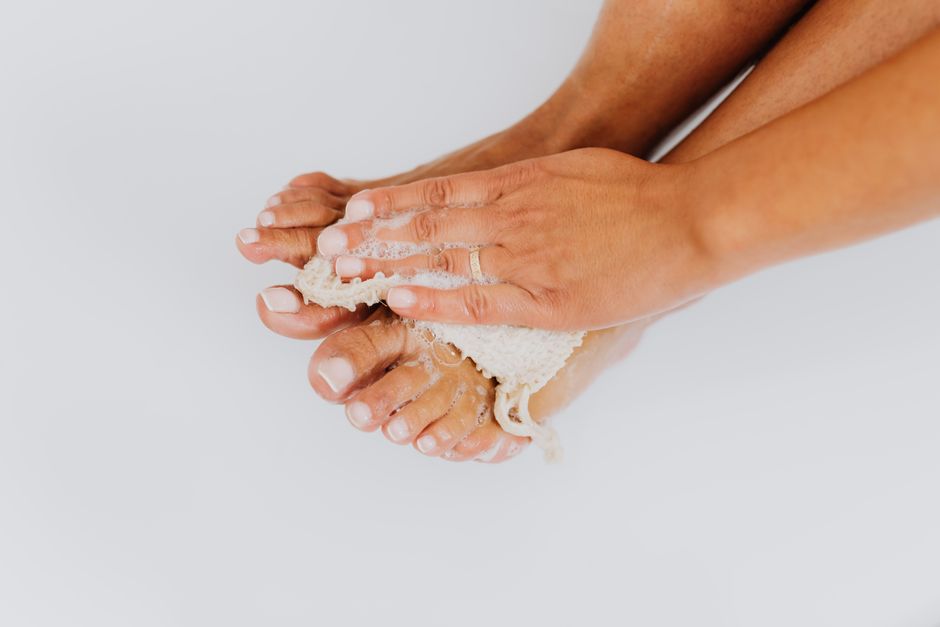
You do not need a loofah, washcloth, or any other tool to get clean with body wash. Your hands work fine. Pour or pump body wash into your palm, rub your hands together, and spread it over your skin with your fingertips and palms. Work from your neck down, rinse well, and you are done.
That is the short answer. The longer answer involves a few details that actually change how well this works: how much product to use, how long to spend on each area, and which body parts need more attention than people usually give them. None of it is complicated, and none of it requires buying anything.
How To Use Body Wash Without Loofah
Bare hands clean skin effectively when you use enough product and enough friction. The mistake most people make is using too little body wash and moving too fast. Body wash is a surfactant-based cleanser, meaning its molecules have one end that binds to oil and dirt and another end that binds to water. That chemistry lifts grime off your skin whether it travels on a loofah or on your palm.
Here is a method that works:
- Wet your whole body first. Water alone rinses away loose dirt and lets the cleanser spread further.
- Use about a quarter-sized amount per section of your body. That is roughly a teaspoon. Most adults need somewhere between one and two tablespoons total for a full shower.
- Rub your palms together to spread the product, then apply it directly to your skin.
- Use flat palms for large areas like your back and thighs. Use fingertips for your underarms, groin, and feet.
- Spend a few seconds on each area. You do not need to scrub hard. Light pressure with repeated motion does the job.
- Rinse until the water runs clear and your skin no longer feels slippery.
Friction is the part people underestimate. A loofah does not clean better because it is a loofah. It cleans because it creates friction and holds lather. Your hands can do both if you keep them moving instead of swiping once and rinsing.
Which Body Parts Need Extra Attention Without a Loofah?
Some areas collect more oil, sweat, and bacteria than others, and those are the places where hand-washing needs a little more time. Your underarms, groin, feet, and the area under your breasts or skin folds produce more sweat and trap more moisture. Give each of these spots several seconds of gentle rubbing rather than a quick pass.
Your back is the one place hands struggle. If you cannot reach comfortably, a long-handled brush or a back strap helps. This is a reach problem, not a cleaning problem. Your hands are not less effective on your back — they simply may not get there.
The rest of your body, including your arms, legs, chest, and stomach, needs very little. These areas have fewer oil glands and less odor-causing bacteria. A light pass with soapy palms is enough. Over-washing these areas can strip the skin barrier and leave you dry and itchy.
Does Body Wash Actually Work Better With a Loofah?
No. A loofah can produce more lather, and lather feels like it is doing more, but lather is mostly a cosmetic effect. It comes from the way surfactants trap air, not from cleaning power. More foam does not mean cleaner skin.
Loofahs also carry a downside worth knowing. Their woven fibers stay damp between showers, which is exactly the environment where bacteria and mold grow. Research on shower accessories has found that loofahs and similar reusable items can harbor microorganisms, and some studies have identified potentially harmful bacteria on them. Rinsing and hanging a loofah to dry helps, but it does not make the loofah sterile. Replacing it often is the more reliable approach if you use one.
For most people, hands are the simpler and more hygienic option. There is no reusable object sitting in a damp shower growing things.





How Much Body Wash Should You Use?
Less than most people think, but more than a single drop. A common mistake is using a tiny amount and wondering why skin still feels oily. Another is using a large handful and ending up with dry, tight skin afterward.
Here is a rough guide for a full-body shower with hands only:
| Body Area | Approximate Amount |
|---|---|
| Underarms, groin, feet | About a teaspoon total |
| Arms, legs, chest, stomach | About a teaspoon total |
| Back | About a teaspoon |
These are estimates, not clinical dosing. The right amount is the smallest amount that leaves your skin feeling clean without feeling stripped. If your skin feels tight or squeaky after drying, you used too much or rinsed with water that was too hot. If it still feels oily, you used too little or did not work it in long enough.
People with oily skin may need slightly more. People with dry or sensitive skin may need less, or a body wash formulated without strong fragrances and harsh surfactants.
What Kind of Body Wash Works Best for Hand Application?
Any body wash works with hands, but some formulas are easier to spread without a tool. Thinner, gel-based body washes spread faster across skin. Thick, creamy formulas tend to sit in one spot until you work them in more. Neither is better for cleaning. It comes down to what feels comfortable.
Two things are worth checking on the label:
- Surfactant type. Gentle surfactants like cocamidopropyl betaine and sodium cocoyl isethionate tend to be less drying than harsh sulfates for some people. This varies by individual skin.
- Fragrance and preservatives. If you have sensitive or eczema-prone skin, fragrance and certain preservatives are common triggers. A fragrance-free formula is often a safer starting point.
Antibacterial body washes are not necessary for routine showering. Plain body wash removes germs through the mechanical action of washing and rinsing. For most people, regular soap and water is enough. This is a widely accepted position in public health guidance.
Common Mistakes When Washing Without a Loofah
The most common mistake is not using enough friction. People pump body wash into their hands, swipe it once over each arm, and rinse. That motion is too brief to lift oil from the skin. The fix is simple: keep your palms moving in small circles for a few seconds per area.
Other mistakes that show up often:
- Washing your whole body with hot water. Hot water strips oils faster than warm water and can leave skin dry and irritated.
- Rinsing too fast. Leftover cleanser residue can cause itching or irritation.
- Skipping the feet. Feet sweat and harbor odor-causing bacteria just like underarms. Wash between the toes.
- Using a washcloth as a substitute for hands and never washing it. A washcloth used once and laundered is fine. A washcloth that hangs damp for days is not better than a loofah.
- Scrubbing hard to compensate for not having a tool. Hard scrubbing damages the skin barrier. Gentle repeated motion is more effective and less irritating.
When Should You See a Doctor About Skin Issues?
Occasional dryness or mild irritation after showering is common and usually responds to a gentler cleanser, shorter showers, and moisturizer applied within a few minutes of drying off. If you have persistent itching, a rash that does not clear, cracking skin, or signs of infection like redness, warmth, swelling, or pus, see a healthcare provider. These can point to conditions such as eczema, psoriasis, or a skin infection, and those need proper diagnosis rather than a change in body wash.
People with diagnosed skin conditions should follow the cleansing routine their clinician recommends. General showering advice may not apply to every condition.
Frequently Asked Questions
Can I get clean using only body wash and my hands?
Yes. Hands provide enough friction to lift dirt and oil when you use enough product and keep your palms moving for a few seconds per area. No tool is required for normal daily cleaning.
How much body wash should I use without a loofah?
Most adults need roughly one to two tablespoons total for a full shower, split across body areas. Use less if your skin feels tight after drying and more if it still feels oily.
Is a loofah more hygienic than using my hands?
No. Loofahs stay damp between showers and can harbor bacteria and mold, while hands do not carry that risk. If you prefer a loofah, replace it regularly and hang it to dry after each use.
Do I need an antibacterial body wash if I am not using a loofah?
No. Plain body wash removes germs through washing and rinsing, which is enough for routine showering. Antibacterial washes are not necessary for most people.
