
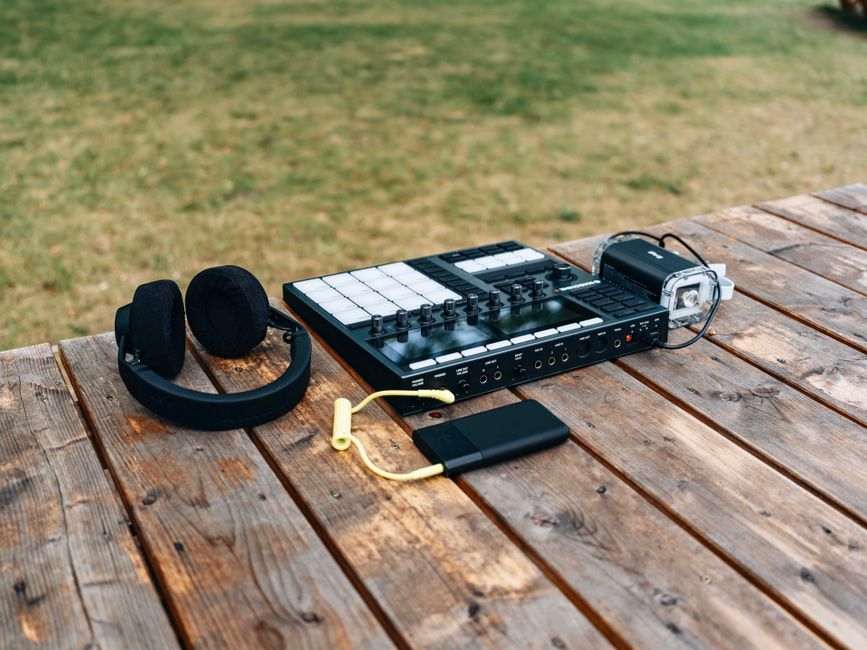
Binaural beats are an auditory illusion. When you play two slightly different tones in each ear through headphones, your brain perceives a third, rhythmic pulse that isn’t actually in the sound. The frequency of that pulse equals the difference between the two tones. To use them, you need stereo headphones, two tones that differ by a small amount, and a quiet space where you can listen without distraction. The evidence for what they actually do is mixed, and this article is honest about that.
What Are Binaural Beats and How Do They Work?
Binaural beats rely on a quirk of how the brain processes sound. If your left ear hears a 200 Hz tone and your right ear hears a 210 Hz tone, the two signals travel separately to brain structures that compare them. The brain detects a 10 Hz difference and generates the perception of a pulsing beat at that rate. That 10 Hz pulse is not present in either ear on its own.
The effect requires both ears working together. This is why headphones are essential. If you play the tones through speakers, both ears hear both tones and the illusion disappears.
The theory behind binaural beats is that the brain’s electrical activity may shift toward the frequency of the beat. This is called brainwave entrainment. It sounds plausible. But plausibility is not proof. Research on whether entrainment actually happens in humans is mixed, and studies using EEG to measure brain activity during binaural beat listening have produced inconsistent results.
What the beat frequency maps to, in theory:
- Delta (0.5–4 Hz) — associated with deep sleep in natural brain activity
- Theta (4–8 Hz) — associated with drowsiness and light sleep
- Alpha (8–13 Hz) — associated with relaxed wakefulness
- Beta (13–30 Hz) — associated with active thinking and alertness
- Gamma (30–100 Hz) — associated with certain types of focused attention
These ranges come from decades of EEG research on natural brain states. What is not established is whether listening to a binaural beat in one of these ranges reliably pushes your brain into that state. Some studies suggest modest effects on relaxation or mood. Others find nothing beyond placebo. The honest summary is that the mechanism is plausible but not confirmed.
How To Use Binaural Beats Setup Frequency Tips
Getting the setup right matters more than most people realize. A few practical points:
- Use stereo headphones. Over-ear or in-ear both work. The key is that each ear receives a different tone. Mono playback or speakers will not produce the effect.
- Keep the volume low. The tones work at low volume. Loud listening for long periods risks hearing damage, which is a real and permanent harm. If you have to raise the volume to hear it over background noise, the environment is too loud.
- Choose a carrier frequency. Most recordings use a base tone between 100 Hz and 500 Hz. Lower carrier tones tend to sound smoother. This is a preference issue, not a physiological one.
- Set the beat frequency to match your goal. A 10 Hz beat sits in the alpha range. A 4 Hz beat sits in the theta range. The difference between the two tones is what matters, not the absolute pitch.
- Give it 10 to 15 minutes. If there is an effect, it tends to develop over minutes, not seconds. Some studies use longer sessions. There is no established optimal duration.
- Use a quiet space. Competing noise masks the subtle beat. This is about perception, not about the brain needing silence.
One non-obvious point: the beat frequency is the difference between the two tones, not the average. A 200 Hz tone in the left ear and a 204 Hz tone in the right ear produces a 4 Hz beat. A 200 Hz tone and a 210 Hz tone produces a 10 Hz beat. Getting this wrong is the most common setup mistake.
What Does the Research Actually Show?
Research on binaural beats is a mixed picture. Some studies report small effects on anxiety, mood, or attention. Others find no difference compared to a control condition. Many studies are small, which makes results less reliable.
A recurring problem is that it is hard to blind participants. People know whether they are listening to binaural beats or silence. Expectation alone can produce changes in how relaxed or focused someone feels. This does not mean the effects are fake. It means separating the beat’s effect from the expectation is difficult.
What the evidence does not support:
- Treating medical conditions like anxiety disorders, depression, or insomnia
- Replacing sleep, medication, or therapy
- Producing large or reliable changes in cognition
What some evidence suggests, with caveats:
- Modest effects on subjective relaxation in some studies
- Possible small effects on mood in some trials
- Inconsistent effects on attention and memory
No large, well-controlled trial has confirmed that binaural beats produce clinically meaningful benefits. If you find them relaxing, that experience is real to you. It just may not come from the beat itself.





Are Binaural Beats Safe?
Listening to binaural beats at low volume is generally considered low risk. The tones themselves are not known to cause harm. The main safety concerns are practical, not theoretical.
Volume is the biggest issue. Prolonged loud listening through headphones can damage hearing. This damage is permanent. Keep the volume at a level where you could still hear someone speaking to you.
People with epilepsy should be cautious. Some research indicates that rhythmic auditory stimulation can affect brain activity, and flashing lights or certain sound patterns have been reported to trigger seizures in people with photosensitive or sound-sensitive epilepsy. The evidence here is limited, but the caution is reasonable. If you have epilepsy, talk to your neurologist before using binaural beats.
People with tinnitus may find the tones uncomfortable or may find them helpful. Responses vary. If the tones worsen your tinnitus, stop using them.
Binaural beats are not a treatment for any medical condition. If you have persistent anxiety, insomnia, or trouble concentrating, those are worth discussing with a clinician. Relying on an unproven audio tool instead of getting evaluated is the real risk.
Common Mistakes and Marketing Claims To Ignore
The binaural beat market is full of claims that outrun the evidence. Here is how to spot them.
“Clinically proven to…” — No large clinical trial has established that binaural beats treat any condition. If a product says this, it is overstating the science.
“Reprogram your brain” — This phrase has no basis in established neuroscience. Brainwave entrainment, if it occurs, is a temporary shift in electrical activity, not a reprogramming.
“Cures insomnia” — Insomnia has multiple causes and evidence-based treatments. Binaural beats are not among the established treatments.
“Instant results” — If any effect exists, it develops over minutes. Instant is a marketing word.
Common setup mistakes:
- Using speakers instead of headphones
- Playing files in mono
- Setting the volume too high
- Confusing the carrier frequency with the beat frequency
- Expecting medical results from an entertainment product
If a recording claims to do something specific — boost focus, induce sleep, reduce pain — treat that as a claim, not a fact. The evidence is not there to support it.
Frequently Asked Questions
Do binaural beats actually work?
The evidence is mixed. Some studies suggest small effects on relaxation or mood, but no large trial has confirmed clinically meaningful benefits.
What frequency should I use for relaxation?
A beat frequency in the alpha range, roughly 8 to 13 Hz, is commonly used for relaxation. There is no established optimal frequency, so this is a starting point, not a proven protocol.
Can I listen to binaural beats without headphones?
No. The effect depends on each ear receiving a different tone. Speakers mix the sounds, so the beat does not form.
Are binaural beats safe for people with epilepsy?
The evidence is limited, but some research suggests rhythmic sound can affect brain activity. If you have epilepsy, talk to your neurologist before using them.
