
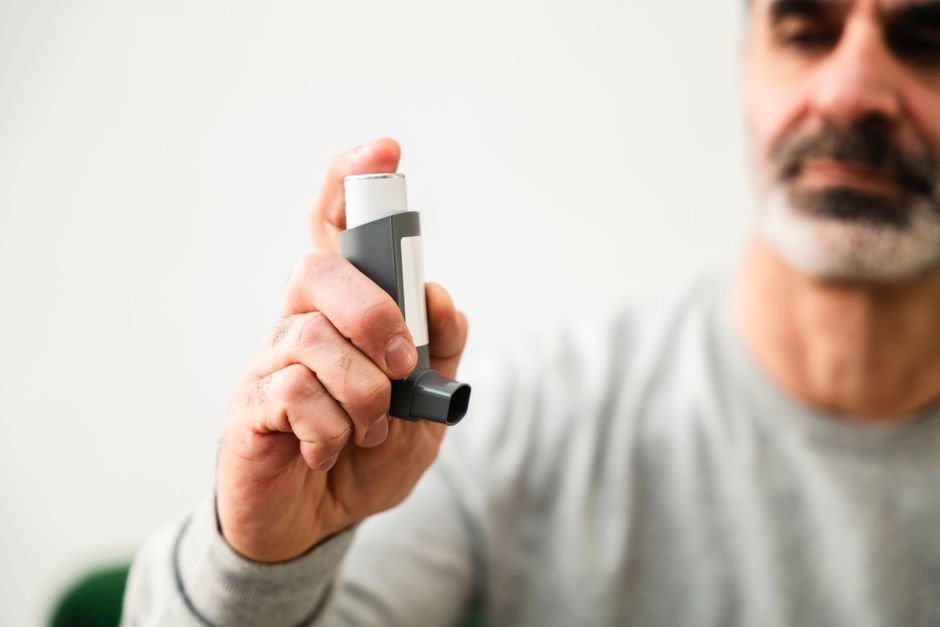
Most people who use a metered-dose inhaler do it wrong, and the most common mistake happens in the first second. A 2011 review of the published evidence found that only a minority of patients — often fewer than half — performed all the necessary steps correctly. Using an aerosol inhaler correctly means shaking the canister, breathing out fully, sealing your lips around the mouthpiece, pressing the canister as you begin a slow deep breath, holding your breath for about 10 seconds, and waiting at least 30 to 60 seconds before the next puff. A spacer helps many people get more medicine into their lungs and less into their mouth and throat.
How To Use An Aerosol Inhaler Correctly: The Step-by-Step Method
An aerosol inhaler — also called a metered-dose inhaler or MDI — delivers a measured puff of medicine mixed with a propellant. The propellant pushes the medicine out at high speed. Your job is to slow that cloud down and breathe it deeply enough that it reaches the small airways, not just the back of your throat.
Here is the standard sequence taught in respiratory clinics and used in clinical trials:
- Remove the cap and check the mouthpiece for dust or debris.
- Shake the inhaler for about 5 seconds. This mixes the medicine with the propellant. Many inhalers settle between doses, so shaking matters.
- Breathe out fully — away from the inhaler, not into it.
- Seal your lips around the mouthpiece. There should be no gap.
- Press the canister once as you start to breathe in slowly and deeply through your mouth. The puff and the breath should start together.
- Keep breathing in — a slow, steady breath over about 3 to 5 seconds works better than a fast gasp.
- Hold your breath for about 10 seconds, or as long as is comfortable. This gives the medicine time to settle in the airways.
- Wait 30 to 60 seconds before a second puff, and shake again first. If your prescription calls for two puffs, they are given as separate doses, not two presses at once.
- Replace the cap and rinse your mouth if the medicine is a corticosteroid.
That last step is not optional housekeeping. Inhaled corticosteroids can cause oral thrush and hoarseness if medicine is left sitting in the mouth and throat. Rinsing and spitting after use reduces that risk. Some inhalers also come with a built-in dose counter — use it, because “floating canister” tests and shake tests are unreliable ways to know when a device is empty.
Why Does the Timing of the Press and Breath Matter So Much?
The medicine leaves the inhaler as a fast-moving cloud. If you press the canister before you start breathing, or after you have already filled your lungs, most of that cloud lands on the tongue, the back of the throat, or the inside of the cheeks. It never reaches the lungs.
Coordination is the single hardest part of inhaler technique, and it is where most errors happen. A common pattern is pressing too early, then inhaling a fast, shallow breath that deposits medicine in the upper airway. Another is pressing twice in a row without waiting. The lung dose drops and the swallowed dose rises — which means more side effects and less benefit.
The breath speed matters too. A slow, deep inhalation gives the particles time to travel down the branching airways. A sharp, quick breath creates turbulence in the throat and throws medicine against the airway walls. Think of sipping through a straw slowly rather than gulping.
Should You Use a Spacer With Your Inhaler?
A spacer — also called a valved holding chamber — is a tube that attaches to the inhaler. You press the canister into the chamber, then breathe in from the mouthpiece. The chamber slows the aerosol cloud and removes the need to time the press and the breath perfectly.
Guidelines from respiratory and allergy organizations generally recommend spacers for people who have trouble coordinating the press-and-breathe technique, and many clinicians recommend them for children and older adults. Research consistently shows that spacers reduce the amount of medicine deposited in the mouth and throat and can increase delivery to the lungs compared with a poorly coordinated inhaler.
Spacers are not a sign of failure. They are a practical tool. If you use one, keep these points in mind:
- Use one puff at a time into the chamber, then breathe in slowly and deeply.
- Breathe in within a few seconds of pressing the canister — the medicine cloud does not stay suspended forever.
- Wash the spacer regularly in warm soapy water and let it air dry without wiping the inside. A dry, slightly textured surface reduces static, which can make medicine stick to the walls.
- Replace the spacer if it cracks or the valves are damaged.





What Are the Most Common Inhaler Mistakes?
Inhaler errors are widespread and they tend to repeat. The most frequent ones seen in clinical practice include:
- Not shaking the inhaler before use.
- Failing to exhale fully before the puff.
- Pressing the canister at the wrong moment in the breath.
- Breathing in too fast or not deeply enough.
- Not holding the breath afterward.
- Taking two puffs without waiting between them.
- Forgetting to rinse the mouth after a steroid inhaler.
- Using an empty or expired device without realizing it.
Here is a detail many people miss: a canister can still spray propellant after the medicine is used up. That is why dose counters and tracking your puffs matter more than whether the device still “puffs.” If you cannot remember when you started the inhaler, check for a counter or ask your pharmacist how many doses the device contains.
How Do You Know If Your Technique Is Actually Working?
Good technique should feel unremarkable. You may taste a little medicine or feel a slight cool sensation, but a strong taste in the back of your throat is often a sign that medicine is depositing in the mouth rather than the lungs.
The more reliable signal is how well your symptoms are controlled. If you are using a rescue inhaler more often than your action plan calls for, or if your breathing is not improving as expected, technique is one of the first things to check. Your clinician or pharmacist can watch you use the inhaler and correct errors — this is called a teach-back demonstration, and it catches problems that a conversation alone will miss.
Ask for a technique check at least once a year, and after any change in inhaler brand or device type. Different devices have different steps, and habits from an old inhaler do not always transfer.
What If You Cannot Coordinate the Press and Breath?
Some people genuinely cannot manage the press-and-breathe timing — young children, people with arthritis or weak grip, and some older adults. For them, a spacer is the first practical fix. Breath-actuated inhalers, which release medicine automatically when you breathe in, are another option some clinicians recommend. Dry powder inhalers work differently and do not need the same coordination, but they require a quick, forceful breath instead of a slow one.
If you are struggling, say so. Inhaler technique is a skill, and it can be taught. A pharmacist can demonstrate the device, watch you use it, and suggest a spacer or a different device. The goal is not to use the inhaler perfectly every time — it is to get enough medicine into your lungs to control your symptoms.
Frequently Asked Questions
How long should you hold your breath after using an inhaler?
Hold your breath for about 10 seconds after a slow, deep breath in, or as long as is comfortable. This gives the medicine time to settle in the airways.
Do you shake an aerosol inhaler before every use?
Yes. Shake the inhaler for about 5 seconds before each puff to mix the medicine with the propellant. Skipping this step can reduce how much medicine you get.
Should you rinse your mouth after using a steroid inhaler?
Yes. Rinse your mouth and spit after using an inhaled corticosteroid to reduce the risk of oral thrush and hoarseness. This step is widely recommended by respiratory clinicians.
Can you use two puffs of an inhaler at once?
No. Give each puff as a separate dose and wait at least 30 to 60 seconds between them, shaking the inhaler again first. Pressing twice in a row delivers less medicine to the lungs.
