
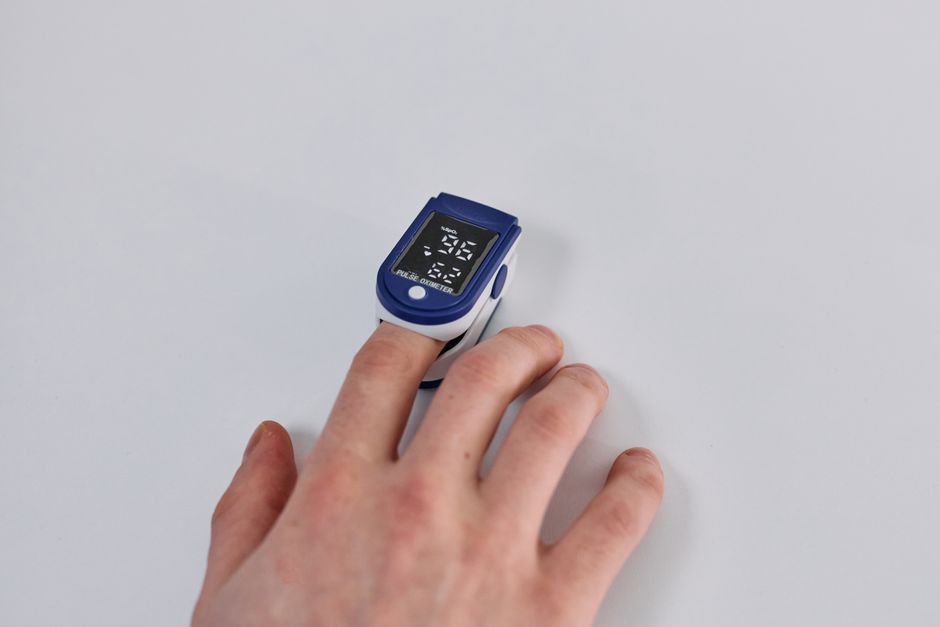
A fingertip oxygen sensor, also called a pulse oximeter, clips onto your finger and uses light to estimate how much oxygen your blood is carrying. You turn it on, slide it onto a bare finger, keep your hand still, and wait for the number to settle — usually 30 to 60 seconds. The reading shows two things: your oxygen saturation (SpO2) and your pulse rate.
That’s the basic answer. What most people need next is how to get a reading they can actually trust, what the numbers mean, and when a low number is worth acting on. This guide covers all of it.
How Does a Fingertip Oxygen Sensor Actually Work?
The device shines two wavelengths of light through your finger — one red, one infrared — and measures how much of each passes through to a detector on the other side. This is called pulse oximetry.
The science behind it is well established. Oxygen-rich blood absorbs red and infrared light differently than oxygen-poor blood. By comparing the two signals, the device estimates the percentage of your hemoglobin that is carrying oxygen. Hemoglobin is the protein in red blood cells that transports oxygen from your lungs to the rest of your body.
The device also separates the pulsing part of the signal — the blood that surges with each heartbeat — from the steady background. That’s why it can report a pulse rate alongside oxygen saturation. It’s a clever piece of engineering, but it’s still an estimate, not a direct measurement of oxygen in your blood.
How Do You Get an Accurate Reading?
Accuracy depends far more on how you use the device than on the device itself. A few simple steps make a real difference.
- Warm your hands first. Cold fingers reduce blood flow and can throw off the reading.
- Remove nail polish, especially dark colors, and artificial nails. They can block or scatter the light.
- Rest your hand on something steady. Movement is one of the most common causes of a bad reading.
- Don’t use a finger with a bandage, injury, or swelling.
- Give it 30 to 60 seconds to settle. The number often drifts before it stabilizes.
- Take more than one reading. If a number looks off, recheck it.
Bright light can also interfere. If you’re outdoors or under a strong lamp, cup your hand or move to a shaded spot. And if your hands are cold, rub them together or run them under warm water before trying again.
One thing worth knowing: pulse oximeters were largely calibrated using data from healthy adults, and several studies have found that readings can be less accurate in people with darker skin pigmentation. The FDA has issued guidance on this issue. This doesn’t mean the devices don’t work for everyone, but it does mean a reading that seems inconsistent with how someone looks or feels deserves attention rather than blind trust.
What Do the Numbers Mean?
For most healthy adults at sea level, a normal oxygen saturation reading is about 95% to 100%. That range is well established in clinical practice.
Here’s a general way to think about the numbers. Keep in mind that context matters — how you feel and your underlying health are as important as the number itself.
| SpO2 Reading | What It Generally Suggests |
|---|---|
| 95%–100% | Normal range for most healthy adults |
| 90%–94% | Below normal; worth paying attention to |
| Below 90% | Low; this is the level clinicians typically treat as a concern |
A reading below 90% is generally considered low and is the threshold most clinicians use to flag a problem. But a single number doesn’t tell the whole story. Chronic lung conditions, altitude, and other factors can shift what’s normal for a given person.
Your pulse rate matters too. For most adults, a resting heart rate of 60 to 100 beats per minute is considered normal. A pulse reading that’s unusually high or low alongside a low oxygen number is more concerning than either number alone.





When Should You Be Concerned About a Low Reading?
A low number on its own isn’t a diagnosis. What matters is the number combined with how you feel and what’s going on with your health.
Seek medical attention if your reading is below 90%, or if you have symptoms like shortness of breath, chest pain, confusion, bluish lips or face, or a feeling that you can’t get enough air — regardless of what the device says. Symptoms and readings don’t always match, and symptoms should never be ignored because a number looks fine.
If you have a chronic condition like asthma, COPD, or heart failure, your doctor may have given you a personal target range. Follow that guidance rather than a general chart. What’s low for one person may be their normal baseline.
If a reading is borderline — say in the low 90s — and you feel fine, the sensible move is to rest, warm your hands, and recheck in a few minutes. If it stays low or drops, contact a healthcare provider.
What Can Throw Off a Reading?
Several things can make a pulse oximeter give a number that doesn’t reflect your actual oxygen level. Knowing these helps you avoid false alarms — and false reassurance.
- Poor circulation. Cold hands, low blood pressure, or conditions that reduce blood flow can affect the signal.
- Movement. A shaking hand or a device that doesn’t fit well produces unreliable numbers.
- Nail polish and artificial nails. Dark polish and gel or acrylic nails can interfere with the light.
- Skin pigmentation. As noted, accuracy can vary, and some research indicates readings may be less reliable in people with darker skin.
- Bright ambient light. Strong light can reach the detector and distort the reading.
- Carbon monoxide poisoning. This is a serious one. Pulse oximeters cannot reliably distinguish oxygen from carbon monoxide bound to hemoglobin, so a reading can look normal even when someone has dangerous carbon monoxide exposure. If you suspect carbon monoxide, don’t rely on a pulse oximeter — get to fresh air and seek emergency help.
That last point is worth repeating because it’s a genuine safety issue. A normal-looking reading does not rule out carbon monoxide poisoning.
Are Fingertip Oxygen Sensors Reliable Enough to Use at Home?
For tracking a known condition or checking a number when you feel unwell, a home pulse oximeter can be a useful tool. Many consumer devices are cleared by the FDA for over-the-counter sale, which means they’ve met certain accuracy standards.
But it’s important to be clear about what they are and aren’t. They provide an estimate, not a lab-grade measurement. They don’t measure how well your lungs are working or diagnose any condition. They can’t tell you why your oxygen might be low.
There’s also a real risk in the other direction. A reassuring number can make someone delay care when they actually need it. If you feel seriously unwell, your symptoms matter more than a device reading. A pulse oximeter is one piece of information, not a substitute for medical judgment.
Some clinicians recommend home monitoring for people managing conditions like COVID-19 or COPD, and it can be genuinely helpful in those situations when paired with clear guidance about when to seek care. The key word is guidance. A number without context can cause unnecessary worry or false calm.
How To Use a Fingertip Oxygen Sensor: Step by Step
Here’s the process in plain order, from start to finish.
- Rest for a few minutes before measuring. Don’t take a reading right after climbing stairs or exercising.
- Warm your hands if they’re cold.
- Remove any nail polish or artificial nails from the finger you’ll use.
- Turn the device on and clip it to your index or middle finger. These tend to give the best signal.
- Keep your hand still and relaxed. Rest it on a table or your lap.
- Wait 30 to 60 seconds for the number to stabilize.
- Note both the oxygen saturation and the pulse rate.
- If the reading seems off, recheck on a different finger after a minute or two.
Record your readings if you’re tracking a condition over time. A pattern is more useful to a doctor than a single number.
Frequently Asked Questions
What is a normal oxygen level on a pulse oximeter?
For most healthy adults, a normal reading is about 95% to 100%. A reading below 90% is generally considered low and worth acting on.
Which finger is best for a pulse oximeter?
The index or middle finger usually gives the strongest signal. Any finger without nail polish, injury, or swelling can work, as long as your hand is warm and still.
Can a pulse oximeter be wrong?
Yes. Cold hands, movement, dark nail polish, bright light, and skin pigmentation can all affect accuracy. Pulse oximeters also cannot reliably detect carbon monoxide poisoning, so a normal reading doesn’t rule it out.
Should I go to the hospital if my oxygen is 92%?
A reading in the low 90s is below normal and deserves attention, but it isn’t automatically an emergency if you feel fine. Rest, warm your hands, and recheck; if it stays low, drops below 90%, or you have symptoms like shortness of breath or chest pain, seek medical care.
