
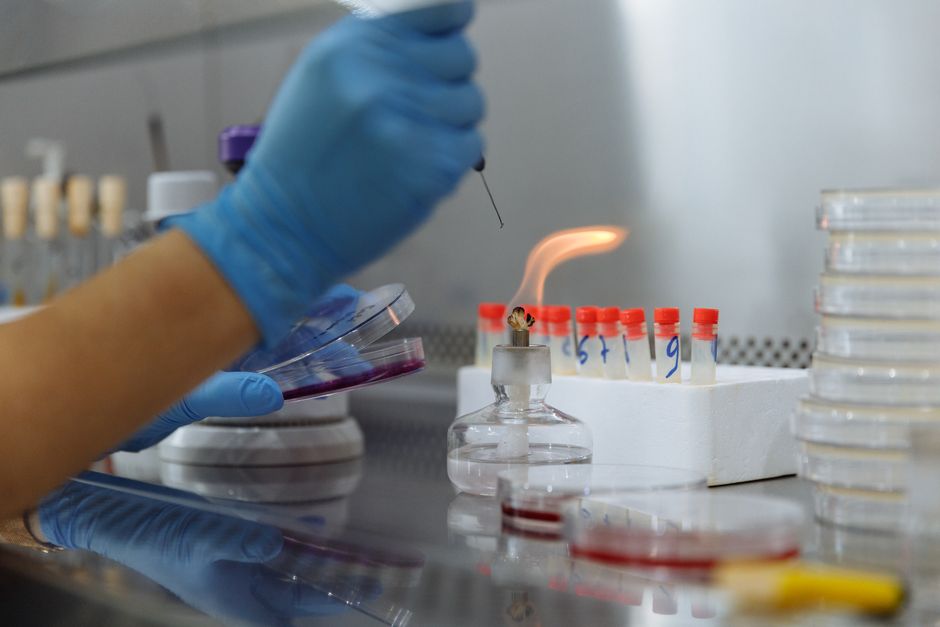
Using a Bunsen burner safely comes down to a fixed sequence: connect the tubing to the gas source, close the air hole, strike a match or lighter at the top of the barrel, turn on the gas, then adjust the collar to control the flame. To shut down, close the gas valve first, then the air hole, and let the burner cool before you move it. The order matters more than most people realize — getting it wrong is how burns and small gas accidents happen.
This is standard lab practice, taught in chemistry classrooms for well over a century. The burner itself is a simple device. The risks come from gas, an open flame, and hot metal, not from complexity. Whether you are a student, a teacher, or someone setting up a home science kit, the same steps apply.
What Is a Bunsen Burner and How Does It Work?
A Bunsen burner is a metal tube mounted on a base that mixes gas with air to produce a controlled flame. Gas enters through a small inlet at the bottom. Air enters through an adjustable hole near the base of the barrel, and the collar around that hole controls how much air gets in.
When gas and air mix before burning, the flame is hotter and cleaner than gas burning alone. That is the whole design idea. The burner is named after Robert Bunsen, who was involved in its development in the mid-1800s, though the underlying principle — pre-mixing fuel and air — was understood before him.
The flame has two visible zones. The inner cone is the cooler, unburned or partially burned gas. The outer cone is where combustion completes and the flame is hottest. That distinction matters when you are heating something, because the hottest point is just above the tip of the inner cone, not the tip of the visible flame.
What Safety Equipment Do You Need Before Lighting a Bunsen Burner?
Before anything is lit, you need the right setup and the right personal protection. Skipping this step is the most common cause of avoidable injuries.
- Safety goggles, not just glasses. Splashes and small explosions can reach the eyes from the side.
- A lab coat or non-flammable clothing. Loose sleeves, dangling jewelry, and long hair should be tied back or secured.
- A clear workspace. Remove paper, notebooks, and anything flammable from the immediate area.
- A working fire extinguisher or fire blanket within reach, and knowledge of where the gas shutoff is.
- Proper ventilation. Burners consume oxygen and combustion produces carbon monoxide if the flame is not burning cleanly.
If you are working in a real lab, follow the specific safety rules of that lab. If you are setting up a burner at home for a science project, the honest position is that this carries more risk than a classroom, because home spaces are not designed for open flames and gas. Many science educators recommend alternatives such as hot plates for home use, and that is reasonable advice.
How To Use A Bunsen Burner From Setup To Shutdown?
The full sequence is short and fixed. Do it in this order every time.
Setup
Place the burner on a heat-resistant surface, away from the edge of the bench. Connect one end of the rubber tubing to the gas inlet at the base of the burner and the other end to the gas valve. Check the tubing for cracks or stiffness — old, cracked tubing can leak. Turn the collar so the air hole is fully closed.
Lighting
Light a match or a striker and hold it just above and to the side of the top of the barrel. Then slowly open the gas valve. The gas should ignite immediately. If it does not light within a second or two, turn the gas off before trying again. Letting gas run unlit fills the area with a flammable cloud, which is how flash fires start.
Some people are taught to turn on the gas first and then bring the flame to it. Both sequences appear in lab manuals. The light-then-gas order is generally safer because it avoids unlit gas escaping while you fumble with a match.
Adjusting the Flame
With the flame lit, slowly open the air hole by turning the collar. As more air enters, the flame changes color and shape. It also becomes noisier.
| Flame type | Air hole | Appearance | Use |
|---|---|---|---|
| Safety (yellow) flame | Closed | Luminous, yellow, flickers | Visible, cooler, easier to see |
| Medium flame | Partially open | Blue with a visible inner cone | General heating |
| Roaring (blue) flame | Fully open | Blue, steady, noisy | Hottest flame, fastest heating |
The yellow safety flame is the coolest and produces soot. It is useful when you want a visible flame but not much heat. The blue roaring flame is the hottest and is what you use for most heating tasks.
Shutdown
Turn off the gas valve at the source first. The flame will go out. Then close the air hole by turning the collar. Wait for the burner to cool before touching the barrel or moving it — metal stays hot for several minutes after the flame is out.



What Does the Flame Color Tell You?
Flame color is a direct readout of how well the burner is mixing gas and air. It is one of the most useful things to watch.
A yellow, flickering flame means the air hole is closed or nearly closed. This flame is cooler and deposits soot on glassware. It is not dangerous by itself, but it is inefficient and will blacken whatever you heat.
A blue flame with a defined inner cone means the air and gas are mixing well. This is the working flame. It burns hotter and cleaner.
A flame that lifts off the top of the barrel or blows itself out means too much air is getting in relative to gas. Close the collar slightly until the flame settles back onto the barrel. A flame that strikes back down inside the barrel — sometimes called a strike-back — is a sign the gas pressure dropped or the mixture is wrong. Turn the gas off immediately and let the burner cool before relighting.
Common Mistakes and How to Avoid Them
Most Bunsen burner problems trace back to a handful of errors. Recognizing them in advance is easier than fixing them under pressure.
- Leaving the air hole open when lighting. This makes the flame hard to light and can cause a pop or strike-back. Close it first.
- Turning on the gas before bringing the flame. Gas can accumulate and ignite suddenly. Light first when possible.
- Heating a closed container. Never heat a sealed vessel. Pressure builds and it can burst. Always leave a vent.
- Pointing the flame at yourself or others. Aim the burner away from people and toward a clear area.
- Reaching over an open flame. Walk around instead. Sleeves and hair catch fire this way.
- Leaving a lit burner unattended. Even for a moment. Turn it off if you step away.
One point that often gets overlooked: the burner should never be left burning with the air hole closed for long periods. The yellow flame produces soot that can clog the barrel over time and coats glassware, which then needs cleaning before you can see what is happening in your experiment.
When Should You Not Use a Bunsen Burner?
A Bunsen burner is not the right tool for every heating job. There are situations where another heat source is the better choice, and in some cases the only safe choice.
If you are heating a flammable liquid — alcohol, ether, acetone, and similar solvents — an open flame is dangerous. Their vapors can ignite from a distance. Use a hot plate, water bath, or heating mantle instead. This is standard practice in chemistry labs.
If the room has poor ventilation, an open flame can consume oxygen and produce carbon monoxide. This is a real concern in small, closed spaces.
If you are working at home without a proper lab bench, the risks go up. Home surfaces may not be heat-resistant, gas connections may not be secure, and there is often no fire extinguisher or eyewash nearby. For home science, a hot plate or a candle in a controlled setting is usually the more sensible option. No clinical guidelines exist for “safe home Bunsen burner use” because it is not a regulated activity — the guidance comes from lab safety standards, which assume a proper lab.
How Do You Store and Maintain a Bunsen Burner?
After the burner has cooled completely, disconnect the tubing from the gas valve and from the burner. Coil the tubing loosely — sharp bends weaken rubber over time. Store the burner upright in a dry place.
Check the tubing periodically for cracks, hardening, or discoloration. Replace it when it shows any of these signs. Cracked tubing is a gas leak waiting to happen. Clean the barrel if it has accumulated soot, following the manufacturer’s instructions. Never use a burner with a damaged barrel or a loose base.
These are simple habits, but they are the difference between equipment that lasts and equipment that fails when you least expect it.
Frequently Asked Questions
What order do you light a Bunsen burner?
Close the air hole, light a match or striker at the top of the barrel, then turn on the gas. If it does not light within a second or two, turn the gas off before trying again.
What color should a Bunsen burner flame be?
A properly adjusted working flame is blue with a visible inner cone. A yellow flame means the air hole is closed and the flame is cooler and sootier.
How do you shut off a Bunsen burner safely?
Turn off the gas valve at the source first, then close the air hole. Wait for the metal to cool completely before touching or moving the burner.
Can you use a Bunsen burner at home?
It is possible but carries more risk than a classroom because home spaces lack proper ventilation, fire equipment, and heat-resistant surfaces. A hot plate is generally the safer choice for home science.
