
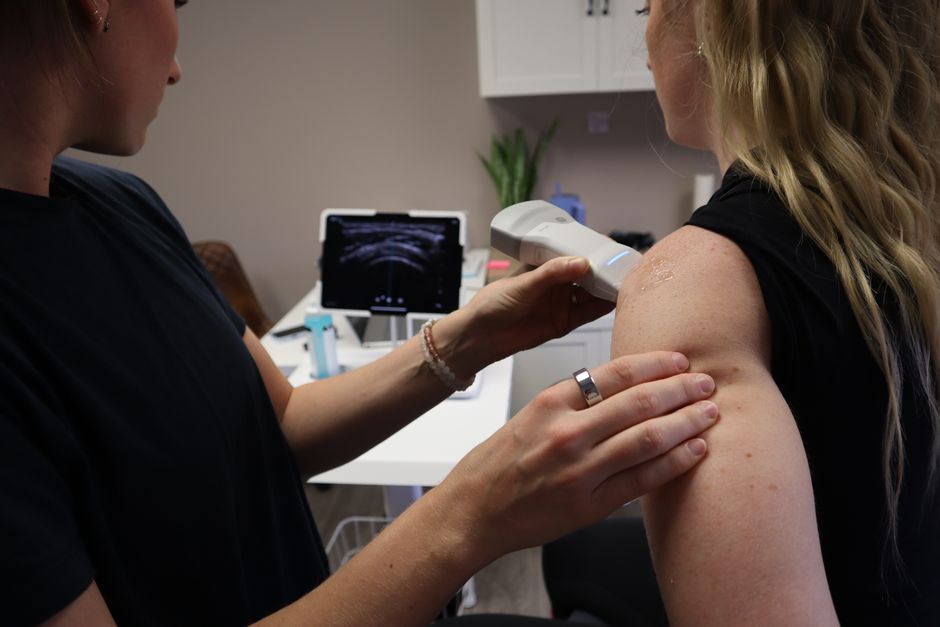
Elbow tendonitis is an overuse injury, and the single most effective treatment is loading the tendon correctly while giving it enough time to adapt. That means relative rest from the aggravating activity, not complete immobilization, plus a graded strengthening program that begins with isometric holds and progresses to slow heavy resistance. Most people improve over weeks to months without surgery, but tendons heal slowly and pushing through pain reliably makes things worse.
What Is Elbow Tendonitis, And Why Does It Happen?
Tendons are the fibrous cords that connect muscle to bone. When a tendon is repeatedly loaded beyond what it can tolerate, the tissue develops small areas of breakdown and disorganized repair. This is called tendinopathy.
The term “tendonitis” implies inflammation, and that label is somewhat misleading. Research using tissue samples has found that chronic elbow tendinopathy shows little of the inflammatory cell activity you would see in, say, an infected joint. What it shows instead is a failed healing response: collagen fibers become disordered, and the tendon thickens in an attempt to cope with load it was not prepared for.
That distinction matters for treatment. Anti-inflammatory strategies may help with short-term pain, but they do not fix the underlying problem, which is a tendon that cannot currently handle the demands placed on it.
Two main patterns occur at the elbow:
- Lateral epicondylitis (tennis elbow) affects the tendons on the outside of the elbow, where the forearm extensor muscles attach. It is far more common and usually stems from gripping, lifting, or repetitive wrist extension.
- Medial epicondylitis (golfer’s elbow) affects the tendons on the inside of the elbow, where the forearm flexors attach. It is linked to repetitive wrist flexion and gripping.
Despite the nicknames, most cases have nothing to do with tennis or golf. Repetitive occupational tasks, tool use, computer work with poor wrist posture, and sudden increases in training volume are common triggers.
How To Treat Tendonitis In Elbow: The Core Approach
Treatment rests on three pillars: reducing the load that provoked the injury, rebuilding the tendon’s capacity through progressive exercise, and managing pain while that happens. These work together, not in sequence.
Relative rest means avoiding the specific movements that reproduce pain, not stopping all activity. Complete rest tends to make tendons weaker because tendons adapt to load. A tendon that is never loaded loses tolerance.
Progressive loading is the intervention with the strongest supporting evidence for tendinopathy. The general approach used in clinical practice:
- Isometric exercises — holding a contraction without movement, such as a sustained wrist extension against resistance. These are often used early because some people report pain relief during and shortly after.
- Heavy slow resistance — lifting a challenging weight through a controlled range, typically with a slow tempo. This is where most of the tendon remodeling happens.
- Eccentric work — lowering a weight under tension, which has a long history of use for tendon rehab.
Pain during exercise is the practical guide. A common clinical rule is that discomfort should stay mild and settle within a day or so. Sharp pain, or pain that worsens over successive sessions, means the load is too high.
This process takes time. Tendon tissue has limited blood supply compared with muscle, and collagen turnover is slow. Improvement over six to twelve weeks is typical, and some cases take considerably longer. That timeline is not a sign that treatment is failing.
What About Braces, Ice, And Anti-Inflammatory Medication?
These tools can help with symptoms, but none of them repair the tendon.
An elbow counterforce brace — the strap worn just below the elbow — changes how force is distributed through the forearm muscles. Some people find it reduces pain during activity. The evidence for it is modest, and it is generally used as a temporary aid rather than a cure.
Ice is widely used for pain relief. It numbs the area and can make activity more tolerable in the short term. There is no strong evidence that it speeds tendon healing.
Nonsteroidal anti-inflammatory drugs (NSAIDs) reduce pain. Whether they help long-term outcomes in tendinopathy is genuinely uncertain, and some researchers have raised the question of whether suppressing inflammation interferes with tendon repair. That question is not settled. NSAIDs are reasonable for short-term symptom control, but they are not a treatment for the underlying problem, and long-term use carries real risks, including gastrointestinal and kidney effects.
Corticosteroid injections reduce pain quickly. This is one of the better-established findings in elbow tendonitis research: injections often produce clear short-term relief. The problem is what happens afterward. Multiple studies have found that the benefit fades within weeks, and some have found worse outcomes at longer follow-up compared with exercise or watchful waiting. Most clinicians now view steroid injections as a short-term option to break a severe pain cycle, not as a solution.





Which Treatments Have Weaker Evidence?
A number of popular treatments have limited or mixed support. This does not mean they never help, but the evidence is not strong enough to present them as reliable.
- Platelet-rich plasma (PRP) injections — evidence is mixed. Some trials show benefit, others do not. It remains an area of active research rather than an established treatment.
- Shockwave therapy — some studies suggest modest benefit for chronic cases; results vary across trials.
- Ultrasound, laser, and electrical stimulation — commonly offered, but evidence for meaningful benefit is weak.
- Dry needling and acupuncture — some people report pain relief; the evidence for tendon healing specifically is limited.
- Topical nitroglycerin patches — studied for tendinopathy with mixed results and notable side effects such as headache.
None of these replace loading exercise. Where they are used, they are typically added alongside a rehab program, not instead of one.
When Is Surgery Considered?
Surgery is reserved for cases that have not improved after a substantial course of non-surgical treatment — commonly several months of consistent rehab. It is not a first-line option.
Procedures for lateral epicondylitis generally involve releasing or debriding the affected tendon origin. Outcomes are reasonable in appropriately selected patients, but recovery involves its own rehabilitation period, and surgery carries the usual risks of infection, nerve irritation, and incomplete relief.
The key point: many people who think they need surgery have not yet completed an adequate loading program. That step is worth doing properly before considering an operation.
What Actually Prevents Elbow Tendonitis From Coming Back?
Recurrence is common when the original cause is not addressed. The tendon healed enough to tolerate daily life, but not enough to tolerate the same workload that injured it.
Practical steps that reduce recurrence risk:
- Increase training or work volume gradually rather than in jumps.
- Improve technique and grip mechanics — many cases involve excessive gripping force.
- Adjust tools and workstation setup to reduce sustained wrist extension or flexion.
- Keep strengthening the forearm muscles even after pain resolves.
- Take breaks from repetitive tasks before pain starts, not after.
A useful and often overlooked point: grip strength and forearm endurance are protective. People who maintain them tend to tolerate repetitive load better. Rehab does not end when pain stops — it ends when capacity is restored.
When Should You See A Doctor?
See a clinician if pain is severe, if it follows a specific injury with sudden swelling or a pop, if you have numbness or tingling in the hand, or if symptoms have not improved after several weeks of self-care.
Those features can point to something other than simple tendinopathy — including nerve compression such as radial tunnel syndrome or cubital tunnel syndrome, which can mimic elbow tendon pain. Getting the diagnosis right changes the treatment.
Frequently Asked Questions
How long does elbow tendonitis take to heal?
Most cases improve over six to twelve weeks with appropriate loading and load management, though some take several months. Tendons heal slowly, and the timeline varies widely between people.
Should I rest my elbow completely with tendonitis?
No — complete rest is generally not recommended because tendons need load to regain strength. Relative rest from the aggravating activity, combined with progressive exercise, is the standard approach.
Is tennis elbow the same as elbow tendonitis?
Tennis elbow, or lateral epicondylitis, is the most common form of elbow tendonitis, affecting the tendons on the outside of the elbow. Golfer’s elbow affects the inside and is a separate but related condition.
Do steroid injections cure elbow tendonitis?
No — corticosteroid injections often relieve pain quickly but the benefit typically fades within weeks, and some research suggests worse long-term outcomes compared with exercise. They are generally used as a short-term measure, not a cure.
