
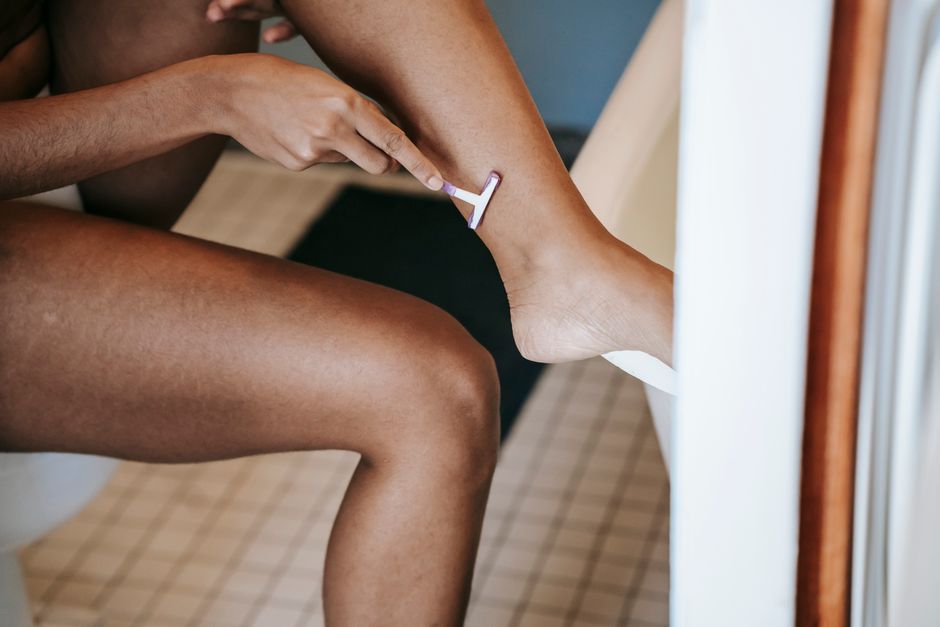
Razor burn on the legs is a mild inflammatory reaction in the skin. It usually shows up as redness, stinging, and small raised bumps within minutes to a day or two after shaving. Most cases settle on their own in a few days with gentle skin care. Better shaving habits prevent most of it.
What Is Razor Burn, Exactly?
Razor burn is irritation of the top layers of skin caused by friction and by cutting hair too close. It is not an infection. It is the skin responding to injury.
When a blade drags across skin, it removes a thin layer of the outermost skin cells along with the hair. That scraping damages the skin barrier. The barrier is the skin’s outer defense, made of cells and oils that hold in moisture and keep irritants out. Once it is disrupted, moisture escapes and irritants get in. The result is redness, stinging, and sometimes small bumps.
Razor burn is different from razor bumps. Razor bumps, also called pseudofolliculitis, happen when a cut hair curls back and grows into the skin. That causes a small inflamed bump that can look like a pimple. Razor burn is broader, flatter irritation across a shaved area.
Both are common on the legs, but they have different causes and different timelines. Razor burn tends to appear quickly and fade within days. Razor bumps can take longer and may recur in the same spots.
What Makes Razor Burn More Likely?
Most razor burn comes from a small number of mechanical factors. None of them involve an allergy or a skin disease.
- Dull blades. A dull blade pulls and tugs instead of cutting cleanly. It takes more passes to remove hair, and each pass adds friction.
- Shaving dry. Without water and a lubricant, the blade drags directly against skin.
- Pressing hard. Extra pressure does not cut hair better. It removes more skin.
- Too many passes. Going over the same spot repeatedly multiplies the damage.
- Shaving against the grain. This cuts hair closest to the skin, which also means scraping more skin.
Some people are simply more prone to it. Fine or sensitive skin, certain medications that thin the skin, and conditions like eczema can make the barrier easier to disrupt. If your skin reacts severely or repeatedly, that pattern is worth discussing with a clinician rather than treating as ordinary razor burn.
How To Treat Razor Burn On Legs
Treatment is about calming inflammation and letting the skin barrier repair. There is no product that speeds healing beyond what the skin does on its own. What you can do is stop making it worse.
First, stop shaving the affected area until it settles. Each additional shave re-injures skin that is still repairing. Most mild razor burn improves within a few days if you leave it alone.
Cool compresses help with stinging. A clean cloth with cool water for short periods can reduce the heat and discomfort. Avoid ice directly on the skin.
Fragrance-free moisturizers support barrier repair. Look for plain, bland products rather than ones with added scent, alcohol, or exfoliating acids. A simple moisturizer applied after a cool rinse is enough for most cases.
Over-the-counter hydrocortisone cream is sometimes used for a few days on inflamed skin. It can reduce redness and itching. It is not meant for long-term use, and it should not be applied to broken or infected skin. If you are unsure whether your skin is broken, ask a pharmacist before using it.
Do not scrub, exfoliate, or use alcohol-based toners on irritated skin. These remove more of the barrier that is already damaged. Resist picking at any bumps, which can introduce bacteria and turn irritation into infection.





When Razor Burn Is Something Else
Some skin reactions after shaving are not razor burn and need different care. Knowing the difference matters because the treatments are not the same.
If bumps are filled with pus, spreading, warm to the touch, or increasingly painful, that suggests infection rather than simple irritation. Folliculitis, an infection of the hair follicles, can look similar at first. It often needs medical evaluation. Do not try to treat spreading infection with moisturizer alone.
If you develop a rash that itches intensely, appears in a pattern, or comes with swelling, that may be contact dermatitis from a shaving product. Fragrances and preservatives in creams and gels are common triggers. Switching to a fragrance-free product and stopping the suspect one is the usual first step.
If a bump grows, darkens, bleeds, or does not heal over several weeks, have it looked at. Most such bumps are harmless, but a non-healing lesion on the leg deserves a professional look rather than a guess.
People with diabetes, poor circulation, or weakened immune systems should treat any leg wound or infection more cautiously. For these groups, a minor skin infection can progress faster. Seek medical advice early rather than waiting to see if it improves.
How To Prevent Razor Burn On Legs
Prevention comes down to reducing friction and cutting hair without scraping skin. Small changes make a large difference.
Soften the hair first. Shave at the end of a shower or bath, when warm water has had time to soften hair and skin. Soft hair cuts more easily, which means fewer passes.
Use a lubricant. A shaving cream, gel, or plain conditioner gives the blade a slick surface to glide on. It also holds water against the skin. Do not shave over dry skin.
Use a sharp blade. Replace blades when they start to pull or feel rough. A common sign is that you need extra passes to get the same result. There is no single correct replacement schedule because it depends on hair thickness, shaving frequency, and how well you store the razor.
Shave with the grain first. Going in the direction the hair grows removes most of it with less skin trauma. If you want a closer shave, a single pass against the grain afterward is less irritating than multiple passes against the grain.
Use light pressure. Let the blade do the work. Pressing harder does not cut closer. It removes skin.
Rinse the blade often. Hair and shaving cream clog the blade and reduce its cutting ability, which leads to more tugging.
Rinse with cool water and moisturize afterward. Cool water can soothe the skin, and a bland moisturizer supports the barrier while it recovers.
Does Hair Removal Cream or Waxing Cause the Same Reaction?
No. Razor burn is specific to the physical scraping of a blade. Other hair removal methods cause different reactions.
Depilatory creams dissolve hair with chemicals. They can cause chemical burns or allergic reactions, especially if left on too long. They do not cause razor burn, but they can cause irritation that looks similar.
Waxing pulls hair out by the root. It can cause redness, ingrown hairs, and irritation, but the mechanism is different from shaving. The skin reaction after waxing is usually short-lived redness rather than the bumpy irritation typical of razor burn.
If shaving consistently irritates your legs no matter what you change, switching methods is a reasonable option. The right method is the one your skin tolerates, not the one that is most popular.
Does Razor Burn Leave Marks or Scars?
Ordinary razor burn does not scar. It affects the surface layers of skin, which regenerate. Redness and bumps typically fade within several days to about a week.
Darkening of the skin, called post-inflammatory hyperpigmentation, can follow irritation. It is more common in people with darker skin tones. It is not a scar, but it can take weeks to months to fade. Sun exposure can make it more noticeable, so covering the area or using sun protection on the legs can help while it resolves.
True scarring is uncommon and usually follows infection or deep injury rather than simple irritation. If a spot is not fading, is changing, or is causing concern, get it checked.
Frequently Asked Questions
How long does razor burn on legs last?
Most mild razor burn fades within a few days to about a week. If it is worsening, spreading, or still present after a week, that is a reason to see a clinician.
Should I shave over razor burn?
No. Shaving over irritated skin re-injures it and slows healing. Wait until the area has settled before shaving again.
Does hydrocortisone cream help razor burn?
It can reduce redness and itching for a few days, but it is not for long-term use or for broken skin. Ask a pharmacist if you are unsure.
Can razor burn turn into an infection?
It can if bacteria enter through damaged skin. Pus, spreading warmth, or increasing pain suggests infection and needs medical evaluation.
Is razor burn the same as razor bumps?
No. Razor burn is surface irritation from friction. Razor bumps happen when a cut hair curls back and grows into the skin.
