
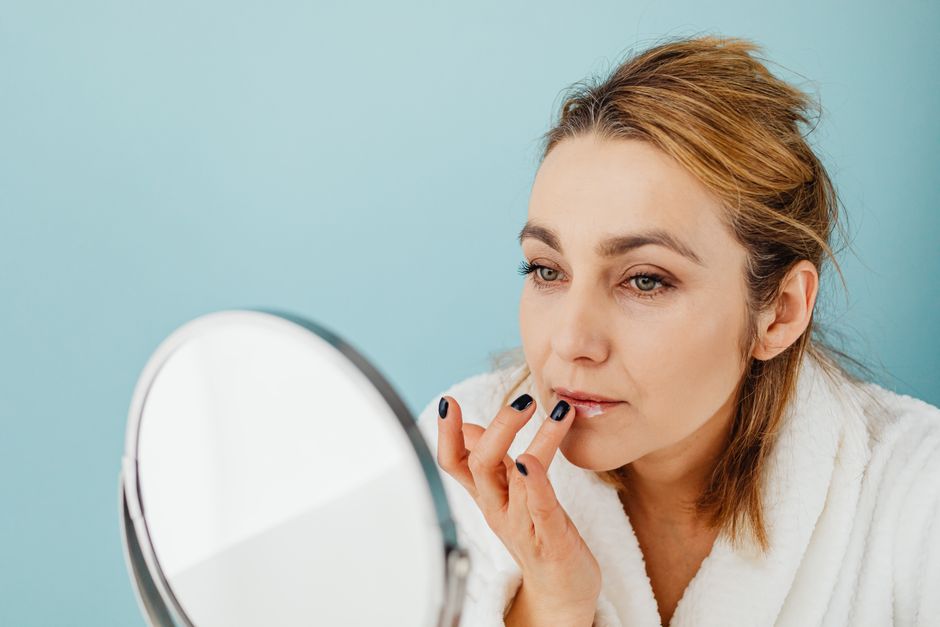
A pimple on or around the lip is annoying for a simple reason: it sits right where you talk, eat, and touch your face all day. The good news is you can treat most of them at home without ever squeezing. Warm compresses, hands off, and a few targeted products usually do the job. The key is knowing which kind of bump you actually have, because a pimple on the lip line is not always a pimple.
Why Popping a Lip Pimple Is a Bad Idea
Popping pushes bacteria and inflammation deeper into the skin. On the lip, that risk is higher than almost anywhere else on the face.
The skin around the mouth is thin and packed with blood vessels. When you squeeze, you can drive bacteria into surrounding tissue instead of out of the pore. That can turn a small bump into a larger infection, a permanent scar, or in rare cases a serious problem. The area around the nose and mouth drains toward deep veins near the brain, which is why doctors treat infections here with more caution than a pimple on your back.
Squeezing also does not remove the cause. A pimple forms when a pore clogs with oil and dead skin cells, and bacteria inside the pore multiply. Pressure does not clean that out. It just damages the tissue wall around it. What you get is more redness, more swelling, and a longer healing time.
There is one more reason to keep your hands off. A sore on the lip that looks like a pimple may not be one. Cold sores, which are caused by a virus, can spread when they are squeezed or scratched. Popping a cold sore can spread the virus to other parts of your face or to other people.
How To Treat Pimples On Lips Without Popping
Most lip-line pimples respond to gentle, consistent care over a few days. The goal is to reduce inflammation and let the pore clear on its own.
Start with a warm compress. Soak a clean cloth in warm water, wring it out, and hold it against the bump for a few minutes. Do this a few times a day. Heat increases blood flow to the area, which can help a whitehead come to a head naturally and drain without pressure. Use a fresh cloth each time and wash your hands before and after.
Keep the area clean with a mild, non-drying cleanser. Harsh scrubs and exfoliants irritate the skin and can make inflammation worse. Pat dry instead of rubbing.
If the bump is a true pimple, an over-the-counter spot treatment containing benzoyl peroxide or salicylic acid may help. Benzoyl peroxide kills acne bacteria and reduces inflammation. Salicylic acid helps unclog pores. Apply a small amount only to the bump, not the whole lip area, since these ingredients can dry and irritate the thin skin around the mouth. Follow the product label.
A few habits matter as much as any product:
- Do not pick, squeeze, or scratch, even if it looks ready.
- Keep your hands away from your face during the day.
- Change your pillowcase regularly.
- Avoid heavy lip products and lip balms that clog pores until it clears.
- Use a lip balm with sun protection, since sun exposure can darken a healing spot.
If the bump is painful, growing, or not improving after about a week, see a doctor or dermatologist. Prescription treatments exist, and a clinician can tell you whether you are dealing with acne or something else.
Is It a Pimple or a Cold Sore?
This is the single most useful thing to figure out, because the two need different treatment. A cold sore will not respond to acne products, and acne treatments can irritate it.
A pimple is a clogged pore. It usually starts as a red bump and may develop a white or yellow center filled with pus. It tends to stay in one spot and feels like a firm, tender lump under the skin.
A cold sore is caused by the herpes simplex virus. It often starts with a tingling, itching, or burning feeling before anything is visible. Then a cluster of small blisters appears, which can break open and crust over. Cold sores commonly show up right on the lip border or just outside it.
There is a detail many people miss: a cold sore can appear as a single sore that looks a lot like a pimple, especially early on. If you get a tingling sensation before a bump appears, or if you have had cold sores before, that is a strong clue. Cold sores are contagious, so avoid sharing cups, utensils, or lip balm, and avoid kissing until it heals.
Antiviral creams or oral antivirals can shorten a cold sore, and they work best when started early. If you are not sure which one you have, a doctor or pharmacist can help you tell the difference.




What Actually Causes Pimples Around the Mouth
Pimples form when a hair follicle or pore gets blocked. Oil from your skin and dead skin cells plug the opening, and bacteria that normally live on the skin multiply inside. Your immune system responds with redness and swelling, which is what you see and feel.
Several things make this more likely around the lips:
- Hormones. Fluctuations in hormones can increase oil production, which is why acne often flares at certain times of the month.
- Lip products. Heavy balms, some lipsticks, and occlusive products can clog pores along the lip line.
- Touching your face. Resting your chin on your hand or constantly touching the area moves oil and bacteria around.
- Diet. Some research suggests certain diets, particularly those high in refined sugars, may be linked to acne, but the evidence is not strong enough to say diet causes it. The relationship is still being studied.
- Stress and sleep. Stress can influence hormones and inflammation, though the direct link to individual pimples is not firmly established.
- Medications. Some medicines, including certain steroids and hormonal treatments, can trigger acne.
Understanding the cause helps you target it. If lip products seem to trigger breakouts, switching to lighter, non-comedogenic formulas can make a difference. Non-comedogenic means the product is formulated to be less likely to clog pores, though no product is guaranteed to prevent every pimple.
When To See a Doctor About a Lip Bump
Most pimples clear on their own or with basic care. Some situations call for a professional look.
See a doctor or dermatologist if the bump:
- Keeps getting bigger or becomes very painful
- Does not improve after about a week of home care
- Spreads, or you develop a fever or feel unwell
- Bleeds, crusts, or will not heal
- Returns in the same spot again and again
A sore that does not heal deserves attention. Most lip sores are harmless, but a persistent sore or lump that does not go away should be checked. This is not meant to alarm you. It is simply that the mouth is an area where early evaluation matters.
If you get frequent breakouts around the mouth, a dermatologist can help you build a treatment plan. Prescription options include topical retinoids, topical antibiotics, and in some cases oral medications. These are decisions to make with a clinician, not on your own.
How Long Does a Lip Pimple Take To Heal?
A typical pimple runs its course in a few days to about a week. If you leave it alone, healing is usually faster and leaves less marks than if you squeeze it.
Inflammation tends to peak in the first day or two, then settle as your immune system clears the clogged pore. A whitehead may come to the surface and drain on its own. A deeper, firmer pimple can take longer, sometimes a couple of weeks.
Dark marks left behind after a pimple fades are called post-inflammatory hyperpigmentation. These are not scars. They are temporary color changes that can take weeks to months to fade, and they are more common in people with darker skin tones. Sun protection helps prevent them from darkening further. True scars, which are indentations or raised tissue, are more likely when a pimple is squeezed or picked.
There is no shortcut that safely forces a pimple to disappear overnight. Products that promise this usually rely on drying or irritation, which can make the area look worse before it looks better.
Frequently Asked Questions
Can I pop a pimple on my lip if it has a white head?
No, you should not pop it even if it looks ready. Squeezing can push bacteria deeper, cause scarring, and spread infection in an area that drains toward deep veins near the brain.
How do I tell if a lip bump is a pimple or a cold sore?
A pimple is a single clogged pore that often has a white center, while a cold sore usually starts with tingling and forms a cluster of blisters. If you are unsure, see a doctor or pharmacist, because the treatments are different.
What is the fastest way to get rid of a pimple on the lip line?
Warm compresses, gentle cleansing, and a small amount of benzoyl peroxide or salicylic acid spot treatment are the main at-home steps. Most pimples still take a few days to a week to clear, and there is no safe way to force it faster.
When should I worry about a bump on my lip?
See a doctor if it keeps growing, becomes very painful, does not improve after about a week, or will not heal. A persistent sore or lump should always be checked.
