
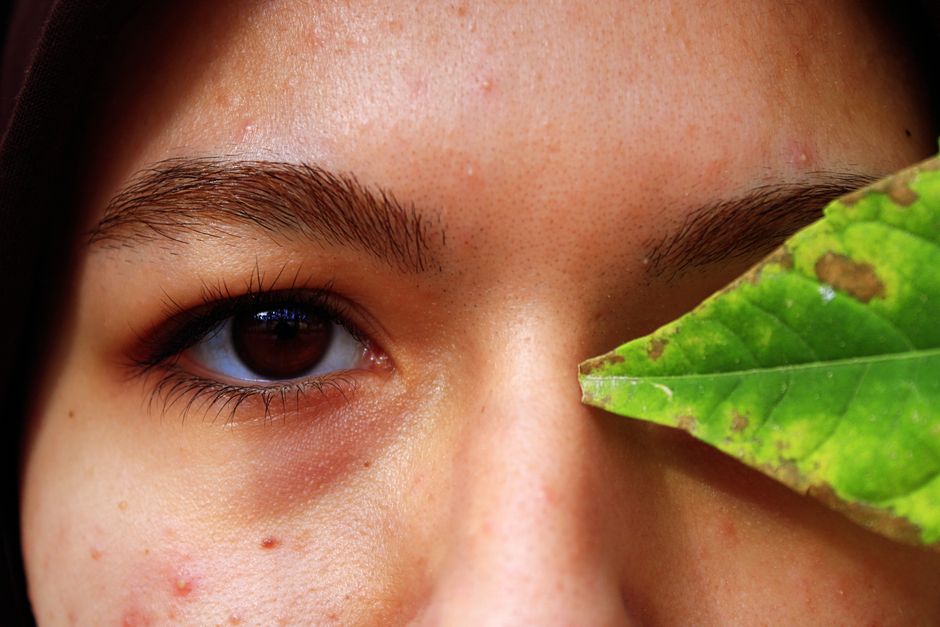
Polycystic ovary syndrome (PCOS) is one of the most common hormonal conditions in women of reproductive age, and acne is one of its most stubborn symptoms. The acne in PCOS tends to appear along the jawline, chin, and lower face, and it often resists the usual over-the-counter washes and spot treatments. The reason is that this acne is driven by hormones, not surface bacteria alone. Diet changes and certain supplements can influence those hormonal drivers, and for some women that shows up in clearer skin. But it is worth being honest up front: the evidence for specific diets and supplements in PCOS acne is real in places, thin in others, and often oversold online. This article separates what is well established from what is not.
Why Does PCOS Cause Acne in the First Place?
PCOS acne is a hormonal acne, and the hormone doing most of the work is androgen — testosterone and related hormones that are typically present in higher-than-usual levels in PCOS.
Androgens signal the sebaceous glands in the skin to produce more oil, or sebum. More sebum, combined with skin cells that shed abnormally inside the follicle, creates the conditions for pores to clog. A common skin bacterium called Cutibacterium acnes then multiplies in the blocked follicle, and the immune system responds with inflammation. That combination — excess oil, blocked pores, bacteria, and inflammation — is what produces the red, tender, deep lesions many women with PCOS describe.
Two other features matter. First, insulin resistance is present in many women with PCOS, and high insulin can push the ovaries and adrenal glands to make more androgens. That is one reason diet can influence acne in PCOS at all. Second, a protein called sex hormone-binding globulin (SHBG) tends to run low in PCOS. SHBG binds testosterone and keeps it inactive. When SHBG is low, more testosterone circulates in its free, active form — even if total testosterone looks only mildly elevated.
This is why PCOS acne often does not respond well to standard acne cleansers. Those products address bacteria and surface oil. They do not address the androgen and insulin signals driving the oil in the first place.
How To Treat PCOS Acne Naturally With Diet and Supplements?
No diet or supplement has been shown to cure PCOS acne. What the evidence supports is that certain dietary patterns and a small number of supplements can modestly improve the hormonal and metabolic environment that feeds it — and for some women, that translates into fewer breakouts.
The most consistent finding across PCOS research is that reducing refined carbohydrates and added sugars tends to lower fasting insulin, and lower insulin is associated with lower androgen production. This is a physiological chain, not a guaranteed outcome. Some women see clear skin changes; others see little. Response varies, and no study has shown that any one diet works for everyone.
Two non-obvious points are worth stating plainly. First, “natural” does not mean risk-free — supplements can interact with medications and are not tightly regulated for purity in the US. Second, the strongest evidence for treating PCOS acne remains prescription medication, including combined hormonal contraceptives and certain anti-androgen drugs. Diet and supplements are best understood as supportive measures, not replacements.
What Does the Evidence Say About Specific Diets?
Low-glycemic-index eating has the most research behind it in PCOS. The glycemic index ranks foods by how quickly they raise blood sugar. Lower-GI foods — most vegetables, legumes, whole intact grains, and many fruits — produce a slower rise, which means less insulin release.
Several studies in women with PCOS have found that low-GI diets are associated with improvements in insulin sensitivity and, in some trials, with modest reductions in circulating androgens. Whether that reliably translates into fewer acne lesions is less certain. Most PCOS diet studies measured metabolic and hormonal markers, not acne severity directly. That is an important gap.
Other approaches have weaker or mixed evidence:
- Low-carbohydrate and ketogenic diets: Some small studies suggest improvements in insulin and androgen markers, but these diets are hard to sustain and long-term data in PCOS are limited.
- Mediterranean-style eating: Associated with better metabolic markers in general populations; specific PCOS acne data are sparse.
- Dairy elimination: Some research links dairy intake to acne in the general population, but findings are inconsistent and the mechanism is debated. There is no strong PCOS-specific evidence that cutting dairy clears acne.
- Anti-inflammatory diets: The concept is reasonable, but clinical trials measuring acne outcomes in PCOS are lacking.
What most of these diets share is a reduction in refined carbohydrates and added sugar. That common thread — not any single branded approach — is where the plausible benefit likely sits.



Which Supplements Have Actual Evidence?
A handful of supplements have been studied in PCOS, though usually for metabolic and hormonal outcomes rather than acne specifically. It is important to be clear about that distinction: a supplement that lowers testosterone in a study has not necessarily been shown to clear acne.
Inositol (myo-inositol and D-chiro-inositol) is among the better-studied options. Multiple trials suggest it can improve insulin sensitivity and restore ovulation in some women with PCOS. Some research also indicates modest reductions in androgen levels. Acne-specific outcomes are rarely reported, so the direct evidence for skin is limited.
Vitamin D is frequently low in women with PCOS, and some studies associate low vitamin D with worse metabolic and hormonal profiles. Whether supplementation improves acne is not established. Testing levels before supplementing is reasonable.
Omega-3 fatty acids have shown anti-inflammatory effects in some PCOS trials, with mixed results on hormonal markers. Evidence for acne benefit is weak.
Zinc has some evidence in general acne, and a few small studies suggest it may help in PCOS-related acne. Doses used in research are higher than typical dietary intake, and high-dose zinc can cause nausea and interfere with copper absorption. This is not a supplement to take casually at high doses.
Spearmint tea has small studies suggesting anti-androgen effects, with some reported reduction in hirsutism. Acne data are very limited.
Supplements marketed specifically for “hormonal acne” often contain blends of these ingredients at doses far below what was studied, or at doses never studied at all. No clinical evidence confirms that most of these products work.
Does Diet Alone Ever Clear PCOS Acne?
For a small number of women, yes — but this is the exception, not the rule, and it is difficult to predict who will respond.
When diet does help, it usually takes time. Skin cell turnover and the resolution of deep inflammatory lesions happen over weeks to months, not days. Anyone expecting rapid change from dietary shifts alone is likely to be disappointed and may abandon an approach that was actually working slowly.
It also matters that PCOS is a spectrum. Some women have predominantly insulin-driven PCOS, where diet may have more influence. Others have a stronger primary androgen excess, where diet changes may move the needle less. This is one reason the same diet produces different results in different women — and why no single “PCOS diet” can be promised to fix acne.
What Actually Works Alongside Diet and Supplements?
Prescription treatment remains the most reliable route for PCOS acne, and it is worth saying so without softening it.
Combined hormonal contraceptives reduce ovarian androgen production and raise SHBG, which lowers free testosterone. They are widely used and well studied for acne in PCOS. Certain anti-androgen medications, such as spironolactone, block androgen receptors in the skin and are commonly prescribed for hormonal acne, though they are not appropriate during pregnancy. Topical retinoids and other prescription topicals address the skin directly.
Metformin, an insulin-sensitizing medication, is sometimes prescribed in PCOS and has been associated with modest improvements in acne in some studies, though results vary and it is not primarily an acne treatment.
The practical picture is that diet and supplements may support these treatments, and for mild cases may be tried first, but they are not a substitute for medical care when acne is moderate to severe, scarring, or affecting quality of life. A dermatologist or endocrinologist can help match treatment to the specific drivers at play.
What Should You Be Careful About?
Be cautious with any supplement promising to “balance hormones” or clear hormonal acne. These claims are not supported by clinical trials, and the products are not required to prove efficacy before sale in the US.
High-dose supplements can cause harm. Zinc at high doses can deplete copper. Some herbal products marketed for hormones contain compounds with estrogenic or anti-androgenic activity that may interact with medications or affect a pregnancy. If you are pregnant, breastfeeding, or trying to conceive, no reliable clinical guidelines exist for most of these supplements in PCOS — which means the honest answer is that safety and dosing are not well established for those situations.
Finally, be skeptical of before-and-after photos and testimonials. They cannot tell you whether the change came from the product, from a prescription started at the same time, from lighting, or from time alone.
Frequently Asked Questions
Can PCOS acne be cured with diet alone?
Diet alone clears PCOS acne in some women, but this is not typical and cannot be predicted. For most, dietary changes support rather than replace prescription treatment.
Which supplements help PCOS acne the most?
Inositol and zinc have the most supporting research in PCOS, though most studies measured hormonal and metabolic markers rather than acne directly. No supplement has been shown to reliably clear PCOS acne on its own.
How long does it take for diet changes to affect PCOS acne?
Skin changes from dietary shifts generally take weeks to months, not days, because deep inflammatory lesions resolve slowly. Anyone expecting rapid results is likely to be disappointed.
Is dairy bad for PCOS acne?
Some research links dairy to acne in general populations, but findings are inconsistent and PCOS-specific evidence is weak. There is no strong evidence that cutting dairy clears PCOS acne.
