
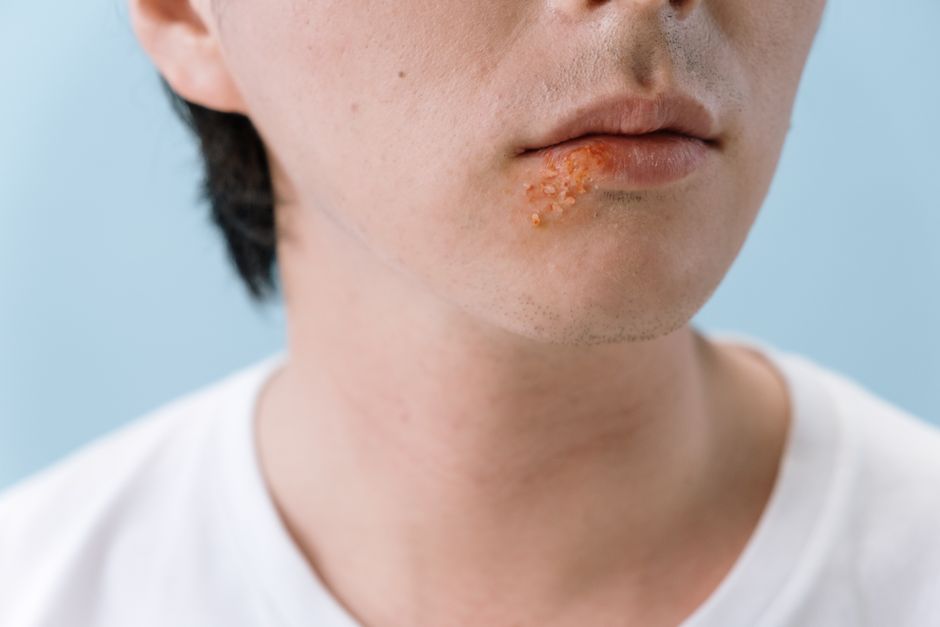
Oral herpes is caused by the herpes simplex virus, usually type 1, and there is no way to clear the virus from your body once you have it. The infection can be managed, though. Antiviral treatment started early in an outbreak can shorten healing time and ease pain, and daily antiviral therapy can reduce how often outbreaks return. Prevention centers on avoiding triggers that set off recurrences and reducing transmission to other people.
Most cold sores heal on their own within about one to two weeks. Treatment does not cure the infection, but it can make episodes shorter and less uncomfortable. Understanding what the virus does and what actually helps is the difference between managing oral herpes well and wasting money on products that do nothing.
What Actually Causes Oral Herpes and Cold Sores?
Herpes simplex virus type 1 (HSV-1) causes most oral herpes infections. The virus enters through small breaks in the skin or the lining of the mouth, often during childhood, and then travels along a nerve to a cluster of nerve cells called a ganglion. There it stays for life.
The virus does not leave the body. Between outbreaks it sits dormant in the nerve tissue. Certain conditions wake it up, and it travels back down the nerve to the skin, where it causes the familiar tingling and then the blister.
HSV-1 is extremely common. The World Health Organization estimates that a large share of the global population under age 50 carries HSV-1. Many people never get noticeable symptoms. Others get occasional cold sores. A smaller group gets frequent recurrences.
One point that surprises people: HSV-1 can also cause genital herpes through oral contact. This is why the distinction between “oral” and “genital” herpes is about location, not about which virus is involved. Both HSV-1 and HSV-2 can cause sores in either place.
What Are the First Signs a Cold Sore Is Coming?
Most people feel a cold sore before they see one. The early warning is called a prodrome, and it usually lasts from a few hours to about a day.
Common early signs include:
- Tingling, itching, or a burning feeling at one spot on the lip or around the mouth
- Tightness or slight swelling in the area
- A small hard bump forming under the skin
This stage is the most important one for treatment. Antiviral medicine works best when it is started during the tingling phase, before the blister fully forms. Once a blister has broken and crusted over, antiviral treatment started at that point has much less effect on how the outbreak unfolds.
The full course usually moves through stages: tingling, then a cluster of small fluid-filled blisters, then oozing and crusting, then healing. Most cold sores heal within one to two weeks without scarring.
How To Treat Oral Herpes Fast And Prevent Outbreaks
Treatment falls into two categories: medicine that shortens an active outbreak, and medicine taken regularly to prevent outbreaks from happening. Both use the same class of antiviral drugs.
Treating an active outbreak
Antiviral medications for oral herpes include acyclovir, valacyclovir, and famciclovir. All three require a prescription in the United States. Some topical antiviral creams are available over the counter in other countries, but their benefit is modest and they must be started very early.
The key principle with any antiviral is timing. Starting treatment within the first day of symptoms, ideally during the tingling phase, gives the best chance of a shorter and milder outbreak. Starting several days in, once the blister is already crusting, offers little benefit.
For people with frequent recurrences, a clinician may prescribe a short course to keep on hand so treatment can begin the moment symptoms appear. This is common clinical practice. Whether it helps depends on how quickly you recognize the early signs.
Supportive care matters too. Cold compresses can ease discomfort. Over-the-counter pain relievers may help with soreness. Keeping the area clean and avoiding picking at the blister reduces the chance of a secondary bacterial infection.
Preventing outbreaks
For people who get frequent outbreaks, daily suppressive antiviral therapy is an established approach. Taken every day, antivirals reduce the frequency of recurrences and lower the amount of virus shed between outbreaks. This is a decision to make with a clinician, since it means ongoing medication.
No vaccine for HSV-1 or HSV-2 is currently approved. Several candidates have been studied, but none has reached the market. Be skeptical of any product marketed as a herpes vaccine or a cure.





What Triggers Outbreaks and How Can You Reduce Them?
Triggers vary from person to person, and the evidence for each is uneven. Some are well described in clinical literature; others are reported by patients but not strongly confirmed in studies.
Commonly reported triggers include:
- Sun exposure. Ultraviolet light is one of the better-documented triggers. Using lip balm with sun protection on the lips may help people who notice outbreaks after time outdoors.
- Physical or emotional stress. Frequently reported, though hard to study precisely.
- Fever or illness. The original “cold sore” name comes from this association.
- Fatigue and lack of sleep.
- Skin injury or irritation around the mouth.
- Hormonal changes, such as around menstruation.
Because triggers are individual, the most useful step is to notice your own pattern. If you track when outbreaks happen, you may find one or two consistent triggers worth addressing. There is no single diet or supplement with strong evidence for preventing cold sores.
How Do You Stop Spreading Oral Herpes to Others?
HSV-1 spreads through direct contact with a sore, saliva, or the skin around the mouth. It is most contagious when a blister is present, but the virus can also be shed between outbreaks without any visible sore. That silent shedding is why transmission sometimes happens with no obvious source.
Practical steps during an outbreak:
- Avoid kissing, especially babies and young children, whose immune systems are less developed
- Do not share utensils, cups, towels, or lip balm
- Wash hands carefully after touching a sore
- Avoid touching your eyes after touching a sore, since the virus can cause a serious eye infection
One important safety point: a cold sore near the eye, or any herpes infection of the eye, needs prompt medical attention. Herpes can cause keratitis, an infection of the cornea, which can threaten vision if untreated. This is not a wait-and-see situation.
Newborns are also at serious risk. A herpes infection in a newborn is a medical emergency. Anyone with an active cold sore should avoid close contact with an infant, and this is standard guidance from pediatric and health authorities.
When Should You See a Doctor for Oral Herpes?
Most cold sores do not need medical care. Some situations do.
See a clinician if:
- A sore lasts longer than two weeks or does not seem to be healing
- Sores are frequent enough to disrupt your life
- You have a weakened immune system from illness or medication
- A sore appears near or in the eye
- You have a fever, widespread blisters, or trouble swallowing
- A young infant develops sores or becomes unwell after contact with someone who has a cold sore
Antiviral medicines are generally well tolerated, but they are prescription drugs with possible side effects and interactions. A clinician can advise on whether treatment is appropriate for you. This article is informational and is not a substitute for individualized medical advice.
Do Home Remedies and Over-the-Counter Products Work?
The evidence for most home remedies is limited or absent. That does not mean everything is useless, but it does mean claims should be treated with caution.
Some products contain docosanol, an over-the-counter cream available in the US. Evidence for its benefit is modest, and it works best when started at the very first sign. Products marketed as “cold sore cures” or “herpes remedies” that promise to eliminate the virus are not supported by evidence. The virus cannot currently be eliminated.
Lysine supplements are widely sold for cold sores. The evidence is mixed and generally weak. Some small studies suggest a possible benefit for prevention, but results have not been consistent, and lysine is not an established treatment. If you are considering it, discuss it with a clinician, especially if you take other medications.
Things that are reasonable and low-risk: cold compresses, keeping the area clean, and avoiding picking. Things to be skeptical of: any product claiming to cure herpes, and any supplement marketed with dramatic before-and-after stories.
Frequently Asked Questions
How long does a cold sore usually last?
Most cold sores heal within one to two weeks. Antiviral treatment started early can shorten this and reduce pain.
Can oral herpes be cured?
No. The virus stays in the body for life, but antiviral medicines can shorten outbreaks and reduce how often they return.
What is the fastest way to treat a cold sore?
Start prescription antiviral medicine as soon as you feel tingling, before the blister forms. Early treatment works better than waiting.
Is it safe to kiss someone with a cold sore?
No. Cold sores are contagious through direct contact, and you should avoid kissing, especially babies, until the sore has fully healed.
