
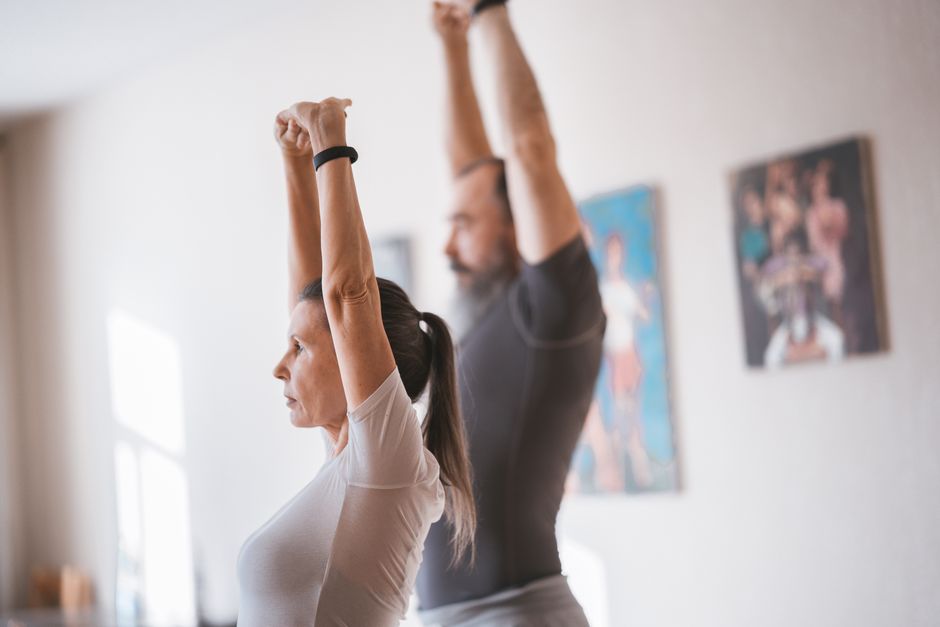
Joint pain during menopause is common, and it is not just in your head or simply a sign of getting older. Falling estrogen levels affect the tissues around joints, trigger low-grade inflammation, and change how pain is perceived. There is no diet or exercise that reverses menopause joint pain, but the evidence supports a practical approach: stay active with the right kinds of movement, eat an anti-inflammatory pattern, protect your sleep and muscle mass, and use targeted medical treatment when pain limits your daily life.
Why Does Menopause Cause Joint Pain?
Estrogen does more than regulate the menstrual cycle. It helps keep joint cartilage, tendons, ligaments, and the lining of joints in working order. Estrogen receptors are found throughout joint tissue, and the hormone appears to help control inflammation in those areas.
When estrogen drops sharply during perimenopause and stays low after menopause, several things happen at once. Inflammatory signaling can increase. Joint lubrication and connective tissue resilience can decline. Bone loss accelerates, which can change how joints bear load. Sleep often worsens, and poor sleep amplifies pain perception.
This is why many women notice stiffness in the morning, aching hands, knees, hips, or shoulders, and pain that seems out of proportion to any injury. The pattern tends to be symmetrical and affects multiple joints rather than one spot.
It is also worth separating two things that get blurred together. Menopause-related joint pain is a real phenomenon, but menopause does not protect you from other joint conditions. Osteoarthritis becomes more common with age regardless of hormone status. Inflammatory arthritis, including rheumatoid arthritis, can first appear in midlife. Some research suggests the risk of developing rheumatoid arthritis rises around menopause, though the reasons are not fully understood.
If joints are swollen, red, warm, or painful for more than a few weeks, or if morning stiffness lasts more than an hour, that pattern deserves medical evaluation rather than being assumed to be hormonal.
How To Treat Menopause Joint Pain Diet Exercise More?
The most effective approach combines movement, nutrition, sleep, and targeted medical care. No single one of these fixes the problem alone, and none of them is a cure.
Exercise is the closest thing to a reliable lever. It does not reverse hormonal changes, but it strengthens the muscles that support joints, maintains range of motion, and reduces pain sensitivity. Diet matters mainly through its effect on inflammation and body weight. Medical treatment fills the gaps when pain interferes with sleep, work, or basic activity.
The order matters less than consistency. A woman who walks daily, lifts something heavy twice a week, eats mostly whole foods, and sleeps seven hours will generally manage better than one who does one of these things perfectly and ignores the rest.
What Kind of Exercise Helps Menopausal Joint Pain?
Two categories do most of the work: strength training and low-impact aerobic activity. Both are supported by broad evidence for reducing joint pain and improving function, particularly in knee and hip osteoarthritis.
Strength training builds the muscle that absorbs force before it reaches the joint. This matters at the knee, hip, and shoulder. It also helps counter the muscle loss that accelerates after menopause. Two sessions per week covering major muscle groups is a reasonable target for most healthy adults, though anyone new to lifting should start lighter and progress gradually.
Low-impact aerobic exercise improves circulation to joint tissues and supports overall pain regulation. Options include:
- Brisk walking
- Swimming or water aerobics
- Cycling, stationary or outdoor
- Elliptical or rowing machines
High-impact activity is not automatically off-limits, but it is often poorly tolerated when joints are already painful. If running or jumping increases pain that lingers more than a day, scale back and substitute something lower impact.
Flexibility and balance work, such as yoga or tai chi, can help with stiffness and stability. The evidence for these specifically reducing menopausal joint pain is modest, but the general benefits for mobility and fall prevention are well established.
One point people often miss: rest makes joint pain worse over time. Prolonged inactivity weakens supporting muscles and stiffens joints, which then makes movement more painful. The goal is to stay active at a level the joints tolerate, not to wait until pain disappears before moving.




Does Diet Really Affect Menopause Joint Pain?
Diet influences joint pain mainly through inflammation and body weight. It does not act directly on estrogen levels in any meaningful way, and no food replaces hormone therapy.
Carrying extra weight increases load on weight-bearing joints. Each additional pound of body weight translates to several pounds of additional force across the knee with each step. Weight loss, when needed, reliably reduces knee and hip pain in people with osteoarthritis. This is one of the better-supported findings in joint pain research.
Beyond weight, an eating pattern rich in vegetables, fruit, whole grains, legumes, fish, and olive oil tends to be associated with lower markers of inflammation. The Mediterranean-style pattern is the most studied in this context. Whether it specifically reduces menopausal joint pain has not been established in large trials, but the general anti-inflammatory direction is reasonable and carries other health benefits.
Specific nutrients sometimes mentioned for joint health include omega-3 fatty acids, vitamin D, and calcium. Omega-3s from fish or supplements have shown modest pain reduction in some studies of inflammatory arthritis, though results in osteoarthritis are mixed. Vitamin D and calcium matter for bone health, which is separate from joint pain but closely related in menopause.
What does not have strong evidence: eliminating nightshades, going gluten-free without celiac disease, or taking collagen supplements specifically for menopausal joint pain. Collagen is heavily marketed, and some small studies suggest possible benefit for knee osteoarthritis, but the evidence is not strong enough to present as established.
What About Supplements and Medications?
Over-the-counter pain relievers such as acetaminophen and nonsteroidal anti-inflammatory drugs can reduce pain and inflammation in the short term. They do not change the underlying process and carry risks with long-term use, including gastrointestinal and cardiovascular effects with NSAIDs.
Topical NSAIDs applied to the skin are often recommended first for localized joint pain in older adults because they carry fewer systemic risks than pills. This is a common clinical approach supported by guidelines for knee and hand osteoarthritis.
Hormone therapy is the most direct treatment for symptoms caused by low estrogen. Whether it helps joint pain specifically is less clear than its effects on hot flashes and night sweats. Some studies suggest hormone therapy may reduce joint pain in early menopause, but the evidence is not consistent enough to call it a proven treatment for this symptom. Anyone considering hormone therapy should discuss benefits and risks with a clinician, since the risk profile depends on age, time since menopause, and personal health history.
For supplements, the honest position is that evidence is limited for most products marketed for joint pain. Glucosamine and chondroitin have been studied extensively, and results are mixed, with most well-designed trials showing little to no benefit over placebo. Turmeric and omega-3 supplements have some supporting evidence for inflammation, but not enough to present as reliable treatments.
How Do Sleep, Stress, and Muscle Mass Fit In?
Pain and sleep run in a loop. Poor sleep lowers the threshold at which the brain registers pain, so the same joint ache feels worse after a bad night. Menopause frequently disrupts sleep through hot flashes, night sweats, and changing sleep architecture. Improving sleep often improves how joint pain is experienced, even when the joint itself has not changed.
Stress has a similar effect. Chronic stress amplifies pain signaling and tends to reduce activity, which then worsens stiffness. This is not a suggestion that the pain is psychological. It is a statement that the nervous system modulates pain, and sleep and stress are two of the strongest inputs.
Muscle mass deserves separate mention. Women lose muscle faster after menopause, partly due to declining estrogen and partly due to reduced activity. Less muscle means more load on joints and less metabolic reserve. Resistance training is the main tool for preserving muscle, and adequate protein intake supports it. General guidance for older adults often suggests higher protein intake than for younger adults, though specific targets should be individualized.
When Should You See a Doctor?
See a clinician if joint pain is severe, persistent, or interfering with daily activities. Also seek care if joints are swollen, red, or warm, if stiffness lasts more than an hour in the morning, if only one joint is affected, or if you have fever, rash, or unexplained weight loss alongside joint pain. These features suggest something other than menopause-related joint pain and need evaluation.
Blood tests and imaging can help distinguish osteoarthritis from inflammatory conditions. Getting the right diagnosis matters because the treatments differ substantially.
Frequently Asked Questions
Does menopause cause joint pain?
Yes, falling estrogen levels can contribute to joint pain by affecting inflammation, connective tissue, and pain perception. However, other conditions such as osteoarthritis and rheumatoid arthritis also become more common in midlife and should be ruled out.
What is the best exercise for menopause joint pain?
A combination of strength training twice a week and regular low-impact aerobic activity such as walking, swimming, or cycling works best for most people. Both are supported by evidence for reducing joint pain and improving function.
Can diet alone fix menopausal joint pain?
No, diet alone does not reverse menopause-related joint pain. An anti-inflammatory eating pattern and weight management, when needed, can reduce pain and support joint health alongside exercise and medical care.
Do collagen supplements help with menopausal joint pain?
The evidence is limited and not strong enough to confirm benefit. Some small studies suggest possible improvement in knee osteoarthritis, but larger, well-designed trials are needed before this can be recommended.
