
Measles is one of the most contagious diseases known to medicine, and in babies it can be serious. There is no antiviral drug that cures measles, so care focuses on supporting your baby through the illness, managing fever and fluids, watching closely for complications, and getting medical help fast if breathing or alertness changes. The single most important protective step is vaccination, which is given on a schedule that starts in the second year of life.
What Is Measles And Why Are Babies At Higher Risk?
Measles is a viral infection caused by a virus in the paramyxovirus family. It spreads through the air when an infected person coughs or sneezes, and the virus can linger in a room for up to two hours after that person leaves.
Babies are at higher risk for a few clear reasons. Their immune systems are still developing. Their airways are smaller, so swelling and mucus cause more trouble. And most babies under 12 months have not yet received the measles-mumps-rubella (MMR) vaccine, which is typically first given at 12 to 15 months in the United States.
Babies who are too young for the vaccine depend on those around them being vaccinated. This is why herd immunity matters so much for infants. When vaccination rates drop in a community, measles finds the unprotected first — and the youngest are often among them.
Measles is not a mild childhood illness. Before the vaccine was introduced in the United States in 1963, measles caused an estimated 3 to 4 million cases each year, along with thousands of hospitalizations and hundreds of deaths. That context matters when weighing how seriously to take it.
How To Treat Measles In Babies: Symptoms Care And What Actually Helps
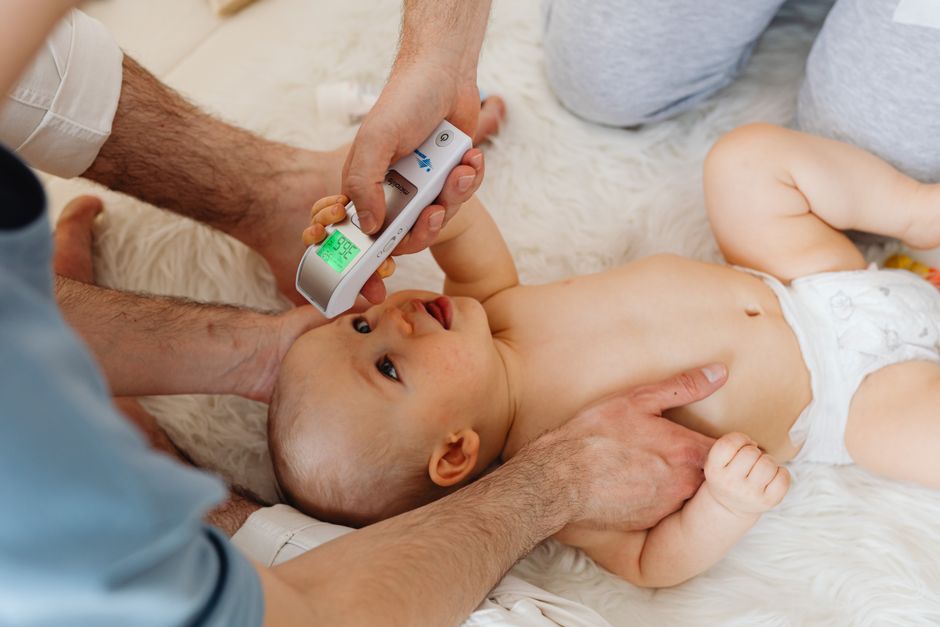
There is no medication that kills the measles virus. Treatment is supportive, meaning you help your baby’s body cope while the immune system clears the infection. This is not a shortcut — it is the honest clinical reality, and it is what pediatricians do too.
Supportive care generally includes:
- Fever management. Acetaminophen or ibuprofen can reduce fever and discomfort. Ibuprofen should not be given to babies under 6 months. Aspirin should never be given to a child with a viral illness because of the risk of Reye syndrome, a rare but serious condition.
- Fluids. Offer breast milk, formula, or oral rehydration solution frequently. Babies with fever and poor appetite dehydrate faster than adults.
- Rest. Sleep is when the immune system does much of its work. Do not try to push activity.
- Humidity and nasal care. A cool-mist humidifier and saline drops can ease a stuffy nose and cough.
- Eye comfort. Measles often causes red, light-sensitive eyes. Keep rooms dim and wipe discharge gently with a clean damp cloth.
Vitamin A deserves a specific mention. The World Health Organization recommends vitamin A supplementation for children with measles, and it is associated with reduced mortality in children in settings where vitamin A deficiency is common. In the United States, this is generally handled by a clinician rather than at home. Do not give high-dose vitamin A to a baby on your own — too much vitamin A can be toxic.
Antibiotics do not treat measles. They are sometimes prescribed for secondary bacterial infections like ear infections or pneumonia, but only when a clinician identifies one.
What Are The Symptoms And How Long Does Measles Last?
Measles symptoms usually appear 7 to 14 days after exposure, though it can take up to 21 days. The first signs look like a bad cold: fever, runny nose, cough, and red watery eyes.
Then come Koplik spots — tiny white spots with a bluish-white center on the inside of the cheeks. They appear 1 to 2 days before the rash and are a distinctive early sign, though they are easy to miss.
The rash follows. It typically starts at the hairline and on the face, then spreads downward over the next few days to the trunk, arms, and legs. The fever often spikes again when the rash appears.
The illness usually runs about 7 to 10 days from the first symptoms to recovery, though the cough can linger for a week or two afterward. A baby with measles should be considered contagious from about 4 days before the rash appears until about 4 days after.
Some babies develop complications. Ear infections and diarrhea are common. Pneumonia is the most frequent serious complication and the leading cause of measles-related death in young children. Encephalitis, or brain swelling, is rare but serious.




When Should You Call A Doctor Or Go To The Emergency Room?
Call a doctor as soon as you suspect measles, before going anywhere in person. This matters for a practical reason: measles is highly contagious, and clinics and emergency rooms need to prepare so they do not expose other patients, including other babies.
Call 911 or go to the emergency room right away if your baby has:
- Trouble breathing, rapid breathing, or grunting sounds
- Blue or gray lips, tongue, or face
- A fever that will not come down, or a fever that returns after improving
- Unusual sleepiness, confusion, or difficulty waking
- A seizure
- Signs of dehydration — fewer wet diapers, no tears when crying, sunken soft spot on the head, dry mouth
- A rash that looks like small purple or red spots that do not fade when pressed
These signs can point to pneumonia, encephalitis, or another serious problem. Do not wait to see if they improve on their own.
Can Measles Be Prevented?
Yes. The MMR vaccine is highly effective at preventing measles. Two doses provide about 97 percent protection; one dose provides about 93 percent. This is one of the most well-established facts in preventive medicine.
In the United States, the first dose is typically given at 12 to 15 months, with the second dose at 4 to 6 years. For babies who will travel internationally or who live in an area with an active outbreak, public health guidance allows an early dose as young as 6 months. That early dose does not count toward the routine two-dose series, so the child still needs the standard doses later.
If your baby is too young for the vaccine and has been exposed to measles, talk to a doctor right away. Measles immune globulin can be given within 6 days of exposure to reduce the risk of infection in certain high-risk people, including infants. This is time-sensitive, so do not delay.
Because measles spreads through the air, keeping a sick person away from unvaccinated babies is important. But by the time symptoms appear, exposure has often already happened. This is why community vaccination rates protect infants who cannot yet be vaccinated themselves.
What Should You Expect During Recovery?
Most babies recover fully from measles, but recovery is not instant. The rash fades over about a week, often leaving a brownish discoloration that fades with time. The cough can last one to two weeks.
There is a lesser-known concern called immune amnesia. Research indicates that measles can wipe out part of the immune system’s memory of past infections and vaccines, leaving children more vulnerable to other illnesses for months to years afterward. This is one more reason measles is not a trivial disease, even when the acute illness passes.
Rarely, a fatal degenerative brain disease called subacute sclerosing panencephalitis (SSPE) can develop years after measles infection. It is uncommon — estimated at roughly 1 in 10,000 to 1 in 100,000 cases — but the risk is higher in children who had measles before age 2. There is no cure for SSPE.
Keep offering fluids and rest during recovery. Follow up with your pediatrician, especially if your baby had complications or if feeding and weight gain are a concern.
Frequently Asked Questions
Can a baby get measles if they have been vaccinated?
It is possible but uncommon. One dose of MMR provides about 93 percent protection and two doses about 97 percent, so a small number of vaccinated babies can still get measles, usually with milder symptoms.
How long is a baby with measles contagious?
A baby with measles is considered contagious from about 4 days before the rash appears until about 4 days after. Keep them away from unvaccinated people and call ahead before any medical visit.
Should I give my baby vitamin A for measles?
Vitamin A is recommended for children with measles in many clinical settings and is linked to lower mortality where deficiency is common. Do not give high doses at home — this should be directed by a doctor because too much vitamin A can be toxic.
What is the best way to prevent measles in a newborn?
Newborns are too young for the MMR vaccine, so protection depends on everyone around them being fully vaccinated. If your baby is exposed, call a doctor right away because immune globulin may help if given within 6 days.
