
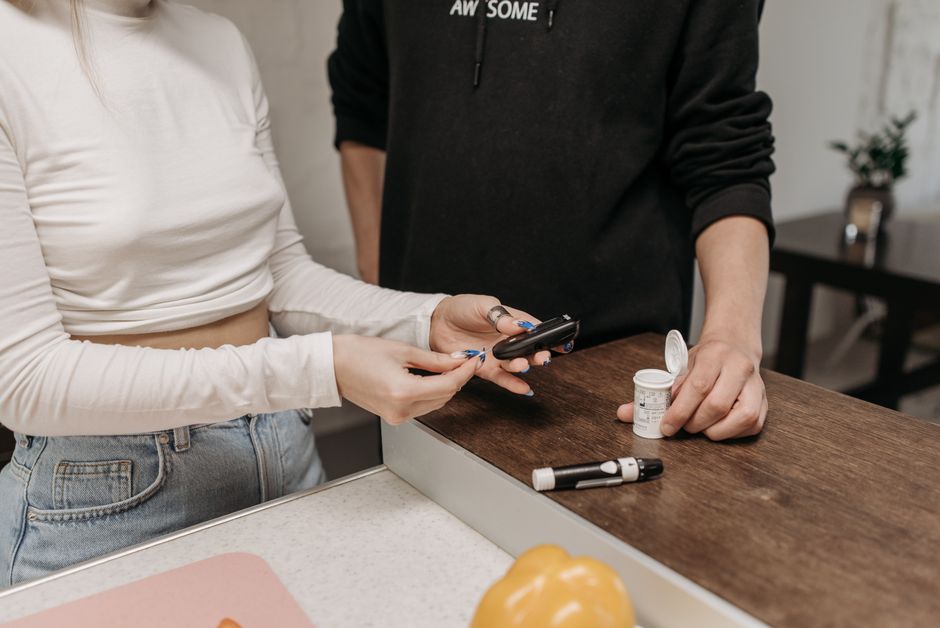
Hypoglycemia means your blood sugar has dropped below a safe level. For most people, that is below 70 mg/dL. When it happens, you need to act fast to bring your blood sugar back up. The standard treatment is the “Rule of 15” — eat 15 grams of fast-acting carbohydrate, wait 15 minutes, and check your blood sugar again. If it is still low, repeat the process until your blood sugar returns to a safe range.
What Are the First Signs of Low Blood Sugar?
Recognizing hypoglycemia early makes treatment easier and safer. Symptoms can come on quickly, sometimes within minutes. The most common early signs include shakiness, sweating, a rapid heartbeat, and sudden hunger. You may also feel anxious, irritable, or confused without a clear reason.
Some people experience headaches, blurred vision, or tingling around the mouth. Others feel weak or dizzy. If you have diabetes and take insulin or certain oral medications, you are at higher risk and should be familiar with your personal warning signs.
Severe hypoglycemia can cause more alarming symptoms. These include difficulty speaking, confusion, clumsiness, or behaving as if intoxicated. In the worst cases, a person may have seizures or lose consciousness. Do not wait for these severe signs. Treat low blood sugar as soon as you notice any symptom.
One important note: not everyone feels symptoms the same way. Some people develop hypoglycemia unawareness, meaning they do not notice their blood sugar dropping until it is dangerously low. If this applies to you, check your blood sugar more frequently, especially before driving or exercising.
How To Treat Hypoglycemia Step By Step
When your blood sugar is below 70 mg/dL, follow the Rule of 15. This is the standard approach recommended by clinical guidelines for conscious adults and children who can swallow safely.
Step 1: Confirm your blood sugar. If you have a glucose meter or continuous glucose monitor, check your level first. If you feel symptoms but cannot check, treat anyway. It is safer to treat a suspected low than to wait.
Step 2: Consume 15 grams of fast-acting carbohydrate. Fast-acting means your body absorbs it quickly and it raises blood sugar within minutes. Good options include:
- 4 glucose tablets (check the label — most brands contain 4 grams each)
- 1 tube of glucose gel (standard tubes contain 15 grams)
- 1/2 cup (4 ounces) of regular fruit juice, such as orange or apple juice
- 1/2 cup of a regular (non-diet) soft drink
- 1 tablespoon of sugar, honey, or corn syrup
- 1 small box of raisins (about 2 tablespoons)
Step 3: Wait 15 minutes. Give your body time to absorb the sugar and raise your blood glucose. Do not eat more during this window.
Step 4: Recheck your blood sugar. If it is still below 70 mg/dL, repeat the process. Consume another 15 grams of fast-acting carbohydrate and wait another 15 minutes.
Step 5: Eat a small snack once your blood sugar is above 70 mg/dL. This is a critical step many people skip. A snack with protein or complex carbohydrate — such as crackers with peanut butter, a small sandwich, or half a sandwich with milk — helps keep your blood sugar stable while your body recovers. This is especially important if your next full meal is more than an hour away.
If your blood sugar does not improve after two or three rounds of the Rule of 15, seek medical attention. Persistent hypoglycemia can indicate a more serious problem that needs professional evaluation.
What Foods Work Fastest for Low Blood Sugar?
Not all carbohydrates work the same way during a hypoglycemic episode. Fast-acting carbohydrates are simple sugars that enter your bloodstream quickly. They raise blood sugar within 10 to 15 minutes.
Glucose tablets are the most reliable option. They contain pure glucose, which your body absorbs directly without needing to break it down first. Glucose gel works similarly and is easy to swallow if you are feeling weak.
Fruit juice and regular soda work well because they contain simple sugars. Orange juice is a common choice. Regular soda — not diet — contains sugar that your body can use quickly.
Foods with fat, protein, or fiber are not ideal for the initial treatment. Chocolate, ice cream, cookies, and other sweets often contain fat, which slows digestion and delays the sugar from reaching your bloodstream. Peanut butter, nuts, and cheese are also too slow for the first step. They are useful later, as part of the stabilizing snack, but not for the immediate emergency.
Whole fruits like apples or bananas are better than nothing, but they contain fiber that slows sugar absorption. If you have no other option, eat a small piece of fruit and recheck your blood sugar sooner than 15 minutes to see if you need more.





How To Treat Severe Hypoglycemia When Someone Cannot Swallow
Severe hypoglycemia is a medical emergency. When a person is unconscious, having seizures, or too confused to swallow safely, do not give food or drink. They could choke. Do not put anything in their mouth.
If the person has a glucagon emergency kit, use it. Glucagon is a hormone that raises blood sugar by signaling the liver to release stored glucose. It comes as an injection kit or a nasal powder. Family members and caregivers of people with diabetes should know how to administer it before an emergency happens.
After giving glucagon, turn the person on their side and call emergency services. Glucagon can cause nausea and vomiting, so positioning them on their side helps keep their airway clear.
If no glucagon is available, call emergency services immediately. Emergency responders can administer intravenous glucose, which works fastest of all. Do not attempt to give anything by mouth until the person is fully conscious and able to swallow.
If the person is conscious but too confused to follow instructions, try glucose gel. You can squeeze a small amount into the inside of their cheek. This allows some absorption through the lining of the mouth. Still, call for medical help if they cannot follow the full treatment protocol.
What Causes Hypoglycemia in People Without Diabetes?
Hypoglycemia is most common in people with diabetes who take insulin or sulfonylurea medications. But it can happen in people without diabetes too. The causes are different and often require medical evaluation.
Reactive hypoglycemia occurs when blood sugar drops a few hours after eating a meal. The body releases too much insulin in response to a high-carbohydrate meal, causing blood sugar to fall too low afterward. Symptoms typically appear 2 to 4 hours after eating.
Fasting hypoglycemia happens when blood sugar drops after going without food for 8 hours or more. This can be caused by certain medications, alcohol consumption without food, critical illness, hormone deficiencies, or rare tumors that produce excess insulin.
Alcohol is a notable trigger. Drinking heavily without eating can cause hypoglycemia many hours later, sometimes while you sleep. Alcohol interferes with the liver’s ability to release stored glucose. This is why drinking on an empty stomach is risky, especially for people with diabetes.
If you do not have diabetes and experience repeated episodes of low blood sugar, see a doctor. Unexplained hypoglycemia needs proper diagnosis. Do not assume it is harmless or self-manage it long-term without medical guidance.
When Should You Seek Emergency Medical Care?
Most hypoglycemic episodes resolve with the Rule of 15. Some situations require immediate medical attention.
Seek emergency care if the person is unconscious, having seizures, or cannot be woken up. Call emergency services immediately. This is a life-threatening situation.
Seek medical help if your blood sugar does not rise above 70 mg/dL after two or three rounds of treatment. Persistent low blood sugar may indicate that something more serious is happening, such as an insulin overdose, a medication interaction, or an underlying medical condition.
If you take a sulfonylurea medication and develop hypoglycemia, you should contact your doctor even if you successfully treat the episode. These medications can cause prolonged hypoglycemia that recurs hours later. Your doctor may need to adjust your dose or monitor you closely.
Repeated episodes of hypoglycemia require medical review. Frequent lows suggest your diabetes medication doses may need adjustment. Do not simply keep treating episodes as they happen without addressing why they keep occurring.
How To Prevent Hypoglycemia From Happening Again
Prevention is the best treatment. Once you have recovered from an episode, think about what caused it and how to avoid a repeat.
If you take insulin or diabetes medications, take them exactly as prescribed. Do not skip meals after taking medication. The timing of your medication relative to your meals matters. Ask your doctor or diabetes educator if you are unsure how your medications align with your eating schedule.
Check your blood sugar regularly, especially before driving, exercising, or going to bed. Blood sugar can drop during physical activity and while you sleep. If your levels tend to run low at night, a bedtime snack may help.
Carry fast-acting carbohydrate with you at all times. Keep glucose tablets in your car, desk, and bag. You cannot treat what you do not have on hand. The cost of a few extra glucose tablets is small compared to the risk of an untreated low.
Wear medical identification if you take insulin or sulfonylureas. A bracelet or necklace that states you have diabetes helps emergency responders treat you correctly if you cannot speak for yourself.
If you experience hypoglycemia unawareness, work with your doctor. This condition can reverse over time if you avoid low blood sugar episodes for several weeks. Your doctor may recommend temporarily raising your blood sugar targets to retrain your body to recognize the symptoms.
Frequently Asked Questions
How long does it take to recover from hypoglycemia?
Most people feel better within 15 minutes of consuming fast-acting carbohydrates. Full recovery, including stable blood sugar, may take up to an hour, especially if you eat a stabilizing snack afterward.
Can you treat hypoglycemia without eating sugar?
No, fast-acting carbohydrate is the only reliable way to quickly raise blood sugar during a hypoglycemic episode. Protein and fat are too slow to correct an active low.
What is the fastest way to raise blood sugar?
Glucose tablets or gel work fastest because they are pure glucose that your body absorbs directly. Fruit juice and regular soda are close alternatives if tablets are not available.
Is 80 mg/dL considered hypoglycemia?
No, 80 mg/dL is within the normal fasting blood sugar range. Hypoglycemia is generally defined as blood sugar below 70 mg/dL, though symptoms can vary between individuals.
