
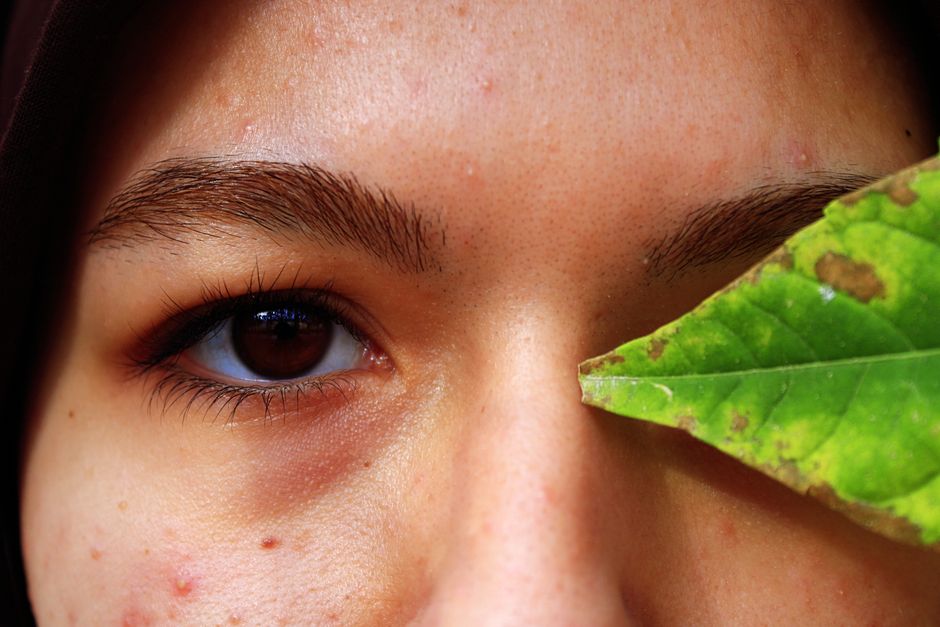
Eyelid dermatitis is inflammation of the thin skin on your eyelids. It usually shows up as redness, scaling, swelling, burning, or itching along the lid margin or the surrounding skin. Most mild cases can be managed at home by stopping the irritant or allergen, keeping the area clean, and using gentle moisturizers. If your eyelids are crusted, oozing, painful, or the rash keeps coming back, see a doctor — the skin here is among the thinnest on the body and absorbs topical products far more readily than skin elsewhere.
What Causes Eyelid Dermatitis?
There are three main types, and they often overlap. Knowing which one you have changes what will actually help.
Irritant contact dermatitis is the most common. It happens when something repeatedly damages the skin barrier — soap, shampoo, makeup remover, chlorine, or even frequent hand-to-eye contact. It is not an allergy. It is direct injury to the skin from exposure.
Allergic contact dermatitis is a delayed immune reaction. The eyelid skin is so thin that allergens penetrate easily. Common culprits include nail polish (the resin can transfer from your fingers to your eyes), fragrances, preservatives in cosmetics and eye drops, nickel, and certain topical antibiotics. The reaction typically appears 24 to 72 hours after contact, which makes the trigger hard to identify.
Atopic dermatitis is the chronic, itchy form linked to a personal or family history of eczema, asthma, or hay fever. On the eyelids it tends to be dry, scaly, and intensely itchy rather than sharply bordered.
Seborrheic dermatitis can also affect the lid margin and eyebrows, usually alongside flaking on the scalp. Blepharitis — inflammation of the eyelid margin itself — can look similar and often needs a different approach. If you are not sure which condition you have, that uncertainty matters, because treatments differ.
How To Treat Eyelid Dermatitis At Home
The first step is to stop whatever is triggering it. Without that, nothing else works well.
Wash your hands before touching your face. Then rinse the eyelids with lukewarm water — no soap, no scrubbing. Pat dry with a clean, soft cloth. Do not rub.
Apply a plain, fragrance-free moisturizer or ointment to the eyelid skin. Petrolatum-based ointments are often recommended because they are simple, occlusive, and rarely cause reactions. A thin layer is enough. Avoid anything labeled “cooling,” “soothing,” or “revitalizing” — those words usually signal added fragrance or botanicals that can worsen the problem.
Stop all eye makeup, eyeliner, mascara, and eye creams until the skin settles. This includes “hypoallergenic” products, which is a marketing term, not a regulated standard. Stop nail polish if you wear it — the resin in polish is a well-documented cause of eyelid reactions, and it transfers easily from your hands.
Cold compresses can reduce swelling and itching. Use a clean cloth, cool water, a few minutes at a time. Do not use ice directly on the eyelid.
Do not scratch or rub, even though it itches. Rubbing thickens the skin over time and makes the cycle worse.
If these steps do not improve things within a few days, or if the condition keeps returning, the trigger has not been removed or the diagnosis may be different.
Which Ingredients Should You Avoid?
If you are trying to identify a trigger, the list is long but well documented. These are the most common offenders in products that touch the eye area:
- Fragrance and essential oils (including “natural” ones like lavender and tea tree)
- Formaldehyde-releasing preservatives, often listed as quaternium-15, imidazolidinyl urea, or DMDM hydantoin
- Methylisothiazolinone and methylchloroisothiazolinone — common preservatives in cosmetics and wipes
- Propylene glycol
- Lanolin
- Nail polish resins, especially tosylamide and formaldehyde resin
- Neomycin and other topical antibiotics
- Benzalkonium chloride in some eye drops
Reading labels is tedious but often necessary. Patch testing by a dermatologist is the only reliable way to confirm which specific ingredient is responsible. Guessing based on a label alone frequently misses the real trigger.





Can You Use Hydrocortisone Cream On Your Eyelids?
This is where caution matters. Over-the-counter hydrocortisone 1% is sometimes used short-term on eyelid skin, but the eyelids absorb topical steroids far more than other areas. Prolonged use can cause skin thinning, which is difficult to reverse, and in some cases can raise eye pressure.
Some clinicians recommend a very thin layer of low-potency hydrocortisone for a few days during a flare. Others avoid steroids on the eyelids entirely and prefer non-steroidal options. There is no universal agreement, and the safest approach is to have a doctor look at it before starting any steroid near your eyes.
Never use a stronger prescription steroid on the eyelids unless a doctor specifically directs it. Never use it for weeks at a time. Never use it if you have any signs of infection — redness that is spreading, warmth, pus, or pain.
What About Oral Antihistamines?
Oral antihistamines can reduce itching, particularly if allergies are part of the picture. They do not treat the underlying skin inflammation. For eyelid dermatitis specifically, they may help you sleep through the itch, which has real value, but they are not a cure.
Topical antihistamines should not be applied to the eyelids. They can cause their own allergic reactions and worsen the problem.
When Should You See A Doctor?
See a doctor if any of these apply:
- The rash does not improve after a week of avoiding triggers and using gentle moisturizer
- It keeps coming back
- Your vision is affected
- There is pain, warmth, pus, or crusting along the lid margin
- One eye only is affected and it is getting worse
- You have a history of glaucoma or high eye pressure
- You are considering a steroid cream near the eye
A dermatologist or ophthalmologist can confirm the diagnosis, perform patch testing if allergy is suspected, and prescribe targeted treatment. Prescription options include calcineurin inhibitors such as tacrolimus or pimecrolimus, which do not thin the skin the way steroids can. These are often used for eyelid eczema and are generally considered safer for long-term use on thin skin, though they can sting when first applied.
How Long Does Eyelid Dermatitis Take To Heal?
If the trigger is identified and removed, mild irritant or allergic contact dermatitis typically improves within one to two weeks. The skin may stay dry or slightly discolored for longer as it rebuilds its barrier.
Atopic dermatitis is chronic. It can be managed but not cured. Flares come and go, often triggered by weather, stress, or exposure to irritants.
If the rash is not improving after two weeks of consistent trigger avoidance and gentle care, the diagnosis is probably wrong or the trigger has not been found. That is a signal to get medical input, not to try more products.
What Makes Eyelid Skin Different?
Eyelid skin is roughly the thinnest on the body — often described as less than 1 millimeter thick. It has very little subcutaneous fat and few sebaceous glands compared to other areas. That means it absorbs topical substances more readily, reacts faster, and shows damage sooner.
This is why products that are fine on your forearm can cause a reaction on your eyelid. It is also why steroid thinning happens faster here than elsewhere. The anatomy itself dictates the caution.
Frequently Asked Questions
Can I use Vaseline on eyelid dermatitis?
Petrolatum-based ointments like Vaseline are often recommended because they are simple, occlusive, and rarely cause allergic reactions. Apply a thin layer to clean, dry skin. They help the barrier heal but do not treat the underlying cause.
Is eyelid dermatitis contagious?
No. Eyelid dermatitis is an inflammatory or allergic reaction, not an infection, so it cannot spread to others. If there is crusting, pus, or warmth, that may indicate a separate infection and needs medical evaluation.
What is the fastest way to get rid of eyelid dermatitis?
Stop the trigger and stop all eye products. Then use a plain fragrance-free moisturizer and cool compresses. If it does not improve within a week, see a doctor — prescription non-steroidal options like tacrolimus may be needed.
Can stress cause eyelid dermatitis?
Stress does not cause it directly, but it can worsen flares of atopic dermatitis and slow healing. Managing stress is supportive, not curative. The primary driver is usually an irritant, an allergen, or underlying eczema.
