
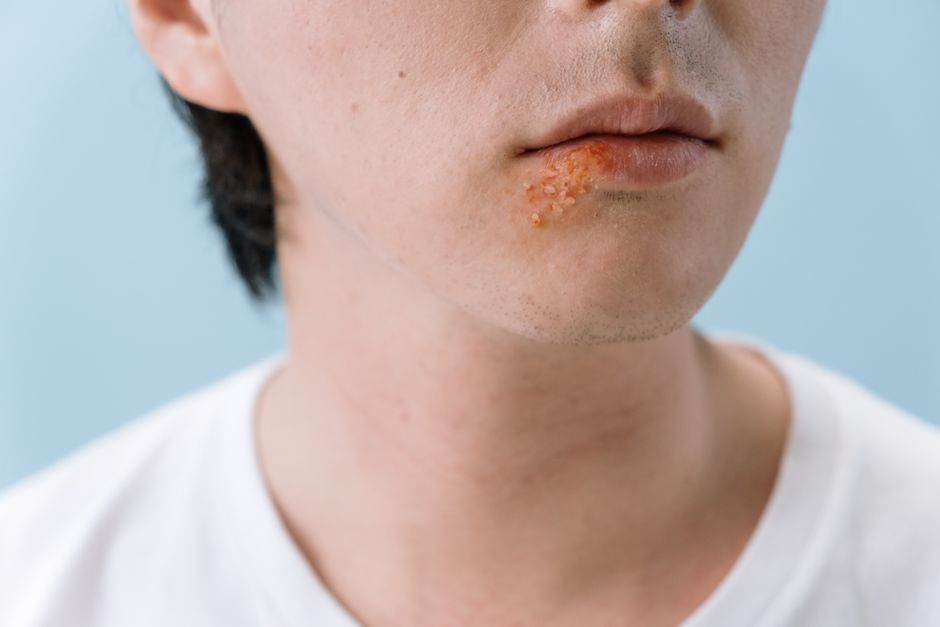
A cold sore on your lip feels urgent. You want it gone before it gets worse. The fastest way to treat one is to start antiviral medication at the very first tingle. Penciclovir cream (Denavir) and docosanol cream (Abreva) are available without a prescription and can shorten healing time by about a day if applied early. Prescription oral antivirals like valacyclovir (Valtrex) work faster and more reliably when taken within the first hour of symptoms. Nothing stops a cold sore that has already blistered — but starting treatment at the first sign gives you the best chance to reduce its size and duration.
What Causes a Cold Sore in the First Place?
Cold sores come from the herpes simplex virus type 1 (HSV-1). Most people get this virus as children through close contact like kissing or sharing utensils. Once the virus enters your body, it stays there forever. It hides in nerve cells near your cheekbone and remains inactive most of the time.
When something stresses your body, the virus reactivates. It travels down the nerve and breaks out on your lip. Common triggers include a cold or flu, too much sun, lack of sleep, stress, or hormonal changes. The CDC reports that about 50 to 80 percent of adults in the United States carry HSV-1. Many never get a cold sore. Others get them repeatedly.
Understanding this cycle matters because it changes your expectations. You are not curing the virus. You are managing an outbreak. The goal is to stop the virus from replicating fast enough to cause a visible blister.
What Is the Fastest Treatment That Actually Works?
Prescription oral antivirals are the fastest option. Valacyclovir (Valtrex) is the most commonly prescribed. Taken as two grams at the first tingle, it can stop the sore from forming entirely in some people. A study published in the Journal of Infectious Diseases found that early valacyclovir reduced healing time by about one to two days compared to placebo.
Topical antivirals work too, but slower. Penciclovir cream (Denavir) requires application every two hours while awake. Docosanol cream (Abreva) is available over the counter and blocks the virus from entering healthy cells. Neither is as powerful as oral medication because less of the drug reaches the deeper layers of skin where the virus is active.
If you get cold sores more than six times a year, your doctor may prescribe daily suppressive therapy. A low dose of valacyclovir taken every day can reduce outbreaks by 70 to 80 percent. This is not a cure, but it keeps the virus suppressed so you rarely see a sore.
How To Treat A Cold Sore On Your Lip Fast With Home Remedies
Home remedies are widely shared online. Most have weak evidence behind them. Ice can reduce swelling and pain by constricting blood vessels. Applying a cold compress for 10 minutes at a time during the first 24 hours may help. It will not kill the virus, but it can make the sore less noticeable.
Lysine supplements are popular. Some studies suggest that lysine may reduce the frequency of outbreaks when taken daily. The evidence is mixed. A 2017 review in the Journal of Clinical and Aesthetic Dermatology found no strong proof that lysine speeds healing once a sore appears. If you take it, know that it may help prevent outbreaks but likely won’t shorten an active one.
Tea tree oil and lemon balm cream are two natural options with some lab evidence of antiviral activity. Lemon balm extract has been studied in a few small human trials and showed a modest reduction in healing time. Tea tree oil can irritate skin if used undiluted. Neither should replace proven antiviral medication when speed matters.



What Not to Do When You Have a Cold Sore
Do not pick at the blister. This is the most common mistake. Picking spreads the virus to other parts of your lip and can cause a bacterial infection. It also slows healing and increases the chance of scarring.
Do not use alcohol or hydrogen peroxide directly on the sore. These dry out the skin but also damage healthy tissue around the sore. They can make the area more inflamed and take longer to heal. Stick to antiviral creams or plain petroleum jelly to keep the area moist.
Do not share towels, razors, lip balm, or drinking glasses while you have an active sore. The virus sheds from the blister and can infect someone else through broken skin or mucous membranes. You are contagious from the first tingle until the sore is completely scabbed over and healed.
Do not assume every sore on your lip is a cold sore. Canker sores are inside the mouth and are not caused by herpes. Impetigo is a bacterial infection that looks similar and requires antibiotics. If you are unsure, see a doctor for a swab test.
Comparison of Cold Sore Treatments
| Treatment | How It Works | Speed | Prescription Needed |
|---|---|---|---|
| Valacyclovir (Valtrex) | Stops virus replication | Fastest — can prevent blister | Yes |
| Penciclovir cream | Blocks virus entry into cells | Moderate — shortens healing by 1 day | Yes |
| Docosanol cream (Abreva) | Prevents fusion of virus to cell membrane | Moderate — shortens healing by 12-24 hours | No |
| Ice compress | Reduces swelling and pain | Fast for symptoms, does not kill virus | No |
| Lysine supplements | May reduce outbreak frequency | Not proven for active sores | No |
When Should You See a Doctor?
Most cold sores heal on their own within 7 to 10 days. You do not always need a doctor. But there are situations where medical care is important.
See a doctor if the cold sore spreads to your eyes. Herpes keratitis can cause corneal scarring and vision loss. If you feel eye pain, redness, or sensitivity to light, go to an eye doctor immediately.
See a doctor if you have a weakened immune system. People on chemotherapy, organ transplant recipients, or those with HIV may develop severe outbreaks that require intravenous antiviral medication. The same applies if the sore lasts longer than two weeks without healing.
See a doctor if you get outbreaks more than six times a year. Suppressive therapy can dramatically reduce the frequency and severity. A simple prescription can change your quality of life.
See a doctor if the sore becomes infected with bacteria. Signs include increasing redness, warmth, pus, or fever. Bacterial infections require antibiotics and do not respond to antiviral drugs.
Common Misconceptions About Cold Sores
One widespread myth is that cold sores only come from a fever or cold. The name is misleading. Any stressor can trigger an outbreak — sunburn, fatigue, menstruation, even dental work. The virus does not care why your immune system is busy. It just takes advantage.
Another myth is that you can catch a cold sore from a toilet seat or public surfaces. This is false. The herpes simplex virus dies quickly outside the body. Transmission requires direct contact with an active sore or with saliva that contains the virus. You cannot get it from a towel that was used hours ago.
Some people believe that once you have had one cold sore, you are immune to getting more. The opposite is true. Once the virus is in your body, it can reactivate repeatedly. You do not build immunity to future outbreaks. You can only manage them.
There is also a persistent idea that toothpaste dries out cold sores and speeds healing. This has no evidence behind it. Toothpaste contains ingredients like sodium lauryl sulfate that can irritate skin. It may make the sore feel drier temporarily, but it does not affect the virus. Stick to treatments that have been tested.
What About Laser Treatment for Cold Sores?
Low-level laser therapy is a newer option. Some dermatology clinics offer it. The idea is that a specific wavelength of light can inactivate the virus and reduce inflammation. A small study published in the Journal of Cosmetic and Laser Therapy found that a single laser session at the first sign of a cold sore reduced healing time by about two days.
This is not widely available yet. Most laser treatments cost between $50 and $150 per session and are not covered by insurance. The evidence is promising but limited to small studies. If you have easy access to a clinic that offers it, it may be worth trying. For most people, antiviral medication remains the more practical and proven option.
Frequently Asked Questions
Can you pop a cold sore like a pimple?
No. Popping a cold sore spreads the virus to surrounding skin and can cause infection. Let it heal naturally.
How long is a cold sore contagious?
You are contagious from the first tingle until the scab has completely fallen off and new skin has formed underneath.
Does toothpaste really help cold sores?
No. There is no evidence that toothpaste speeds healing and it can irritate the skin. Use antiviral cream instead.
Can you get a cold sore from stress alone?
Yes. Stress weakens your immune system which can trigger the dormant virus to reactivate and cause a sore.
