
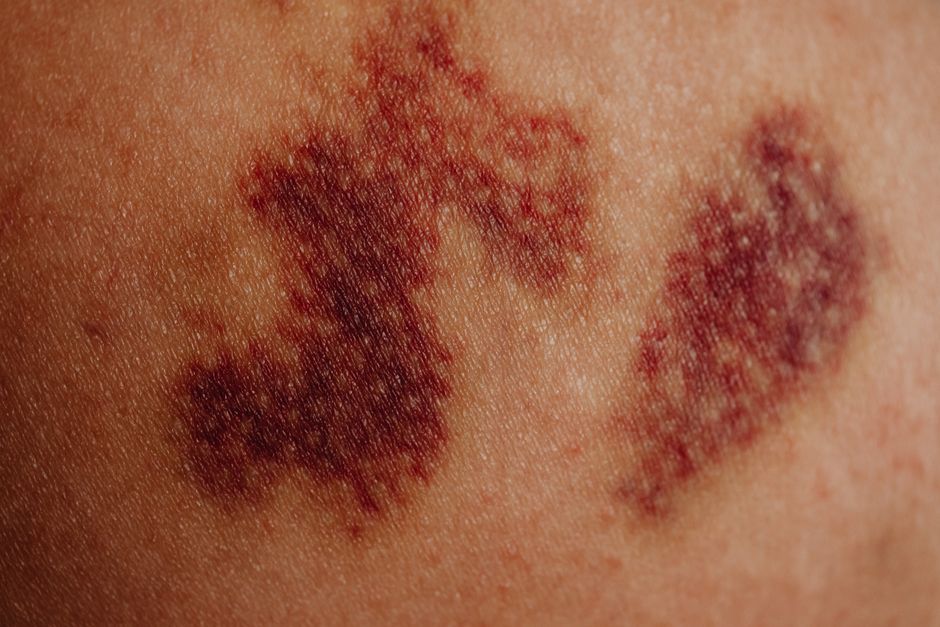
A bruise on your face is hard to hide, and it can take days to fade. The good news is that you can speed up the process with the right care. Start with cold therapy immediately, then switch to gentle heat after 48 hours, and protect the area from the sun. Most facial bruises heal within one to two weeks, but the right steps can help them fade faster and look less severe while they do.
What Happens When You Get A Bruise On Your Face?
A bruise forms when small blood vessels under your skin break. Blood leaks into the surrounding tissue, which causes the familiar black-and-blue mark. On the face, this happens easily because the skin is thin and the blood supply is rich.
Your body then breaks down that pooled blood. The color changes you see — from red to purple to green to yellow — are the stages of that breakdown. Hemoglobin in the blood changes chemical form as it is processed, which shifts the color of the bruise over time.
Facial bruises tend to heal faster than bruises elsewhere on the body. The face has excellent blood flow, which brings in the cells needed for repair. But the face is also more visible, so the bruise feels more disruptive than it would on your arm or leg.
What Should You Do In The First 48 Hours?
The first two days are when you have the most control over how large and dark the bruise becomes. Acting quickly matters.
Apply a cold compress to the area as soon as possible. Cold constricts the blood vessels, which reduces the amount of blood that leaks into the tissue. Use an ice pack wrapped in a thin cloth — never apply ice directly to skin. Keep it on for 15 to 20 minutes at a time, several times a day.
Keep your head elevated, especially when sleeping. Extra pillows help reduce blood pooling in the face, which can make the bruise and any swelling worse. This is the same principle used after facial surgery or dental work.
Avoid anything that thins your blood during this window. That includes aspirin, ibuprofen, and alcohol. These can increase bleeding under the skin and make the bruise larger. If you take a blood thinner for a medical condition, do not stop it without talking to your doctor.
What Helps After The First 48 Hours?
Once 48 hours have passed, the bleeding under the skin has mostly stopped. Now the goal shifts to helping your body clear the pooled blood.
Switch from cold to gentle heat. A warm compress applied for 10 to 15 minutes a few times a day increases blood flow to the area. This helps carry away the broken-down blood cells faster. The warmth should be comfortable, never hot enough to burn or irritate the skin.
Gentle massage can also help, but only after the first two days. Light pressure around the bruise — not directly on it — can encourage lymphatic drainage. Do not press hard. The area is still tender, and aggressive massage can worsen the injury.
Keep the area moisturized. Bruised skin can become dry and flaky as it heals. A simple fragrance-free moisturizer keeps the skin barrier intact and helps the surface look healthier while the deeper bruise fades.



Can Arnica Or Vitamin K Creams Help?
Arnica is one of the most commonly recommended remedies for bruising. Some research suggests that arnica gel applied topically may reduce bruise size and pain. The evidence is not strong, and results vary between studies, but arnica is generally safe when used on unbroken skin.
Vitamin K cream has also been studied for bruising. Some clinical trials have found that it helps reduce bruise severity, particularly after cosmetic procedures. Other studies show no benefit. The evidence is mixed, but the cream is low-risk for most people.
Neither treatment will make a bruise disappear overnight. If you choose to try one, follow the product instructions and stop if your skin becomes irritated. Do not apply these products to broken skin or open wounds.
What About Makeup And Sun Protection?
You do not have to stay home while a facial bruise heals. Color-correcting makeup can make the bruise far less noticeable. A yellow or peach corrector applied under concealer neutralizes the purple and blue tones of a fresh bruise.
Sun protection is not about cosmetics — it is about healing. A healing bruise involves skin that has been stretched and damaged. UV exposure can darken the area and slow the repair process. Apply a broad-spectrum sunscreen with at least SPF 30 to the bruised area if it will be exposed to sunlight.
Once the bruise fades, the skin may be temporarily more sensitive to sun. Keep protecting the area for a few weeks after the bruise is gone.
What Foods Or Supplements Support Bruise Healing?
Your body needs certain nutrients to repair damaged tissue and clear the pooled blood. A well-balanced diet provides most of what you need.
Vitamin C is essential for collagen production, which helps rebuild the skin and blood vessel walls. Good sources include citrus fruits, bell peppers, broccoli, and strawberries. Vitamin K plays a direct role in blood clotting, so it is involved in stopping the initial bleed. Leafy greens like spinach and kale are rich sources.
Some people take bromelain, an enzyme from pineapple, to reduce bruising. Some studies suggest it may help, but the evidence is limited and dosing is not standardized. No clinical guidelines currently exist for using bromelain specifically to treat bruises.
Supplements are not a quick fix. A bruise that has already formed will not vanish because you ate an orange. But giving your body the nutrients it needs supports the normal healing process.
When Should You See A Doctor About A Facial Bruise?
Most facial bruises are minor and heal on their own. But some situations require medical attention.
See a doctor if the bruise is accompanied by severe pain, vision changes, difficulty breathing, or trouble moving your jaw. These symptoms can indicate a fracture or a more serious injury. A bruise that continues to expand after 48 hours is also a reason to seek care.
Bruising that appears without any known injury is different. If you notice frequent or unexplained bruises on your face or body, that warrants a medical evaluation. It can be a sign of a bleeding disorder, a vitamin deficiency, or a medication side effect.
If you hit your head and lost consciousness, even briefly, seek emergency care. A facial bruise from a fall or blow to the head should be evaluated by a medical professional to rule out a concussion or other head injury.
How Long Does A Facial Bruise Take To Heal?
A typical facial bruise takes one to two weeks to fully fade. The timeline depends on the severity of the injury and your individual healing rate.
You will notice color changes over that period. The bruise may look worse on day two or three before it starts to improve. This is normal. The dark purple color means blood is pooling; the yellow-green phase means your body is actively clearing it.
If a bruise shows no sign of improvement after two weeks, or if it is still painful, have it checked. Most bruises resolve completely, but persistent ones can indicate an underlying issue.
Does Age Affect How Fast A Bruise Heals?
Yes. As you age, your skin becomes thinner and the blood vessel walls become more fragile. This means older adults bruise more easily and the bruises often look more dramatic.
Healing also slows with age. The cellular processes that clear the pooled blood and rebuild tissue become less efficient over time. A bruise that might take five days to fade in a 25-year-old can take two weeks in a 65-year-old.
There is not much you can do to reverse this process. But protecting your skin from sun damage over a lifetime helps maintain its thickness and resilience. Sunscreen is not just about preventing cancer — it preserves the structural health of your skin.
Are There Any Home Remedies That Do Not Work?
Some popular remedies for bruising have no evidence behind them. Raw onion slices, vinegar, and toothpaste are sometimes suggested online. None of these have been shown to speed up bruise healing, and some can irritate the skin.
Witch hazel is sometimes recommended as an astringent. It may temporarily tighten the skin, but there is no evidence it affects the blood pooling beneath it. The same applies to cold tea bags — the caffeine and tannins do not penetrate deeply enough to change how a bruise heals.
If a remedy sounds creative, it probably lacks research support. Stick with cold, heat, gentle massage, and sun protection. Those are the interventions with at least some evidence or a clear physiological basis.
Frequently Asked Questions
Should I ice a facial bruise or use heat?
Use ice for the first 48 hours to limit blood pooling, then switch to gentle heat to help your body clear the blood faster.
Can makeup make a bruise heal slower?
No, makeup does not slow healing as long as the skin is not broken and you remove it gently at the end of the day.
Why is my bruise turning yellow?
Yellow is a normal stage of healing — it means your body is breaking down the hemoglobin from the leaked blood.
When should I worry about a bruise on my face?
Seek medical care if you have vision changes, severe pain, trouble breathing, or if the bruise keeps expanding after 48 hours.
