
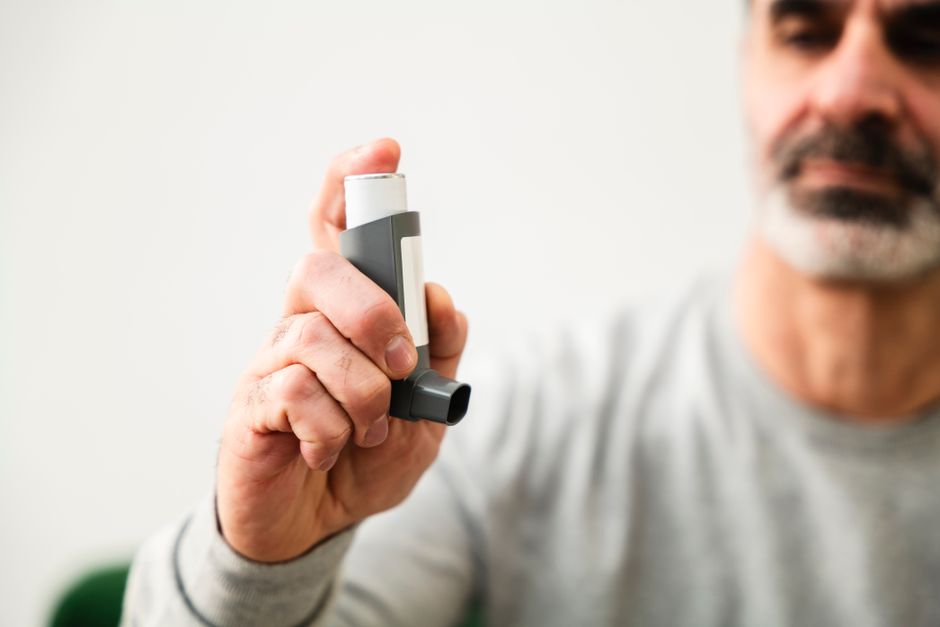
An asthma attack happens when the muscles around your airways tighten and the airway lining swells, making it hard to move air. At home, the first step is to sit upright, stay calm, and use your rescue inhaler as prescribed. If symptoms do not improve quickly or breathing becomes difficult, call 911 — hospital treatment with oxygen and medications can be life-saving.
What Happens During an Asthma Attack?
Asthma is a chronic condition in which the airways are inflamed much of the time, even when you feel fine. During an attack, three things happen at once. The smooth muscle wrapped around the airways contracts. The airway lining swells and produces extra mucus. Together, these narrow the passage for air.
Exhaling becomes harder than inhaling. That is why wheezing — a whistling sound — is common, though not everyone wheezes. Some people mainly cough. Others feel chest tightness, like a band squeezing the ribs.
A mild attack may ease with a rescue inhaler within minutes. A severe attack does not respond well and can become an emergency. The line between the two is not always obvious at the start, which is why knowing the warning signs matters.
How To Treat an Asthma Attack at Home
Home treatment works for mild attacks when you have a rescue inhaler and an asthma action plan from your doctor. An action plan is a written set of steps that tells you what to do based on your symptoms and peak flow readings.
Start by sitting upright. Do not lie down. Sitting lets your diaphragm and chest muscles work more efficiently. Try to slow your breathing. Panic tightens muscles and makes breathing harder, so a calm, steady pace helps.
Use your rescue inhaler. Most rescue inhalers contain albuterol, a short-acting beta-agonist that relaxes the airway muscles. Follow the instructions your doctor gave you. If you do not have specific instructions, the general approach is one to two puffs, repeated as directed on your action plan. A spacer can help more medicine reach your lungs, especially if you use a metered-dose inhaler.
Move away from whatever may have triggered the attack — smoke, dust, strong fumes, cold air, or an allergen. If you have a peak flow meter, check your reading and compare it to your personal best.
Give the medicine a few minutes to work. If your breathing improves and stays better, you can usually continue managing at home and follow up with your doctor. If it does not improve, or gets worse, that is the signal to seek emergency care.
When Should You Go to the Hospital?
Go to the hospital or call 911 when home treatment is not enough. Do not wait to see if things improve on their own. Asthma can worsen quickly, and delays are dangerous.
Call 911 or go to an emergency room if you notice any of these:
- Your rescue inhaler is not helping, or relief wears off within minutes
- You are breathing so hard you cannot finish a sentence
- Your lips, face, or fingernails turn blue or gray
- Your chest and neck muscles pull in with each breath
- You cannot walk or talk without stopping for air
- Your peak flow reading drops well below your usual range
- Symptoms keep getting worse despite treatment
Blue lips and struggling to speak are late warning signs. Do not wait for them. If you are unsure whether an attack is serious, treat it as serious and get help.





What Happens in the Hospital?
Hospital treatment aims to open the airways fast and get oxygen into your blood. Staff will check your oxygen level, usually with a small clip on your finger, and may give you oxygen through a mask or nasal tube.
You will likely receive medications through a nebulizer — a machine that turns liquid medicine into a fine mist you breathe in. Nebulized albuterol, sometimes combined with ipratropium, is common. Ipratropium is a different type of bronchodilator that can add to the effect of albuterol in moderate to severe attacks.
If the attack does not respond, doctors may give corticosteroids. These reduce airway swelling, but they take hours to work, so they are not a quick fix. They are used to prevent a rebound and to help you recover. Some people need corticosteroids by mouth or by injection.
In severe cases, you may get medications through an IV or, rarely, breathing support. Most asthma attacks treated in the emergency department improve with bronchodilators and steroids, and many people go home the same day. Admission is more likely if the attack was severe or does not improve with initial treatment.
What Is an Asthma Action Plan and Why Does It Matter?
An asthma action plan is a written guide, usually divided into green, yellow, and red zones, that tells you how to manage your asthma day to day and what to do when symptoms flare. Your doctor fills it out based on your history and peak flow numbers.
The plan removes guesswork. During an attack, you may not think clearly, and a plan tells you exactly when to use your inhaler, when to add other medicines, and when to call for help. People with a written plan tend to recognize worsening asthma sooner.
If you have asthma and do not have an action plan, ask your doctor for one. Review it at least once a year, and any time your symptoms or medicines change.
What Are the Warning Signs an Attack Is Getting Worse?
Asthma often gives warning signs before a full attack. Catching them early is one of the most useful things you can do. Common early signs include coughing, especially at night, chest tightness, and needing your rescue inhaler more often than usual.
A drop in your peak flow reading can show up before you feel much different. That is why tracking peak flow can help some people, especially those with moderate to severe asthma.
Signs that an attack is becoming serious include:
- Rescue inhaler needed more often, or helping less
- Waking at night because of breathing problems
- Feeling unable to keep up with normal activity
- Breathing faster than usual at rest
If you notice these, follow your action plan and contact your doctor. Do not wait for the attack to become severe.
Can You Prevent Asthma Attacks?
You cannot prevent every attack, but you can lower how often they happen and how bad they get. The most important step is controlling the underlying inflammation with the right long-term treatment. Many people with persistent asthma need a daily controller medicine, often an inhaled corticosteroid, even when they feel well.
Rescue inhalers treat symptoms. They do not treat the inflammation that causes attacks. Relying on a rescue inhaler alone, without controller treatment, is a common reason attacks keep happening.
Other steps that help:
- Identify and avoid your triggers where possible
- Take controller medicines as prescribed, every day
- Get a flu vaccine, since respiratory infections can trigger attacks
- Keep your rescue inhaler with you at all times
- Follow your action plan and review it with your doctor
If you find you are using your rescue inhaler often, that is a sign your asthma is not well controlled. Talk to your doctor about adjusting your treatment.
Frequently Asked Questions
Can I treat an asthma attack without an inhaler?
No reliable home method replaces a rescue inhaler, so if you do not have one and are struggling to breathe, seek emergency care. Sitting upright and staying calm can help a little, but they are not a substitute for medicine.
How long should it take for a rescue inhaler to work?
A rescue inhaler usually eases mild symptoms within minutes. If it does not help within a few minutes, or relief fades quickly, treat it as an emergency and get help.
When should I call 911 for an asthma attack?
Call 911 if your inhaler is not helping, you cannot speak in full sentences, or your lips or fingernails turn blue or gray. These are signs of a severe attack that needs emergency treatment.
Can a severe asthma attack be treated at home?
No. A severe attack needs oxygen and medications that only a hospital can provide, and waiting can be dangerous. If home treatment is not working, go to the emergency room or call 911.
