
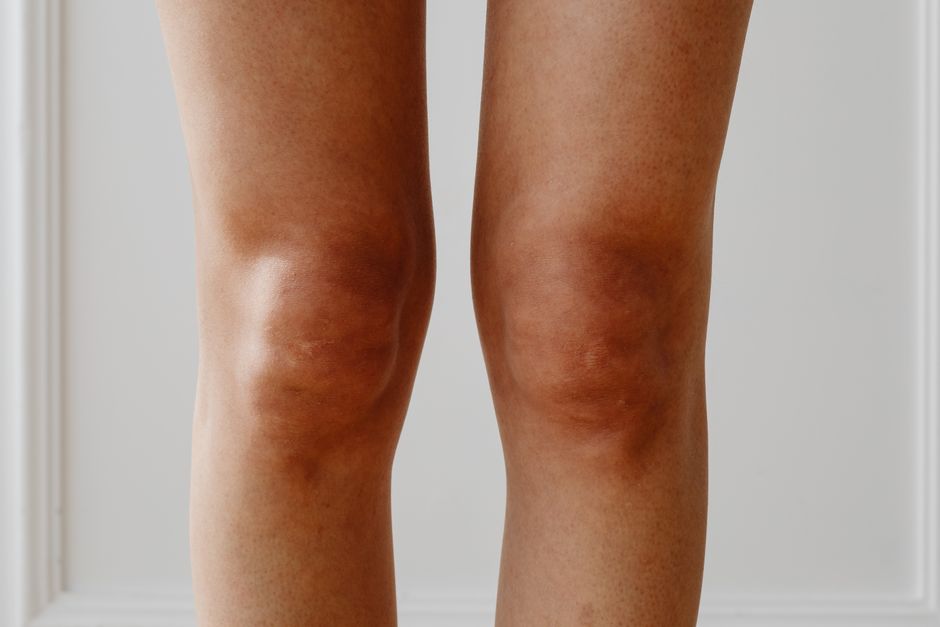
A knee that suddenly buckles or gives out is frightening. It can happen on stairs, on a walk, or just when you stand up. The feeling that your leg will no longer support you is a clear sign that something in the joint is not working correctly. Treatment depends entirely on why the knee is failing. For a first-time incident without severe pain or swelling, rest, ice, and a temporary brace may be enough. However, if the knee locks, swells significantly, or gives out repeatedly, you need a medical evaluation to rule out ligament tears or cartilage damage.
What Does “Giving Out” Actually Mean?
Knee instability is not the same as knee pain. When patients say their knee “gives out,” they usually describe a sudden, involuntary loss of support. The knee buckles and they must catch themselves to avoid falling. This is a mechanical failure of the joint, not just a pain response.
True instability often points to a structural problem. The knee relies on ligaments, cartilage, and muscles to stay aligned. If one of those structures fails, the joint can shift or slip. In some cases, the kneecap (patella) slides out of its groove. In other cases, the shinbone (tibia) moves too far forward or sideways relative to the thighbone (femur). This movement is what you feel as giving way.
What Causes a Knee to Give Out?
Several distinct problems can cause the knee to buckle. Identifying the cause is the first step in treatment because each requires a different approach.
Ligament injuries are a common culprit. The anterior cruciate ligament (ACL) and the medial collateral ligament (MCL) are frequently injured during sports or twisting movements. A torn ACL often causes immediate swelling and a feeling of the knee shifting forward. The posterior cruciate ligament (PCL) is less common but can cause the shinbone to sag backward.
Cartilage damage is another major cause. The meniscus is the C-shaped cartilage that cushions the knee. A torn meniscus can create a flap that catches in the joint. When this happens, the knee may lock or give way because the torn piece blocks normal movement.
Patellar instability occurs when the kneecap slides out of its groove. This is more common in younger people and those with shallow grooves or loose ligaments. The knee gives out when the kneecap dislocates or nearly dislocates.
Muscle weakness can also cause instability. The quadriceps muscles in the front of the thigh are the primary shock absorbers for the knee. If these muscles are weak or fatigued, the knee may buckle under load. This is often seen in older adults or after prolonged inactivity.
How To Treat A Knee That Gives Out: Immediate Steps
For a sudden onset of giving out, the first 48 hours are critical. Stop the activity that caused the problem. Continuing to walk on an unstable knee can worsen the injury.
Apply ice to the knee for 15 to 20 minutes every few hours. This helps reduce swelling and pain. Use a compression wrap or sleeve to provide gentle support. Elevate the leg when sitting or lying down to help fluid drain from the joint.
Over-the-counter pain relievers like ibuprofen or acetaminophen can help manage discomfort. Follow the dosing instructions on the label. Do not take these medications for more than a few days without consulting a doctor.
If the knee feels stable and the pain is mild, you can try walking with a cane or crutch for support. A simple knee brace with hinges can also provide stability during the early healing phase. These measures are temporary. They are meant to get you through the first few days, not to solve the underlying problem.



When to See a Doctor Immediately
Some symptoms demand urgent medical attention. Do not wait to see if they improve on their own.
Seek care right away if the knee locks and you cannot straighten it. This often means a torn meniscus is physically blocking the joint. Immediate evaluation is also needed if the knee swells significantly within a few hours of the injury. Rapid swelling usually indicates bleeding inside the joint, which suggests a ligament tear or fracture.
You cannot bear weight on the leg. You see obvious deformity or misalignment. You feel numbness or tingling below the knee. Any of these signs require prompt evaluation. An orthopedic doctor or emergency department can perform imaging tests to identify the specific injury.
Do not assume a giving-out episode is just a sign of aging. While arthritis can cause instability, sudden buckling in a previously stable knee is not normal. It warrants investigation.
Diagnostic Tests Your Doctor May Order
A physical exam is the first step. Your doctor will move your knee through different positions to test ligament integrity and joint stability. They may use specific maneuvers like the Lachman test for the ACL or McMurray test for meniscus tears.
X-rays are useful for ruling out fractures and assessing joint alignment. They do not show soft tissues like ligaments or cartilage. For those structures, an MRI is the standard imaging tool. An MRI provides detailed images of the ligaments, meniscus, and surrounding tissues.
In some cases, your doctor may order a CT scan or ultrasound. These are less common but may be useful for specific concerns. The choice of imaging depends on your symptoms and physical exam findings.
Non-Surgical Treatment Options
Many knee instability issues respond to conservative treatment. Physical therapy is the cornerstone of non-surgical care. A physical therapist will design a program to strengthen the quadriceps, hamstrings, and hip muscles. Stronger muscles support the knee and reduce the load on ligaments and cartilage.
Balance training is also important. Exercises like single-leg stands and stability board work help retrain the muscles to react quickly when the knee starts to give way. This neuromuscular training can prevent future episodes.
Bracing may be helpful for certain conditions. A patellar stabilizing brace can help keep the kneecap in its groove. A functional brace may be recommended for ACL injuries in athletes who want to return to sport without surgery. These braces do not fix the injury. They provide external support while the muscles and ligaments heal.
Corticosteroid injections can reduce inflammation in the joint. These are more helpful for arthritis-related pain than for structural instability. Hyaluronic acid injections, sometimes called viscosupplementation, can lubricate the joint and provide temporary relief for osteoarthritis. The evidence for their effectiveness is mixed, and results vary between individuals.
Surgical Treatment Options
Surgery is not the first choice for most knee instability. It becomes necessary when conservative treatment fails or when the injury is severe enough that healing cannot occur without intervention.
Complete ACL tears often require surgical reconstruction, especially in younger or active patients. The surgeon replaces the torn ligament with a graft from your own body or a donor. Recovery takes six to twelve months with intensive rehabilitation.
Meniscus tears may be repaired or partially removed depending on the location and size of the tear. Some tears heal on their own with rest. Others require arthroscopic surgery to trim the damaged portion or stitch the tear together.
Patellar instability may require surgery if dislocations recur despite physical therapy. Procedures can tighten loose ligaments or realign the kneecap groove. These are specialized operations that require an experienced orthopedic surgeon.
For severe arthritis that causes instability, a partial or total knee replacement may be the final option. This is a major surgery reserved for cases where the joint surface is significantly worn down and conservative measures no longer provide relief.
Preventing Future Episodes
Once the acute injury has healed, prevention becomes the priority. A knee that has given out once is more likely to do it again if you do not address the root cause.
Strengthening the quadriceps is the single most effective preventive measure. Simple exercises like straight leg raises, wall sits, and leg presses build the muscles that protect the knee. Start with low resistance and increase gradually to avoid overloading the joint.
Maintaining a healthy weight reduces the force placed on the knee with every step. Excess body weight significantly increases the risk of knee osteoarthritis and instability. Even modest weight loss can reduce symptoms.
Wearing appropriate footwear matters. Shoes with good arch support and cushioning absorb shock and improve lower leg alignment. High heels and worn-out shoes can increase stress on the knee.
Warm up properly before exercise. Cold muscles and ligaments are less pliable and more prone to injury. A five-minute warm-up that includes light cardio and dynamic stretching prepares the knee for activity.
Frequently Asked Questions
Can a knee that gives out heal without surgery?
Yes, many causes of knee instability improve with physical therapy and activity modification. Ligament sprains and muscle weakness often respond well to conservative treatment.
Is a knee brace helpful for a knee that gives out?
A brace can provide temporary support and improve confidence during activity, but it does not fix the underlying structural problem. Use a brace as directed by a medical professional while you work on strengthening the surrounding muscles.
How long does it take to recover from a knee giving out?
Recovery time ranges from a few weeks for mild sprains to six to twelve months after ligament reconstruction surgery. The timeline depends entirely on the specific injury and your adherence to rehabilitation.
What is the fastest way to strengthen a weak knee?
Consistent quadriceps strengthening exercises are the fastest reliable approach. Straight leg raises and wall sits performed daily can build noticeable strength within several weeks when done correctly.
