
Sickle cell disease is a group of inherited blood disorders that affect hemoglobin, the protein in red blood cells that carries oxygen. Testing for it is straightforward in concept but differs depending on why you are being tested and how old you are. A newborn screening test, a diagnostic test for symptoms, and a carrier test for family planning all use similar laboratory methods but serve different purposes.
How To Test For Sickle Cell At Every Age
The test itself is a blood test. What changes with age is the reason for testing, the type of sample collected, and how results are interpreted.
In newborns, testing happens as part of mandatory newborn screening in all 50 US states. A few drops of blood are collected from a heel prick, usually within the first 24 to 48 hours after birth, and sometimes repeated at about two weeks. The sample is sent to a state laboratory and screened for sickle cell disease and other hemoglobin conditions.
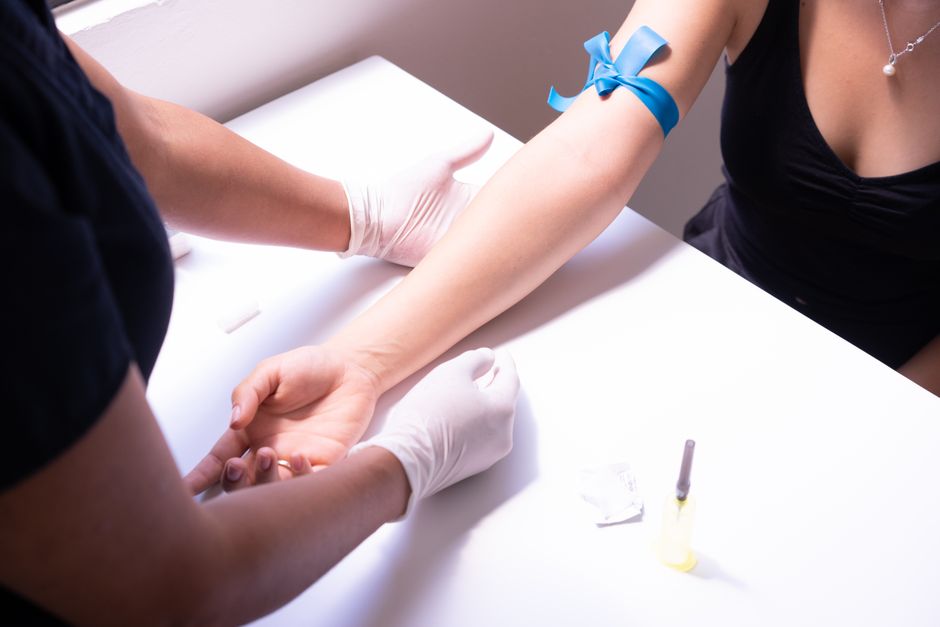
For older children and adults, a standard blood draw from a vein is used. The same laboratory methods apply. The difference is that outside the newborn period, testing is usually done because of symptoms, a family history, or a desire to know carrier status.
Age does not change the accuracy of the test. It changes the context. A newborn with sickle cell disease may not yet show symptoms, so screening is the only way to identify the condition early. An adult with unexplained pain or anemia is tested to find a cause.
What Are the Different Types of Sickle Cell Tests?
Several laboratory methods can detect sickle cell disease or sickle cell trait. They are not interchangeable in every situation, and some are used together.
- Hemoglobin electrophoresis: This separates different types of hemoglobin based on electrical charge. It can identify hemoglobin S (the sickle variant), hemoglobin A (normal), and other variants like hemoglobin C or beta-thalassemia. It is one of the most widely used confirmatory tests.
- High-performance liquid chromatography (HPLC): This method separates hemoglobins by how they interact with a column. It is highly accurate and is often used in newborn screening programs.
- Isoelectric focusing: Another separation method, also common in newborn screening.
- Sickle solubility test (sickledex): A rapid screening test. It can tell you whether hemoglobin S is present but cannot distinguish between sickle cell trait and sickle cell disease. A positive result must be confirmed with electrophoresis or HPLC.
- DNA testing: This looks directly at the HBB gene for the specific mutation that causes sickle hemoglobin. It is used when other tests are unclear, for prenatal testing, or for carrier testing when results need to be definitive.
One important clarification: a complete blood count (CBC) is not a sickle cell test. It can show anemia or abnormal red blood cell shapes, but it cannot diagnose sickle cell disease or trait. A CBC may prompt further testing, but it does not replace it.
How Is Sickle Cell Tested in Newborns?
Newborn screening for sickle cell disease is universal in the United States. Every baby born in a US hospital or birthing center is tested, usually before discharge.
The sample is collected by pricking the baby’s heel and placing drops of blood on a special filter paper card. The card is dried and sent to a state laboratory. Results are typically available within a few days to a few weeks, depending on the state.
If the screening test is positive or inconclusive, the baby’s doctor is notified and follow-up testing is arranged. This usually involves a confirmatory test such as hemoglobin electrophoresis or HPLC using a fresh blood sample.
Newborn screening is critical because early diagnosis allows early treatment. Babies with sickle cell disease are at risk for serious infections, and preventive measures — including certain vaccinations and daily antibiotics in early childhood — are started as soon as the diagnosis is confirmed. Without screening, these measures would be delayed until symptoms appear, which can be too late.
It is worth noting that newborn screening identifies sickle cell disease and sickle cell trait. Trait results are also reported, though laws about how and when trait information is shared vary by state.





How Do You Test for Sickle Cell Trait?
Sickle cell trait means a person carries one copy of the sickle hemoglobin gene and one normal copy. People with trait usually have no symptoms and a normal life expectancy. But they can pass the gene to their children.
Testing for trait uses the same laboratory methods as testing for disease — hemoglobin electrophoresis, HPLC, or DNA testing. A solubility test alone is not enough because it cannot tell trait from disease.
Many people discover they have trait through newborn screening, through testing during pregnancy, or through screening when a family member is diagnosed. Some people seek testing before having children to understand their risk of passing the condition on.
If both parents have sickle cell trait, each pregnancy carries a 25% chance of the child having sickle cell disease, a 50% chance of the child having trait, and a 25% chance of the child having neither. These probabilities are the same for every pregnancy.
There is no age limit for trait testing. It can be done at any point in life.
When Should You Get Tested for Sickle Cell?
Newborns are tested automatically. For everyone else, testing is recommended in several situations.
- You have symptoms that could suggest sickle cell disease, such as episodes of severe pain, unexplained anemia, frequent infections, or swelling in the hands and feet.
- You have a family history of sickle cell disease or trait.
- You are planning a pregnancy and want to know your carrier status.
- You are pregnant and your partner has sickle cell trait or disease.
- You are of African, Mediterranean, Middle Eastern, Indian, or Hispanic ancestry, where sickle cell trait is more common.
- You donated blood and were notified of an abnormal hemoglobin finding.
Sickle cell trait occurs in about 1 in 13 African American babies, according to the Centers for Disease Control and Prevention. It also occurs in people with ancestry from regions where malaria has historically been common, because carrying the trait offers some protection against severe malaria.
Testing is not routinely recommended for everyone. It is recommended based on symptoms, family history, or ancestry. If you are unsure whether testing applies to you, a doctor or genetic counselor can help.
How Accurate Are Sickle Cell Tests?
Hemoglobin electrophoresis, HPLC, and DNA testing are highly accurate when performed in a qualified laboratory. These are well-established methods with decades of clinical use.
False positives and false negatives can happen, but they are uncommon. Newborn screening in particular is designed to be sensitive — it may flag some cases that turn out not to be sickle cell disease, which is why confirmatory testing is always done before a diagnosis is finalized.
One situation where standard testing can be less clear is when a person has received a blood transfusion recently. Transfused blood contains donor hemoglobin, which can temporarily affect results. In that case, DNA testing may be used to get a definitive answer.
Another situation involves rare hemoglobin variants that can interact with sickle hemoglobin. These are uncommon but can sometimes complicate interpretation. A hematologist or genetic counselor can help sort this out.
What Happens After a Sickle Cell Test?
If the test is negative, no further testing for sickle cell is needed unless new symptoms or family information arise.
If the test shows sickle cell trait, the result is usually not a medical concern for the person’s own health. The main implication is reproductive — the chance of having a child with sickle cell disease if a partner also has trait. Genetic counseling can explain the odds and options.
If the test shows sickle cell disease, the next step is a full evaluation by a hematologist. Treatment depends on the type and severity of disease. It may include medications, vaccinations, antibiotics in early childhood, and in some cases blood transfusions or other therapies. Newer treatments have expanded options in recent years, though not all are appropriate for every patient.
Early diagnosis remains the single most important factor in improving outcomes. That is why newborn screening exists and why it is done before symptoms appear.
Frequently Asked Questions
Can you test for sickle cell at home?
No reliable at-home test exists for sickle cell disease or trait. Testing requires a laboratory method such as hemoglobin electrophoresis or HPLC, which must be performed on a blood sample by a qualified lab.
At what age can you find out if you have sickle cell trait?
You can be tested at any age, including as a newborn. Many people learn their trait status through newborn screening, while others are tested later for family planning or other reasons.
Does a complete blood count test show sickle cell?
A CBC can show anemia or abnormal red blood cells but cannot diagnose sickle cell disease or trait. A specific hemoglobin test is needed for diagnosis.
How long do sickle cell test results take?
Results from a standard blood draw usually take a few days to a week. Newborn screening results typically take one to two weeks, depending on the state program.
