
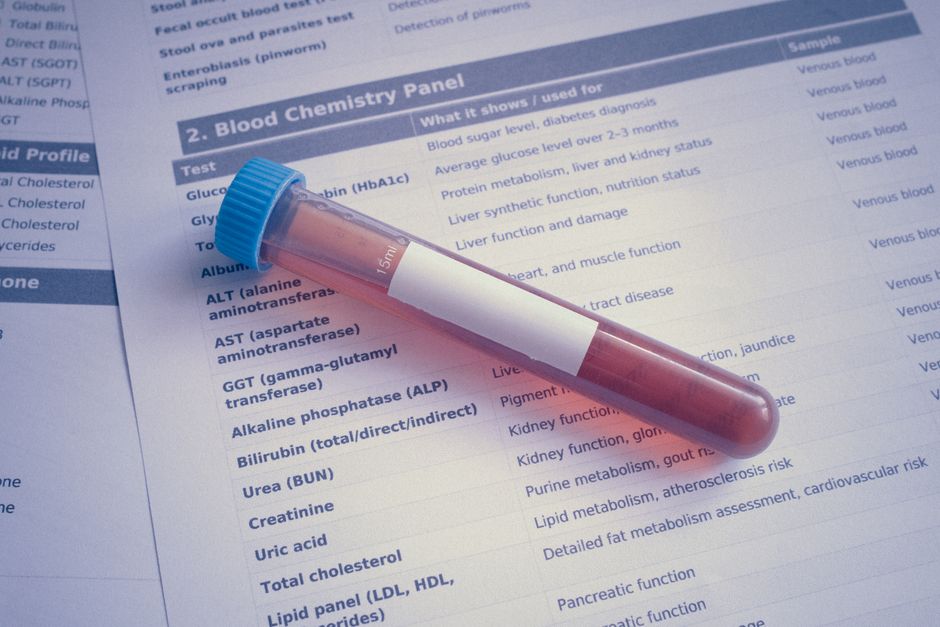
Testing for MTHFR starts with a blood test your doctor orders. The most common one checks for two specific changes in the MTHFR gene, known as C677T and A1298C. Your results tell you which versions of the gene you carry — but they do not tell you whether you are sick, and they do not tell you what treatment you need.
What Is the MTHFR Gene and Why Does It Matter?
MTHFR stands for methylenetetrahydrofolate reductase. That is a mouthful, but the job is simple. This gene gives your body instructions to make an enzyme. That enzyme helps convert one form of folate into another form your body can use.
The enzyme converts 5,10-methylenetetrahydrofolate into 5-methyltetrahydrofolate. That second form is needed to turn homocysteine into methionine. Homocysteine is an amino acid. When levels get too high, it is associated with health problems. Methionine is another amino acid your body needs for many everyday jobs.
So the MTHFR enzyme sits in the middle of a pathway that manages folate and homocysteine. When the gene has certain variations, the enzyme may work less efficiently. How much less depends on which variation and how many copies you carry.
Here is where things get misunderstood. A gene variation is not a disease. Nearly everyone carries some version of MTHFR variation. Some estimates suggest that roughly 40 to 50 percent of people carry at least one copy of the C677T variant. That makes it common, not rare.
How Do You Actually Get Tested for MTHFR?
You get tested through a blood sample. A doctor or lab draws blood and sends it to a genetics lab. The lab reads your DNA at the two spots on the MTHFR gene where the most common variations occur.
There is no home finger-prick test that gives you clinically reliable results on its own. Some direct-to-consumer companies offer genetic testing that includes MTHFR. If you use one of those, the result is a starting point, not a diagnosis. A doctor can order a clinical test to confirm.
The two main variants tested are:
- C677T — the most studied variant. It changes one letter in the DNA code, which makes the enzyme less active.
- A1298C — another variant. It also reduces enzyme activity, but usually less than C677T.
You inherit one copy of the MTHFR gene from each parent. So your result will show whether you have zero, one, or two copies of each variant.
No major medical organization currently recommends MTHFR testing for the general population. That is an important point. The test is available, but it is not part of routine screening. Some doctors order it in specific situations, such as when a person has high homocysteine levels that are not explained by other causes.
What Do Your MTHFR Results Actually Mean?
Your results come back as a combination of letters and numbers. Here is how to read them.
| Result | What It Means |
|---|---|
| C677T: No variant (wild type) | You have two normal copies. Enzyme function is typical. |
| C677T: Heterozygous (one copy) | You carry one copy of the variant. Enzyme activity is somewhat reduced. |
| C677T: Homozygous (two copies) | You carry two copies. Enzyme activity is more reduced. This is the version most studied. |
| A1298C: Heterozygous | One copy of this variant. Mild reduction in enzyme activity. |
| A1298C: Homozygous | Two copies. Some reduction, generally less than C677T homozygous. |
| Compound heterozygous | One copy of C677T and one copy of A1298C. Enzyme activity may be reduced similarly to C677T homozygous. |
Having two copies of C677T is linked to lower enzyme activity. But here is the key point most people miss: reduced enzyme activity in a lab test does not automatically mean you have a health problem. It means your body may process folate differently. Whether that matters depends on many other factors, including your diet, other genes, and your overall health.
Some research has linked MTHFR variants to slightly higher homocysteine levels, especially in people with low folate intake. But the evidence for direct links to most diseases is weak or inconsistent. Studies on heart disease, stroke, and pregnancy complications have produced mixed results. Some show a small association. Others show none.





Does a Positive MTHFR Result Mean You Need Treatment?
No. A positive result — meaning you carry one or more variants — does not mean you need treatment. This is where a lot of confusion and unnecessary worry happens.
Most people with MTHFR variants have no symptoms and no health problems related to the gene. The gene is common. If carrying it automatically caused disease, the disease would be far more widespread than it is.
That said, there are situations where a doctor might suggest checking homocysteine levels. If homocysteine is elevated, that is a measurable health marker worth addressing. The MTHFR gene is one possible contributor, but it is not the only one. Low levels of vitamin B12, vitamin B6, or folate can also raise homocysteine. Kidney disease, thyroid problems, and certain medications can too.
Some clinicians recommend folate supplementation for people with MTHFR variants and elevated homocysteine. The evidence here is limited. No large clinical trials have confirmed that treating MTHFR variants with supplements improves health outcomes in people who are otherwise healthy. The supplement industry has promoted this idea far beyond what the science supports.
If your homocysteine is normal and you feel fine, most doctors would not recommend any treatment based on MTHFR results alone.
What About MTHFR and Pregnancy?
Some research has looked at MTHFR variants and pregnancy outcomes, including neural tube defects and recurrent pregnancy loss. The evidence is not strong enough to recommend routine MTHFR testing for all pregnant women or those trying to conceive.
What is well established is that adequate folate intake before and during early pregnancy reduces the risk of neural tube defects. This is why folic acid supplementation is recommended for people who may become pregnant. That recommendation stands regardless of MTHFR status.
Some doctors may check MTHFR status in women with a history of pregnancy complications or elevated homocysteine. But this is not standard practice, and the evidence does not support it as a routine measure. If you are pregnant or trying to conceive and have questions about MTHFR, talk to your doctor. Do not stop or change any supplement without medical guidance.
What Should You Do With Your MTHFR Results?
First, do not panic. A variant is not a diagnosis. It is a piece of genetic information that needs context.
Second, ask your doctor whether checking your homocysteine level makes sense. That gives you a functional measure of how your body is handling the pathway. If homocysteine is normal, there may be nothing to address.
Third, be skeptical of anyone who tells you that MTHFR results require a specific supplement protocol, a special diet, or expensive treatments. No major medical organization endorses that approach. The science does not support it for most people.
Fourth, focus on what is proven. Eat a diet rich in folate from leafy greens, legumes, and fortified grains. If you drink alcohol, keep it moderate. Do not smoke. These steps support the folate pathway and your overall health regardless of your MTHFR status.
If you are concerned about symptoms like fatigue, brain fog, or mood changes, those are worth investigating. But MTHFR is rarely the sole explanation. A thorough medical workup should look at many possible causes.
Why Is There So Much Confusion About MTHFR?
MTHFR has become a popular topic online. Some of that attention is helpful because it encourages people to learn about genetics. Some of it is misleading.
A common claim is that MTHFR variants cause a long list of symptoms, from depression to chronic fatigue to autoimmune disease. The evidence for most of these claims is weak or absent. Some small studies have suggested links, but larger studies have often failed to confirm them.
Another common claim is that everyone with an MTHFR variant needs to avoid folic acid and take a special form called methylfolate instead. There is no strong evidence that this is necessary for most people. Folic acid is well studied and safe at recommended levels. Methylfolate is also available, but it is not required just because you carry a variant.
The gap between what the science shows and what is marketed is wide here. If a product or practitioner tells you that MTHFR testing is essential for everyone, or that a specific supplement will fix your genes, that is a sign to ask more questions. Real genetics is more complex than a single gene and a single pill.
Frequently Asked Questions
Can I order an MTHFR test myself?
Some direct-to-consumer genetic testing companies include MTHFR in their panels, but these are not clinical diagnostic tests. A doctor can order a clinical test if there is a medical reason.
What does it mean if I have two copies of the C677T variant?
It means you carry two copies of a variant that reduces MTHFR enzyme activity. It does not mean you have a disease or that you automatically need treatment.
Should I take methylfolate if I have an MTHFR variant?
No major medical organization recommends methylfolate specifically for MTHFR variants. If you have elevated homocysteine, your doctor may discuss folate options with you, but this is not standard for everyone with a variant.
Does MTHFR testing show up on a regular blood test?
No. MTHFR testing is a genetic test, not a standard blood chemistry panel. It must be ordered separately and is not part of routine blood work.
