
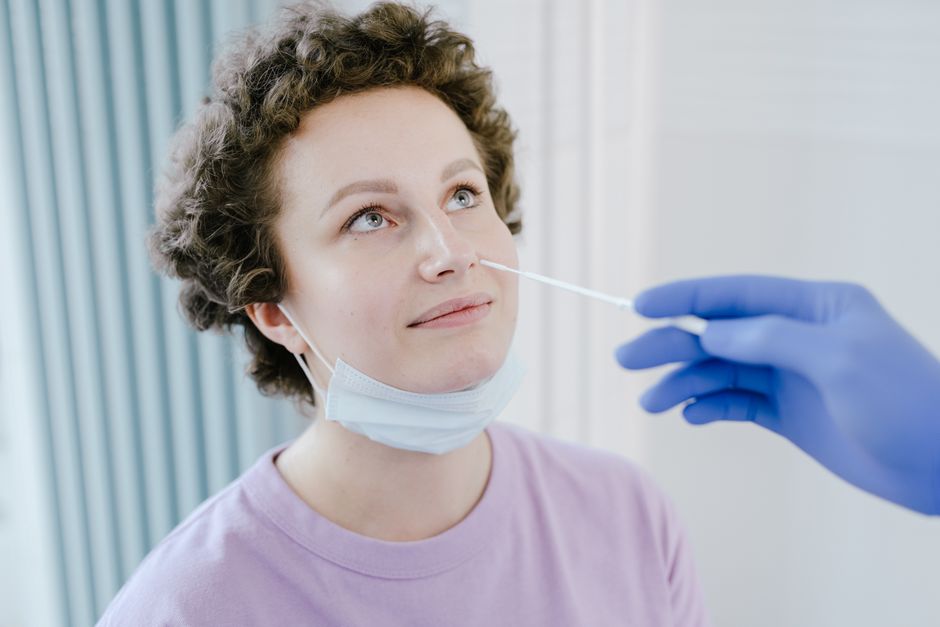
Testing for HPV in women usually involves a swab or brush sample taken during a pelvic exam. The sample is sent to a lab to check for high-risk HPV types that can cause cervical cancer. You can also use an HPV self-collection kit at home, but you still need to send the sample to a lab for accurate results.
What Is an HPV Test and How Does It Work?
An HPV test looks for the DNA of the human papillomavirus in cells from the cervix. It does not check for all 100-plus types of HPV. It specifically looks for high-risk types linked to cancer, such as HPV 16 and HPV 18.
The test is usually done at the same time as a Pap smear. Your clinician inserts a speculum to open the vagina, then uses a small brush or spatula to collect cells from the cervix. The sample goes into a liquid vial and is sent to a laboratory.
In the lab, technicians look for the genetic material of high-risk HPV types. If the virus is present, the test reports which high-risk type was found. This information helps your doctor decide if further testing is needed.
How To Test For HPV In Women Swabs Kits Results: The Main Steps
The process has three parts: sample collection, lab analysis, and result interpretation. Each step matters for getting a reliable answer.
First, the sample must be collected correctly. A cervical swab must reach the transformation zone, where most HPV-related changes begin. This area sits at the opening of the cervix. If the sample misses this zone, the test can return a false negative.
Second, the lab must use a validated testing method. The FDA has approved several HPV tests in the United States. These tests detect 14 high-risk HPV types and specifically identify types 16 and 18, which cause most cervical cancers.
Third, your doctor interprets the result in context. A positive HPV test does not mean you have cancer. It means a high-risk virus is present and needs monitoring or follow-up testing.
What Do HPV Test Results Mean?
A negative HPV test result means no high-risk HPV types were found in your sample. This is reassuring. The risk of developing cervical cancer in the next few years is very low.
A positive result means high-risk HPV was detected. This does not mean you have cervical cancer. Most HPV infections clear on their own within one to two years. Your immune system usually suppresses the virus without any treatment.
If the test also identifies HPV 16 or 18 specifically, your doctor will likely recommend a colposcopy. This is a procedure that uses a magnifying lens to look closely at the cervix. During a colposcopy, the doctor can take a small tissue sample called a biopsy if anything looks abnormal.
If you test positive for a high-risk type other than 16 or 18, the next step depends on your Pap result. If your Pap is normal, your doctor may recommend repeating the HPV test in one year. If your Pap is abnormal, a colposcopy is usually the next step.





At-Home HPV Test Kits: What You Should Know
At-home HPV test kits became available in the United States in 2024. These kits allow you to collect your own vaginal sample without a pelvic exam. You insert a small swab into the vagina, rotate it for about 10 to 20 seconds, and place it in a transport tube.
You then mail the tube to a laboratory. Results are available online or by phone within one to two weeks. The kits test for the same high-risk HPV types as clinic-based tests.
Self-collection is not the same as clinician-collection, but research shows it is highly accurate. Studies have found that self-collected vaginal samples detect high-risk HPV almost as well as clinician-collected cervical samples. The accuracy is close enough that many health organizations now support self-collection as an option.
However, an at-home kit is not a substitute for a full cervical cancer screening visit. A clinic visit also includes a Pap test if needed, a pelvic exam, and a conversation with your clinician about your individual risk. If your at-home test comes back positive, you will need to see a clinician for follow-up testing.
Who Should Get Tested and How Often?
Current guidelines recommend starting cervical cancer screening at age 21. For women aged 21 to 29, the recommendation is a Pap test every three years. HPV testing is not the primary test for this age group because HPV infections are very common and usually clear on their own.
For women aged 30 to 65, the preferred approach is an HPV test every five years. An alternative is a Pap test every three years. A third option is a co-test, which combines HPV testing and Pap testing every five years.
Women over 65 may stop screening if they have had adequate negative screening results in the past and no history of cervical precancer. Women who have had a hysterectomy for non-cancerous reasons may also stop screening.
These guidelines apply to women with average risk. If you have an abnormal result in the past, a weakened immune system, or a history of cervical precancer, your doctor may recommend more frequent testing.
HPV vs. Pap Test: What Is the Difference?
The HPV test and the Pap test answer different questions. The HPV test looks for the virus that can cause cervical cell changes. The Pap test looks for abnormal cell changes that may already be present.
Think of it this way: the HPV test asks whether you have been exposed to a high-risk virus. The Pap test asks whether the virus has caused any damage to your cervical cells.
| Test | What It Detects | Primary Use |
|---|---|---|
| HPV test | DNA from high-risk HPV types | Screening for cervical cancer risk |
| Pap test | Abnormal cervical cell changes | Detecting precancerous changes |
| Co-test | Both HPV DNA and cell changes | Combined screening approach |
Both tests use a similar collection method. Both require a speculum exam when done in a clinic. The difference is what happens in the laboratory after the sample arrives.
How Accurate Are HPV Tests?
HPV tests are highly accurate when performed correctly. The FDA-approved tests used in the United States detect high-risk HPV types with very high sensitivity. This means they rarely miss an infection that is present.
False positives can happen. A positive test may detect an HPV infection that would have cleared on its own without causing any problems. This is why positive results do not automatically lead to treatment. The goal is to find persistent infections that could cause cancer, not to treat every transient infection.
False negatives are rare but possible. If the sample does not contain enough cells, or if the collection missed the transformation zone, the test may not detect an existing infection. This is why proper collection technique matters.
What Happens After a Positive HPV Test?
A positive HPV test triggers a follow-up plan, not immediate treatment. The plan depends on your age, your Pap result, and which HPV type was found.
If you have HPV 16 or 18, your doctor will likely recommend a colposcopy regardless of your Pap result. These two types cause about 70 percent of cervical cancers, so they are managed more aggressively.
If you have another high-risk type and a normal Pap, your doctor may recommend repeating both tests in one year. Most infections clear within this time. If the virus persists, your doctor may recommend a colposcopy.
If you have a high-risk type and an abnormal Pap, a colposcopy is the standard next step. The colposcopy allows the doctor to see the cervix in detail and take biopsies if needed.
Can Men Get Tested for HPV?
There is no FDA-approved HPV test for men. Men can carry and transmit HPV, but routine testing is not recommended because there is no approved screening method that prevents cancer in men.
Anal HPV testing is sometimes used for men who have sex with men, particularly those with HIV. This testing is not routine for the general male population. The best protection for men is the HPV vaccine, which is approved for males through age 45.
Frequently Asked Questions
Can I test myself for HPV at home?
Yes, at-home HPV self-collection kits are available and approved in the United States. You collect a vaginal swab yourself and mail it to a lab, but you still need a clinician for follow-up if the result is positive.
How long does it take to get HPV test results?
Most HPV test results come back within one to two weeks. At-home kits may take slightly longer because of shipping time to the laboratory.
Does a positive HPV test mean I have cancer?
No. A positive HPV test means a high-risk virus is present, but most infections clear on their own within one to two years. Only persistent infections can lead to cervical cell changes that may progress to cancer.
Is the HPV test painful?
Most women feel mild discomfort or pressure during the swab collection, but it is not painful. The procedure takes less than a minute during a routine pelvic exam.
