
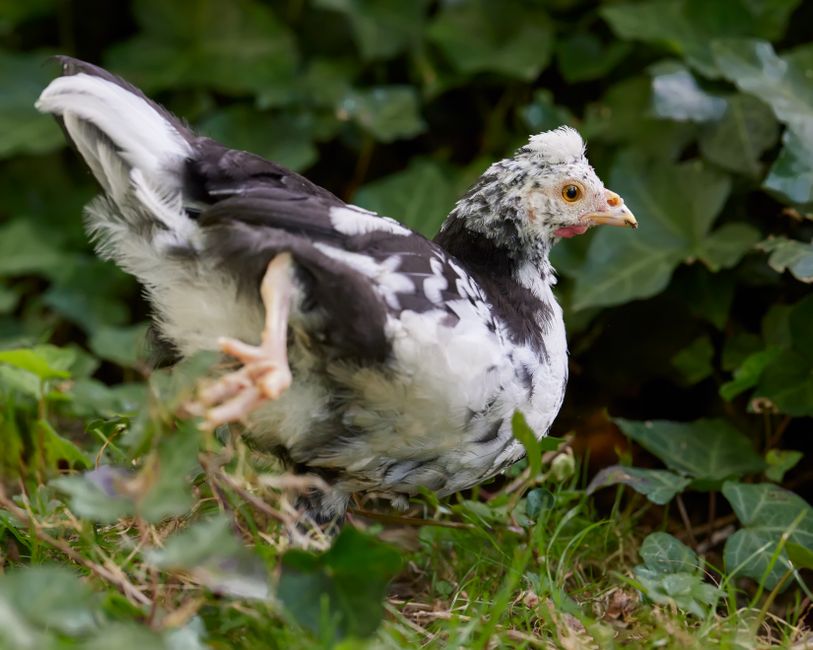
If you have young chickens and need to know which are pullets (females) and which are cockerels (males), look at their combs, feathers, and behavior. Pullets develop smaller, paler combs that stay pinkish while roosters grow larger, redder combs much earlier. Feather shape is also a clear giveaway—roosters grow pointed, shiny saddle and hackle feathers by 6-8 weeks, while pullets have rounded, softer feathers. Leg size, early crowing attempts, and overall body shape provide additional clues. None of these signs alone is perfect, but together they make telling them apart reliable by 8-12 weeks old.
How Early Can You Tell Pullets From Roosters?
Most people cannot reliably sex chicks at one day old unless they are skilled at vent sexing. Even experienced breeders get it wrong sometimes. For most backyard chicken keepers, the first reliable signs appear around 4-6 weeks.
At 4 weeks, comb and wattle differences start showing. Roosters typically develop larger, brighter red combs first. Pullets have smaller combs that stay more pink than red. This is not a perfect test—some pullet breeds like Leghorns can develop red combs early too. But as a general rule, the chick with the biggest reddest comb at 5 weeks is probably a rooster.
Feather development also differs by sex in many breeds. Some breeds are “sex-linked” meaning you can tell at hatch by feather color or pattern. But for standard breeds, feather shape differences appear around 6-8 weeks. That is when rooster hackle and saddle feathers become pointed instead of rounded.
What Do Rooster Combs Look Like Compared to Pullet Combs?
Comb size and color are the most noticeable early signs. Rooster combs grow faster, larger, and turn bright red earlier. Pullet combs stay smaller, paler, and more pinkish until they start laying eggs, which is usually around 18-20 weeks.
The table below summarizes the key comb differences:
| Trait | Pullet (Female) | Rooster (Male) |
|---|---|---|
| Size at 6 weeks | Small, flat against head | Larger, stands up taller |
| Color at 6 weeks | Pale pink to light red | Bright red |
| Texture | Smoother, less bumpy | More textured, bumpy surface |
| Growth rate | Slow, steady | Rapid, noticeable weekly changes |
| Final size | Smaller relative to head | Large, prominent on head |
One thing many guides do not mention: comb color can be misleading in cold weather. A rooster’s comb may temporarily turn pale if he is sick or cold. So always look at comb size and shape along with color. A pale but large comb still points to a rooster.
How To Tell Pullets From Roosters by Feather Shape and Growth
Feather differences are one of the most reliable methods. This works for most standard breeds but not all. Silkies and some feather-legged breeds may be harder to sex this way.
Roosters develop two distinct feather types that pullets do not have. The first is hackle feathers around the neck. On a rooster, these are long, narrow, and come to a sharp point. On a pullet, hackle feathers are shorter, wider, and rounded at the tip. The second is saddle feathers on the back just before the tail. Rooster saddle feathers are also pointed and often have a shiny appearance. Pullet saddle feathers remain rounded and dull.
Roosters also grow sickle feathers in the tail—long, curved feathers that arch dramatically. These appear later, usually around 12-16 weeks. Pullets have shorter, straighter tail feathers that do not curve.
Feather growth rate can also differ. In many breeds, pullets feather out faster than roosters as chicks. A 3-week-old pullet may have full wing feathers while a rooster of the same age still has fluffy down. This is not universal but is common in breeds like Rhode Island Reds and Barred Rocks.





What Behavioral Differences Help Tell Pullets From Roosters?
Behavior is not as reliable as physical traits, but it provides useful clues. Roosters tend to be more assertive, curious, and bold from a young age. They may stand taller, stretch their necks, and try to establish dominance over other chicks. Pullets are generally more reserved and less confrontational.
Crowing is the most obvious behavioral sign. Roosters start practicing crowing as early as 4-6 weeks. It sounds terrible at first—more like a squeaky gargle than a crow. But if you hear any attempt at crowing, that chick is almost certainly a rooster. Pullets do not crow. They may make loud noises, but never the full crow pattern.
Roosters also show tidbitting behavior. This is when a chick picks up a piece of food, drops it, and calls other chicks over to eat it. This is a natural rooster courtship behavior. Pullets rarely do this. If you see a young chick repeatedly offering food to others, it is likely a rooster.
One study from the University of California found that rooster chicks show more exploratory behavior and spend less time near their mother by 3 weeks of age compared to pullets. The differences are small but consistent across multiple breeds. This does not mean a shy chick is definitely a pullet—but combined with physical signs, behavior adds weight to your conclusion.
How To Tell Pullets From Roosters by Leg Size and Body Shape
Leg size is a less known but useful sign. Roosters develop thicker, longer legs than pullets of the same age. By 6-8 weeks, a rooster’s legs may look noticeably sturdier. The difference is subtle but visible when you compare chicks side by side.
Body shape also changes. Roosters tend to have a more upright stance with a broader chest. Pullets have a rounder, more compact body shape. Roosters often hold their tail feathers higher and more upright, while pullets keep their tails at a lower angle.
Here are the key body differences to check:
- Leg thickness: Rooster legs are thicker, especially the shanks (the part below the hock joint)
- Body width: Roosters develop wider shoulders and chests by 8-10 weeks
- Head size: Rooster heads are larger with a more prominent brow
- Wattle size: Rooster wattles (the red skin under the beak) grow faster and larger
- Overall size: Roosters are usually larger than pullets of the same breed and age
These differences become clearer as the birds approach 12 weeks. Before that, size alone is not reliable because some pullet breeds are naturally larger than roosters of other breeds. Always compare birds of the same breed and age.
What About Breed-Specific Differences in Telling Pullets From Roosters?
Some breeds make sexing much easier than others. Sex-linked breeds are specifically developed so you can tell males from females at one day old. For example, Red Sex Links and Black Sex Links show different feather colors at hatch based on sex. The hatchery or breeder should tell you which color is which.
Other breeds have traits that make sexing harder. Silkies have fluffy feathers that hide body shape and comb differences. Their combs are also small in both sexes. With Silkies, you may need to wait until they try to crow or lay eggs to be sure. Polish crested breeds have large head feathering that covers combs, making comb comparison useless.
Bantam breeds tend to show sex differences later than standard-sized breeds. A bantam rooster may not develop obvious pointed hackle feathers until 10-12 weeks. Standard breeds like Rhode Island Reds or Wyandottes usually show clear signs by 6-8 weeks.
The American Poultry Association notes that some breeds have “slow feathering” and “fast feathering” genetic lines. In fast-feathering breeds, pullets feather out faster. In slow-feathering breeds, the difference is smaller. If you know your breed’s feathering speed, it can help. Most hatchery catalogs list this information.
Frequently Asked Questions
Can you tell pullets from roosters at 1 day old?
Only by vent sexing, which requires training and is not 100% accurate. Most people cannot reliably sex chicks at hatch without help from a hatchery.
Do all roosters grow pointed hackle feathers?
Yes, in all standard breeds roosters develop pointed hackle and saddle feathers by 8-12 weeks. Silkies and feather-legged breeds may be harder to see this difference.
What age do roosters start crowing?
Roosters typically start practicing crowing between 4-8 weeks old. The first crows sound rough and squeaky, not like an adult crow.
Is comb size alone enough to tell pullets from roosters?
No, comb size should be combined with feather shape, leg size, and behavior for accurate sexing. Some pullet breeds develop large combs early.
