
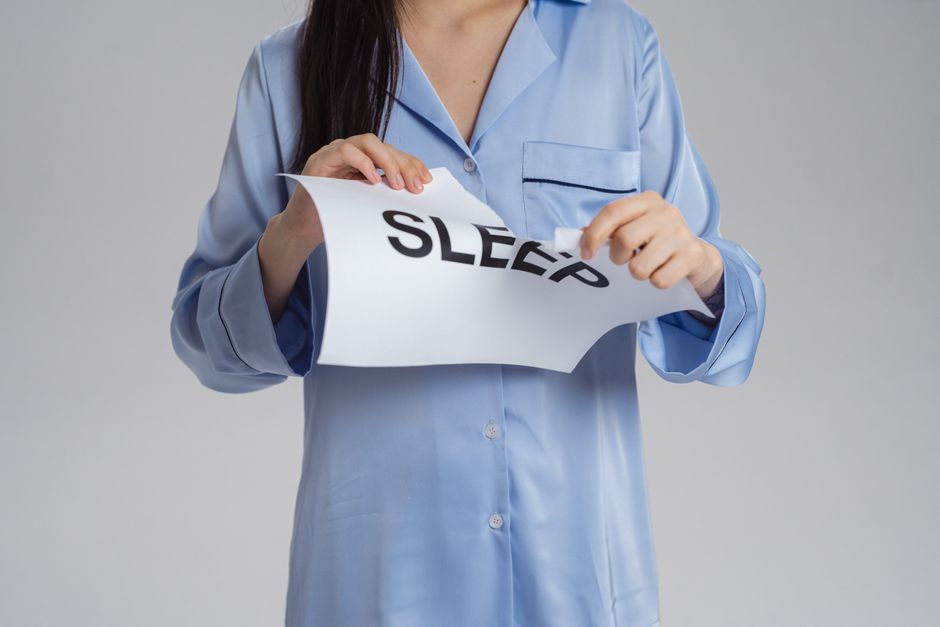
Insomnia is not just one rough night of sleep. It is a pattern — a persistent difficulty falling asleep, staying asleep, or getting sleep that actually restores you, even when you had the time and the chance to sleep well. The key difference between a bad night and insomnia is frequency and impact. If you struggle to sleep at least three nights per week for three months or longer, and it leaves you tired or impaired during the day, you are looking at what clinicians call chronic insomnia. You do not need to hit every symptom on a checklist, but you do need the pattern to be consistent and the daytime effects to be real.
What Does Insomnia Actually Look Like Day to Day?
Insomnia shows up in two places: at night and during the day. The nighttime symptoms are the ones most people notice first, but the daytime symptoms are often what push someone to seek help.
At night, insomnia can mean lying in bed for 30 minutes or more trying to fall asleep. It can mean waking up multiple times and struggling to get back to sleep. It can also mean waking up far too early and being unable to drift off again. Some people experience all three. The common thread is frustration — you want to sleep, you try to sleep, and your brain will not cooperate.
During the day, the effects are broader. Fatigue is the obvious one, but irritability, poor concentration, forgetfulness, and low motivation are just as common. Many people with insomnia report feeling physically tense or heavy. Some notice their mood sinks. Others find their work performance slips because they cannot hold focus. If you feel like you are running on empty most days and sleep is the reason, that is a meaningful sign.
How To Tell If You Have Insomnia What To Look For
To tell if you have insomnia, look for a consistent pattern rather than a one-off event. Ask yourself three questions. First, do you regularly have trouble falling asleep or staying asleep? Second, does this happen at least three nights a week? Third, has it been going on for at least three months? If you answer yes to all three, you meet the standard clinical picture for chronic insomnia.
The other crucial question is whether you have the opportunity to sleep well. Insomnia is not diagnosed when someone is forced to sleep in shifts, in a noisy room, or with a newborn waking every hour. Those situations produce poor sleep, but they are environmental. Insomnia is when the opportunity for good sleep exists and your body still cannot take it.
Daytime impairment is the final piece. Sleep difficulty alone does not define insomnia. The sleep problem must cause noticeable distress or interfere with your daily functioning. That could mean low energy, mood changes, trouble concentrating, or reduced performance at work. If your nights are poor but your days feel completely fine, the pattern may not meet the full definition.
Common Signs You Should Not Ignore
Some signs point more strongly to insomnia than others. Waking up multiple times each night and feeling alert rather than sleepy is a classic pattern. Racing thoughts that start the moment your head hits the pillow are another. Many people with insomnia report that their brain will not shut off — they replay conversations, plan tomorrow, or worry about sleep itself.
Worrying about sleep is actually a hallmark of the condition. People with insomnia often dread bedtime because they know what is coming. This anxiety makes sleep even harder, creating a cycle where the fear of not sleeping becomes the reason you cannot sleep. If you find yourself checking the clock repeatedly, calculating how many hours of sleep you might get, or feeling your heart rate rise at the thought of bed, that is worth noting.
Physical symptoms can also appear. Some people feel restless legs or a crawling sensation that makes lying still unbearable. Others notice muscle tension, headaches, or digestive issues that worsen with poor sleep. These do not confirm insomnia on their own, but they add to the picture when combined with sleep difficulties.





When It Is Not Insomnia
Several conditions can look like insomnia but are actually something else. Sleep apnea is the most common example. People with sleep apnea wake frequently throughout the night, often without remembering it. They feel exhausted during the day and may assume they have insomnia. The difference is that sleep apnea involves breathing pauses during sleep, often accompanied by loud snoring or gasping. A bed partner may notice these signs even when you do not.
Restless legs syndrome is another mimic. The urge to move the legs, especially at night, can delay sleep onset significantly. The sensation is usually described as creeping, crawling, or pulling — and it eases with movement. This is a distinct condition with its own treatments.
Circadian rhythm disorders can also masquerade as insomnia. If you cannot fall asleep until 2 a.m. but sleep perfectly well once you do, your issue may be a delayed body clock rather than insomnia. The treatment approach differs, so getting the distinction right matters. A sleep diary or a conversation with a clinician can help sort this out.
What Causes Insomnia and Why It Persists
Insomnia often starts with a trigger. Stress, illness, jet lag, a medication change, or a major life event can disrupt sleep. For many people, sleep returns to normal once the trigger passes. For others, the pattern becomes self-sustaining.
This is where the biology matters. When you repeatedly struggle to sleep, your brain begins to associate the bed with wakefulness rather than rest. You start trying harder to sleep, which raises arousal levels and makes sleep less likely. Over time, this conditioned arousal becomes the core problem, even after the original trigger is gone.
Certain habits can reinforce the cycle. Staying in bed for hours trying to force sleep trains the brain that bed is a place for frustration. Napping during the day reduces sleep pressure at night. Caffeine late in the day blocks the chemical signals that promote sleep. Alcohol may help you fall asleep initially but fragments sleep in the second half of the night. None of these cause insomnia by themselves, but they can keep it going.
What To Do If You Think You Have Insomnia
The first step is not medication — it is structure. Keep a consistent wake time every day, including weekends. This anchors your body clock and builds sleep pressure at a predictable time each night. Go to bed only when you feel sleepy, not when the clock says you should. If you are in bed for 20 minutes and cannot sleep, get up, do something quiet in dim light, and return to bed only when drowsy.
Limit caffeine to the morning hours. Caffeine has a half-life of about five to six hours, meaning half of what you drink is still in your system hours later. A 3 p.m. coffee can still be interfering at bedtime. Alcohol should be avoided in the hours before bed if sleep is already a problem.
If these self-management steps do not improve sleep within a few weeks, professional help is reasonable. The most effective first-line treatment for chronic insomnia is cognitive behavioral therapy for insomnia, often called CBT-I. It is a structured program that addresses the thoughts and behaviors that maintain insomnia. It has a stronger evidence base than sleep medications for long-term results, and it does not carry the dependency risks that some sleep aids do.
Talk to a primary care clinician about your sleep pattern. They can rule out other conditions like sleep apnea, thyroid issues, or depression that might be driving the problem. They can also refer you to a sleep specialist if needed. In some cases, a sleep study is warranted, though it is not necessary for every person with insomnia.
When To Seek Medical Help
Seek medical help if insomnia is affecting your safety or your health. Falling asleep while driving is a clear red flag. So is a pattern of worsening mood, anxiety, or depression alongside poor sleep. If you have been struggling for more than three months, that alone is a reason to have a conversation with a clinician.
Do not try to manage long-term insomnia with over-the-counter sleep aids. These are intended for short-term use, and their effectiveness for chronic insomnia is not well established. Some carry risks like daytime drowsiness, falls in older adults, and tolerance over time. They are not a solution for a persistent sleep problem.
If you take prescription sleep medication, use it exactly as directed and discuss a plan for discontinuation with your clinician. These medications are generally recommended for short-term use, not as a permanent solution. The goal is to restore natural sleep, not to rely on a pill indefinitely.
Frequently Asked Questions
How many nights a week do you need to have trouble sleeping to call it insomnia?
At least three nights per week for three months or longer meets the standard clinical definition of chronic insomnia. A few bad nights here and there are not insomnia.
Can you have insomnia if you fall asleep easily but wake up too early?
Yes. Waking up too early and being unable to get back to sleep is a recognized form of insomnia. The sleep problem must happen consistently and cause daytime impairment to qualify.
Is it insomnia if you can sleep fine on weekends but not on work nights?
That pattern is more likely related to your sleep schedule than to insomnia. It often reflects a mismatch between your body clock and your work schedule, which is a circadian rhythm issue rather than insomnia.
What is the difference between insomnia and poor sleep from stress?
Stress-related poor sleep usually resolves when the stressor passes. Insomnia persists beyond the initial trigger and becomes a self-sustaining pattern of poor sleep and daytime symptoms. If poor sleep continues for months after stress has ended, it may have become insomnia.
