
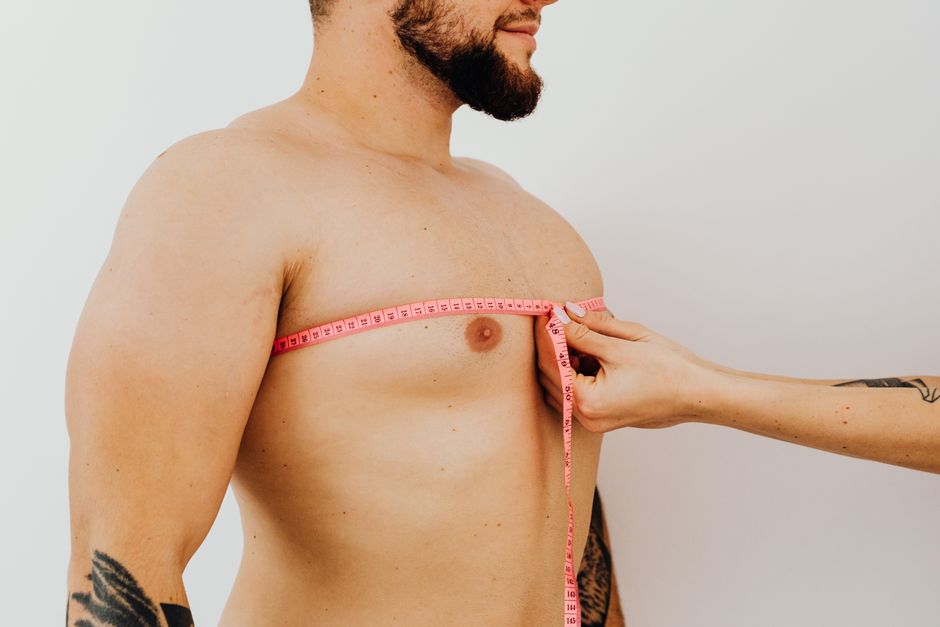
If your chest looks fuller than you want, the first question is whether it is breast tissue or fat. The difference comes down to what sits under the nipple: gynecomastia is a rubbery, firm disc of glandular breast tissue, usually centered right behind the nipple, while chest fat is soft, spread out, and squeezes between your fingers. You can often tell them apart at home by pressing that area, checking whether one or both sides are affected, and watching for tenderness. A doctor can confirm it with a short exam, and sometimes a blood test or imaging.
What Is The Difference Between Gynecomastia And Chest Fat?
Gynecomastia is a real enlargement of the glandular breast tissue in males. It is not fat and it is not a disease on its own. It is a benign proliferation of glandular tissue, driven mostly by a shift in the balance between estrogen and testosterone.
Chest fat is exactly what it sounds like. It is adipose tissue stored in the chest area. It responds to the same things that drive fat storage anywhere on the body: overall body fat, genetics, and hormones.
The two can also occur together. Many men have both glandular tissue and extra fat in the chest, which is why the distinction can be tricky. That combination is sometimes called pseudogynecomastia when fat is the main driver, but the term is used loosely and not everyone agrees on it.
Here is the key point. Gynecomastia has a distinct texture and location. Fat does not.
How To Tell If You Have Gynecomastia Or Chest Fat At Home?
You can do a basic self-check in a few minutes. It will not replace a doctor’s exam, but it can help you understand what you are feeling.
Lie flat on your back. This flattens the chest and makes it easier to feel what is underneath.
Place your thumb and index finger on either side of your nipple. Press gently inward toward the nipple. Feel for a firm, rubbery, button-like disc. That disc is the hallmark of gynecomastia.
If you feel a soft, squishy area that moves and spreads under your fingers, that is more consistent with fat. Fat does not have a defined edge. It does not sit in one firm lump behind the nipple.
Other clues that point toward gynecomastia:
- The tissue feels firm or rubbery, not soft
- It is centered directly behind the nipple
- It may be tender or sensitive to touch
- It can affect one side or both, and the two sides may not match
- It appeared during a known hormonal shift, like puberty or after starting a medication
Clues that point toward chest fat:
- The area feels soft and doughy throughout
- There is no firm disc behind the nipple
- It tends to change as your overall weight changes
- It usually appears on both sides fairly evenly
One thing worth knowing: a small amount of glandular tissue is normal in many men. Up to roughly half of men have some palpable breast tissue at some point, and it often goes unnoticed. Feeling a small disc does not automatically mean something is wrong.
What Does Gynecomastia Actually Feel Like?
Most men describe it as a firm, slightly tender lump right under the nipple. The size can range from a small pea to a larger mass that changes the shape of the chest.
In true gynecomastia, the tissue is usually mobile. It moves a little when you push it. It is not fixed to the chest wall or the skin.
It is often tender in the early stages, when the tissue is actively growing. As it becomes more longstanding, the tenderness tends to fade and the tissue can become more fibrous and firm.
This is where a lot of confusion happens. Men feel tenderness and assume it must be something serious. In most cases, early gynecomastia is tender simply because the tissue is growing, not because it is dangerous.
There is one important exception. A hard, fixed, irregular lump that does not move, or that comes with nipple discharge, skin changes, or a lump in the armpit, is not typical gynecomastia. That needs prompt medical evaluation. Male breast cancer is uncommon, but it does occur, and it can look different from gynecomastia.





What Causes Gynecomastia?
Gynecomastia is driven by hormones. Specifically, it reflects an imbalance where estrogen activity in breast tissue outweighs androgen activity. Estrogen stimulates breast tissue growth. Androgens oppose it. When that balance tips, tissue can grow.
Common causes and triggers include:
- Puberty. A large share of adolescent boys develop some breast tissue during puberty. Most of it resolves on its own within a few years.
- Medications. Several drug classes are associated with gynecomastia, including some used for prostate conditions, some antidepressants, certain heart and blood pressure medications, and anabolic steroids.
- Hormonal conditions. Low testosterone, thyroid problems, and other endocrine issues can contribute.
- Liver and kidney disease. These can alter hormone metabolism and clearance.
- Alcohol and certain drugs. Heavy alcohol use and some recreational drugs, including marijuana, have been linked to gynecomastia, though the strength of that link varies.
- Older age. Testosterone tends to decline with age while estrogen does not fall as much, which can tip the balance.
In a meaningful number of cases, no clear cause is found. That is called idiopathic gynecomastia, and it is common.
What Causes Chest Fat Instead?
Chest fat is stored fat. It follows the same rules as fat anywhere else on your body.
It is driven by overall energy balance, genetics, age, and hormones. Some men simply store more fat in the chest area, the same way some people store it in the belly or hips. That pattern is largely genetic.
Because chest fat is fat, it responds to changes in overall body fat. If you lose fat overall, chest fat usually shrinks along with it. It does not disappear in one spot just because you exercise that spot. Spot reduction does not work the way people hope. Crunches do not burn belly fat, and chest exercises do not selectively burn chest fat.
Insulin resistance and low testosterone can both promote fat storage and shift where the body puts it. So the two conditions can overlap in the same person.
When Should You See A Doctor About Your Chest?
See a doctor if you notice any of the following:
- A hard, fixed lump that does not move
- Nipple discharge, especially bloody or one-sided
- Skin dimpling, puckering, or a change in the nipple itself
- A lump in the armpit
- Rapid growth, or growth on only one side that keeps changing
- Pain that is severe or getting worse
- Signs of a hormonal problem, such as low sex drive, erectile changes, or loss of body hair
For anything else, a routine visit is reasonable. A doctor can usually tell the difference between glandular tissue and fat during a physical exam. If the cause is unclear, they may order blood tests to check hormone levels, liver and kidney function, or other markers. Imaging is sometimes used, but not always.
Do not assume it is harmless just because it is common. And do not assume it is cancer just because you feel a lump. Both assumptions can lead you in the wrong direction.
Can You Get Rid Of Gynecomastia Or Chest Fat?
The honest answer depends on which one you have.
Chest fat responds to fat loss. If you reduce overall body fat through diet and activity, chest fat tends to shrink with it. There is no shortcut that targets the chest alone.
Gynecomastia is different. It is glandular tissue, so it does not respond to fat loss the way fat does. Some cases resolve on their own, especially those tied to puberty or a temporary trigger like a medication. When a medication is the cause, the tissue sometimes shrinks after stopping it, but only under a doctor’s guidance. Never stop a prescribed medication on your own.
For persistent cases, treatment options exist. These include medications in some situations and surgery in others. The evidence for medication is mixed and it does not work for everyone. Surgery is generally considered for cases that are longstanding, bothersome, or not responding to other approaches. This is a decision to make with a doctor, not from an article.
One thing to be clear about: supplements and creams marketed for gynecomastia have no reliable clinical evidence behind them. Be cautious with anything promising a guaranteed fix.
What About Pseudogynecomastia?
Pseudogynecomastia is the term some clinicians use when the chest enlargement is mainly fat rather than glandular tissue. The word literally means “false gynecomastia.”
The distinction matters because the two are managed differently. Fat responds to weight and lifestyle changes. Glandular tissue generally does not.
In practice, many men have a mix of both, which is why a physical exam is more reliable than a self-check alone. If you are unsure which one you have, that is a good reason to have a doctor take a look.
Frequently Asked Questions
How can I tell if I have gynecomastia or just chest fat?
Press around your nipple: a firm, rubbery disc centered behind it suggests gynecomastia, while soft tissue with no defined lump suggests fat. A doctor can confirm it with a quick exam.
Does gynecomastia go away on its own?
Some cases do, especially those linked to puberty or a temporary trigger, and often within a few years. Longstanding cases are less likely to resolve without treatment.
Can you get rid of gynecomastia with exercise?
Exercise can reduce chest fat but does not remove glandular tissue, so it may improve the look of the chest without resolving true gynecomastia. Results depend on how much of each type is present.
Is gynecomastia a sign of cancer?
Gynecomastia itself is benign and is not cancer. However, a hard, fixed lump, nipple discharge, or skin changes are not typical of gynecomastia and should be checked by a doctor promptly.
