
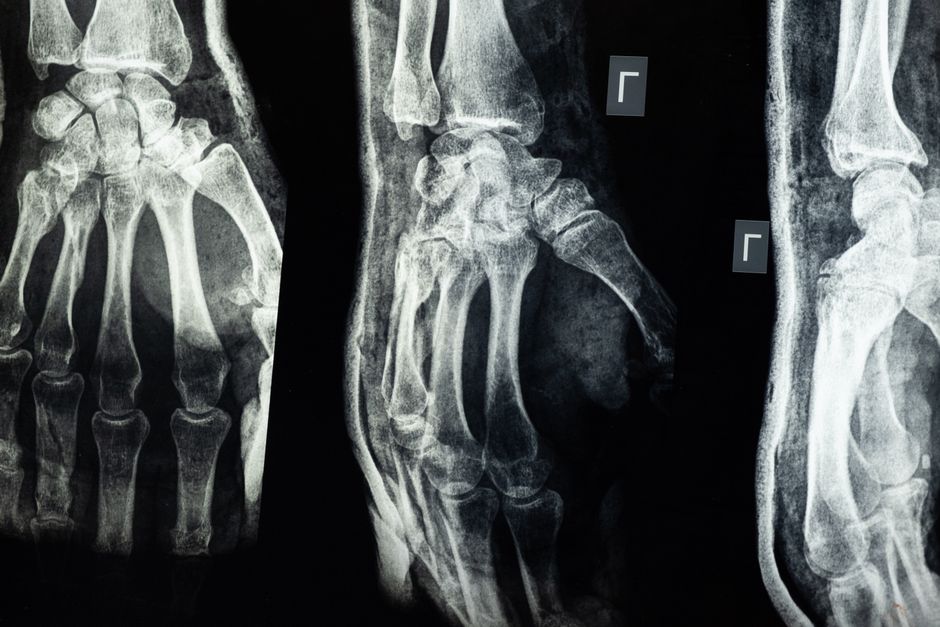
A wrist injury can happen fast — one wrong move catching yourself during a fall and you are left wondering if it is a bad sprain or something worse. The difference matters because a fracture needs different care than a sprain and guessing wrong can delay healing. Here is the short version: if you heard a snap or grinding sound at the moment of injury, cannot move your wrist at all, or have visible deformity like a bump where there should not be one, you likely have a fracture and need an X-ray. The rest of this article walks through the specific signs, what the research actually says, and when you can safely wait versus when to head to urgent care.
What Is the Difference Between a Wrist Fracture and a Sprain?
A wrist fracture means one of the bones in your wrist is cracked or broken. The wrist has eight small carpal bones plus the two forearm bones — the radius and ulna — that connect to them. The most commonly broken wrist bone is the distal radius, near the thumb side. A sprain means the ligaments that connect bone to bone are stretched or torn but the bones themselves are intact.
Research published in the Journal of Orthopaedic Trauma found that about one in six wrist injuries that look like bad sprains on first exam actually turn out to be fractures once X-rayed. This is why relying on how much you can move your wrist is not reliable. Some people with fractures can still move their wrist fairly well, especially if the break is small or nondisplaced. And some people with severe sprains cannot move their wrist at all because the swelling and pain are that intense.
The safest rule is this: if the injury happened from a fall onto an outstretched hand, especially if you are over 50 or have low bone density, assume fracture until proven otherwise. The American Academy of Orthopaedic Surgeons states that a fall onto an outstretched hand is the classic mechanism for a distal radius fracture.
How To Tell If U Fractured Your Wrist Without an X-Ray
You cannot diagnose a fracture at home with total certainty. No test you do in your kitchen can replace an X-ray. That said, there are reliable signs that strongly point toward a break.
The most telling sign is deformity. If your wrist looks bent at an odd angle, if there is a bump on the back of your wrist that was not there before, or if your hand looks shifted compared to your forearm, those are fractures until proven otherwise. Do not try to pop it back into place. Keep it still and get medical help.
Bruising that spreads quickly and widely is another strong clue. A sprain might bruise, but a fracture often causes bruising that moves down into your fingers or up your forearm within hours. The American College of Emergency Physicians notes that bruising extending more than a few inches from the injury site raises suspicion for fracture.
Numbness or tingling in your thumb, index, or middle fingers can mean the fracture is pressing on the median nerve. That is the same nerve involved in carpal tunnel syndrome. If you feel that, do not wait. Go to urgent care or the emergency room.
One quick test some emergency doctors use is the “scaphoid snuffbox” test. The scaphoid bone is at the base of your thumb. If you press into the small hollow on the thumb side of your wrist and it hurts badly, that suggests a scaphoid fracture. These fractures are notorious for not showing up on initial X-rays and need special imaging or a cast anyway. If that spot is tender, treat it as a fracture even if X-rays look clean.
What Does the Research Say About Wrist Fracture Symptoms?
A 2021 study in the journal Bone & Joint Research looked at over 800 wrist injury patients and found that the single most reliable symptom for predicting fracture was point tenderness over a specific bone. Generalized pain across the whole wrist was less useful. If you can place one finger on the exact spot that hurts worst, that is more concerning than pain that feels spread out.
The same study found that swelling visible within the first hour was a strong predictor. Delayed swelling that shows up the next day was more typical of sprains. This makes sense biologically — broken bones bleed internally, and that blood causes rapid swelling. Ligament tears bleed less.
Another finding from research in the Journal of Hand Surgery: the ability to grip objects is not a reliable test. Many patients with fractures can still grip a water bottle or shake hands. The pain comes from certain wrist positions, not from gripping itself. So if someone tells you “if you can grip it is not broken,” they are repeating a myth that has been disproven.
The table below summarizes what the evidence shows about common self-tests:
| Symptom or Test | What Research Shows |
|---|---|
| Point tenderness on one bone | Strong predictor of fracture |
| Visible deformity | Nearly certain fracture |
| Rapid swelling within 1 hour | Moderate predictor |
| Ability to grip objects | Not reliable — many fractures still grip |
| Bruising spreading to fingers | Strong predictor |
| Pain with thumb-side pressure | Suggests scaphoid fracture |
When Should You Go to the ER Versus Urgent Care?
This depends on what you see and feel. If your wrist is clearly deformed, if bone is poking through the skin, or if your fingers are turning blue or white, go to the emergency room immediately. Those are signs of a displaced fracture or compromised blood flow and need same-day surgical evaluation.
If you have swelling and pain but no deformity and your fingers look normal, urgent care is fine. Most urgent care centers have X-ray machines and can apply a splint. They will refer you to an orthopedist for follow-up if the X-ray shows a fracture. The CDC reports that about 90% of wrist fractures seen in urgent care are treated with a splint or cast and do not require surgery.
One exception: if you are on blood thinners like warfarin or apixaban, any injury that causes significant swelling should be evaluated in the ER. The risk of internal bleeding into the wrist compartment is higher. The American Society of Hematology advises that patients on anticoagulants with traumatic swelling need same-day evaluation.
If you are unsure, err on the side of getting checked. A missed fracture that shifts out of place later may need surgery that could have been avoided with early casting.
What Happens If You Ignore a Wrist Fracture?
Ignoring a wrist fracture is not just painful — it can permanently change how your wrist works. A broken bone that heals in the wrong position can shorten the wrist bones, shift the angle of the joint, and lead to post-traumatic arthritis within a few years. Research in the Journal of Bone and Joint Surgery found that patients with untreated distal radius fractures had a 40% rate of arthritis within five years.
Scaphoid fractures are especially tricky. They have poor blood supply, so they heal slowly. If you ignore a scaphoid fracture, the bone can die — a condition called avascular necrosis. That requires surgery to fuse bones together and permanently limits wrist motion. The scaphoid is the most commonly missed fracture in emergency rooms, let alone at home.
Another risk is complex regional pain syndrome, or CRPS. This is a chronic pain condition that can develop after an untreated fracture. The wrist is one of the most common sites. CRPS causes burning pain, swelling, and skin changes that can last for years. Early treatment of the fracture reduces the risk significantly.
If your wrist still hurts after two weeks and you have not had it X-rayed, get it checked. A small fracture that is not displaced can still cause long-term problems if left in a cast too late.
Common Misconceptions About Wrist Fractures
The most persistent myth is that if you can move it, it is not broken. This is false. Many nondisplaced fractures allow full or near-full motion. The bone is cracked but still aligned, so the tendons can still pull. Pain with motion is the real clue, not inability to move.
Another myth is that ice and rest cure everything. Ice and rest help with swelling and pain, but they do not fix a broken bone. If a fracture is present, immobilization with a splint or cast is needed. Ice alone buys you time but does not heal the bone.
Some people believe that if the X-ray is negative, they are fine. That is not always true. Occult fractures — fractures that do not show on initial X-rays — happen in about 10-15% of wrist injuries, especially in the scaphoid bone. If your X-ray is clean but you still have point tenderness over the scaphoid, standard practice is to splint and re-X-ray in two weeks. Some doctors order an MRI or CT scan for high-risk cases.
Finally, there is the idea that “it is just a sprain, it will heal on its own.” Severe sprains — Grade 3 ligament tears — can be as disabling as a fracture and may require surgery. Do not dismiss a wrist injury just because you think it is “only” a sprain. Both fractures and bad sprains need medical evaluation.
Here are the signs that should make you stop guessing and get an X-ray:
- You heard a pop, snap, or grinding sound at the moment of injury
- Your wrist looks bent or has a bump that was not there before
- Bruising spreads to your fingers or up your forearm within hours
- You cannot put any weight on that hand at all
- Numbness or tingling in your thumb or fingers
- Pain when pressing into the hollow on the thumb side of your wrist
- You are over 50 and fell onto an outstretched hand
Frequently Asked Questions
Can you still move your wrist if it is fractured?
Yes, many people with nondisplaced fractures can move their wrist, though it usually hurts. Motion alone does not rule out a break.
How long after a wrist injury should I get an X-ray?
Get an X-ray within 24 hours if you have any signs of fracture. Waiting longer risks the bone shifting out of place.
What is the most commonly broken bone in the wrist?
The distal radius, on the thumb side near the forearm, is the most frequently fractured wrist bone in adults.
Can a wrist fracture heal without a cast?
Some small nondisplaced fractures can heal in a splint, but most need a cast for 4 to 6 weeks. Never assume it will heal without immobilization.
