
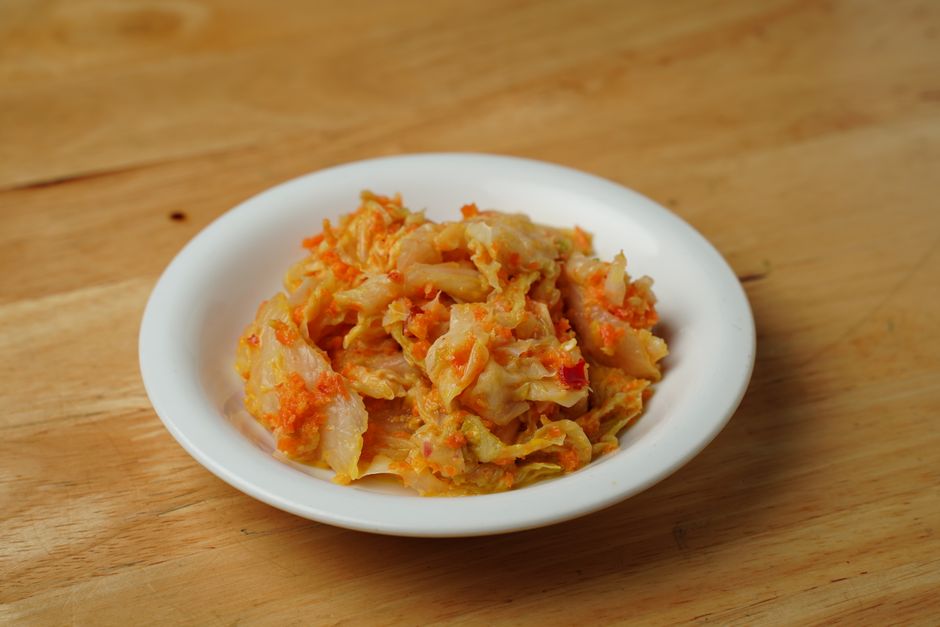
Napa cabbage stays fresh for about a week in the fridge, but it can spoil faster depending on how it was stored. You can tell it has gone bad by looking for wilting leaves, dark brown or black spots, a slimy texture, or a sour and unpleasant smell. If the outer leaves look tired but the inner head is firm and crisp, you can often salvage the good part and use it right away.
How To Tell If Napa Cabbage Is Bad Or Still Good?
Check the outer leaves first. They take the most damage and spoil first. Look for leaves that are wilted, yellowed, or turning brown at the edges. A few bruised outer leaves are normal and not a sign the whole head is bad.
Next, feel the texture. Fresh napa cabbage is firm and crisp. If the leaves feel slimy or wet and mushy, that is a clear sign of spoilage. Sliminess means bacteria are already growing, and that part should be discarded.
Smell is a reliable test. Fresh napa cabbage has a mild, slightly sweet scent. If it smells sour, fermented, or like rotting vegetables, it has gone bad. Trust your nose on this one — the smell only gets worse as the cabbage continues to spoil.
What Do Bad Spots On Napa Cabbage Look Like?
Small brown or black specks on the leaves are common in napa cabbage. These are called “pepper spot” or gomasho. They are harmless and do not mean the cabbage is spoiled. They look like tiny dark dots or freckles scattered across the leaf surface.
Real spoilage looks different. Bad spots are larger, soft, and often wet. They may be dark brown, black, or gray and can spread across the leaf. If the spot is mushy or slimy when you touch it, that area is rotting.
Cut into the spot if you are unsure. Healthy tissue underneath a pepper spot is still crisp and white. If the tissue underneath is brown, translucent, or mushy, the decay has spread deeper and that section should be removed.
How Long Does Napa Cabbage Last In The Fridge?
Whole napa cabbage lasts about one to two weeks in the refrigerator. The exact time depends on how fresh it was when you bought it and how cold your fridge runs. Store it in the crisper drawer, ideally in a perforated plastic bag to keep moisture in without trapping excess condensation.
Cut napa cabbage does not last as long. Once you slice into it, the exposed edges start to oxidize and lose moisture. Cut cabbage stays good for about three to five days when wrapped tightly in plastic or stored in an airtight container.
Cooked napa cabbage lasts three to four days in the fridge. Reheat it thoroughly before eating. If it develops an off smell or visible mold, discard it rather than trying to salvage it.





Can You Eat Wilted Napa Cabbage?
Yes, mildly wilted napa cabbage is safe to eat. Wilting means the leaves have lost water, not that they have spoiled. The texture will be less crisp, but the flavor and nutrition remain largely intact.
You can revive wilted leaves by soaking them in ice water for 10 to 15 minutes. This rehydrates the cells and restores some crunch. This works well for cabbage that is only slightly limp, not for leaves that are slimy or discolored.
If the cabbage is severely wilted — leaves are papery, dry, or translucent — it is past its best. Use it in cooked dishes like stir-fries or soups where texture matters less. Do not use severely wilted cabbage for raw salads or slaws.
Is It Safe To Cut Off The Bad Parts?
You can cut off small spoiled areas and eat the rest. This is safe as long as the damage is limited to a small section. Remove the bad part plus about an inch of surrounding healthy tissue to make sure you get all the affected area.
Do not do this if the spoilage is widespread. If more than a quarter of the head shows rot, slime, or strong odor, throw the whole thing away. Bacteria can spread through the inner leaves even when the outside looks only partially affected.
After cutting away bad spots, wash the remaining cabbage thoroughly under running water. Dry it well before storing. Moisture on cut surfaces speeds up further spoilage.
How To Store Napa Cabbage To Keep It Fresh Longer
Keep the whole head dry. Moisture is the main driver of rot. Do not wash napa cabbage before storing it. Wash it right before you use it instead.
Wrap the head loosely in a plastic bag with a few small holes for airflow. Place it in the crisper drawer of your refrigerator. The ideal temperature is just above freezing, around 32 to 35°F, but standard fridge temperatures work fine.
For cut cabbage, wrap the cut side tightly in plastic wrap or store it in an airtight container. Press out as much air as possible. Exposure to oxygen causes the cut edges to brown and dry out faster.
Do not store napa cabbage near fruits that produce ethylene gas, like apples, bananas, or tomatoes. Ethylene accelerates ripening and speeds up spoilage in leafy vegetables.
Can You Freeze Napa Cabbage?
Yes, but freezing changes the texture significantly. Napa cabbage has high water content. When frozen, ice crystals rupture the cell walls. Thawed cabbage becomes soft, watery, and limp.
Frozen napa cabbage is not suitable for salads or slaws. It works fine in cooked dishes like soups, stews, stir-fries, and dumpling fillings. The texture change is less noticeable when the cabbage is cooked.
To freeze, wash and chop the cabbage first. Blanch it in boiling water for one to two minutes, then plunge it into ice water. Drain well, pack into freezer bags, and remove as much air as possible. Frozen napa cabbage keeps for about six to eight months.
How To Tell If Napa Cabbage Is Bad After Cooking
Cooked napa cabbage spoils faster than raw because heat breaks down cell walls and releases moisture. Check for a sour smell, which indicates bacterial growth. Fresh cooked cabbage smells mild and slightly sweet.
Look for changes in color and texture. Spoiled cooked cabbage may turn grayish or develop a slimy film on the surface. If you see any mold growth, discard the entire batch — mold spores can spread invisibly through the food.
When in doubt, throw it out. Food poisoning from spoiled vegetables is not common but it is possible, especially for people with weakened immune systems, pregnant women, and older adults. The cost of wasting food is lower than the cost of a hospital visit.
Frequently Asked Questions
Can you eat napa cabbage with black spots?
Yes, if the spots are small, dry, and speckled — this is pepper spot and it is harmless. If the spots are large, soft, or wet, cut them away along with some surrounding tissue.
How long does napa cabbage last in the fridge?
A whole head lasts one to two weeks in the crisper drawer. Cut cabbage lasts three to five days when wrapped tightly.
What does spoiled napa cabbage smell like?
It smells sour, fermented, or like rotting vegetables. Fresh napa cabbage has a mild, slightly sweet smell.
Is slimy napa cabbage safe to eat?
No. Sliminess means bacteria are actively growing on the leaves. Discard slimy sections or the whole head if the slime is widespread.
