
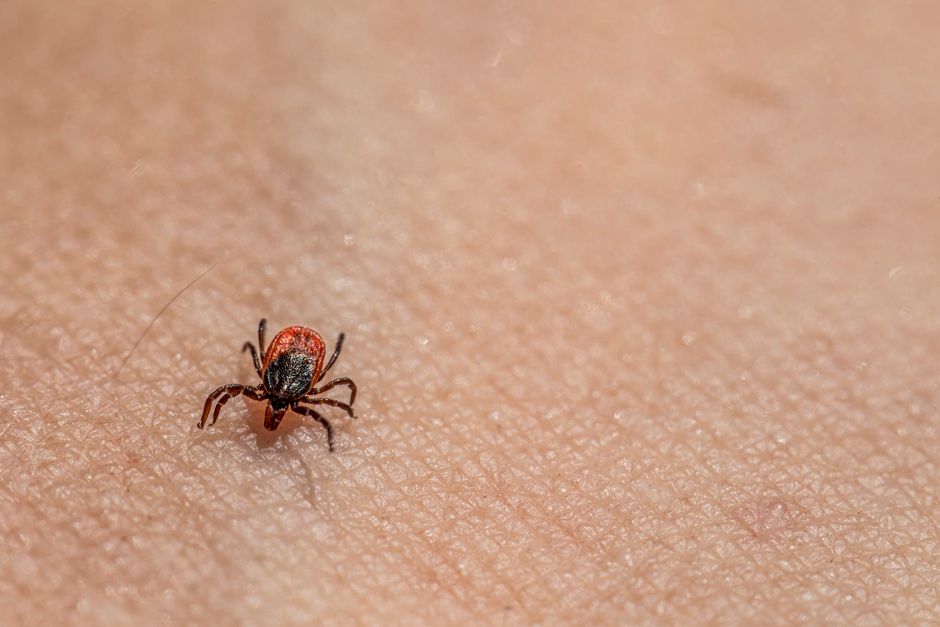
A tick is a live animal that attaches to your skin and feeds on blood. A mole is a cluster of pigment cells that grows in your skin. The fastest way to tell them apart is to look for legs. A tick has eight legs and can move. A mole has none and stays in the same spot for years. If the spot appeared suddenly and was not there last week, it is far more likely to be a tick than a new mole.
This matters because ticks can transmit disease, and a tick needs to be removed correctly and quickly. Moles can also be a health concern, but on a different timeline and for different reasons. Knowing which one you are looking at changes what you do next.
How To Tell If Its A Tick Or A Mole
Look at the edges and the surface. A tick has a defined body with a head buried in your skin. Depending on how long it has been feeding, that body may look flat and small or swollen and grayish. A mole sits flat against the skin or rises from it as a smooth, rounded bump with no legs and no separate head.
Here is the detail most people miss. A tick that has been attached for a while becomes engorged with blood. Its body swells and changes color, sometimes to a pale gray or greenish tone. At that stage it can look like a small, oddly colored mole or a skin tag. But it will still have legs, and it will not have been there a month ago.
A mole, by contrast, has usually been present for years. It may have been there since childhood. It does not appear overnight, and it does not grow dramatically over a few days.
Some useful differences to check:
- Legs: A tick has eight legs. A mole has none.
- Movement: A tick can crawl before it attaches. A mole never moves.
- Onset: A tick appears suddenly. A mole develops slowly or has always been there.
- Texture: A tick has a distinct body with a hard or soft shell. A mole is made of skin tissue.
- Attachment point: A tick’s mouthparts are embedded in the skin, so you can often see a small insertion point.
If you are unsure, do not dig at it. See a clinician. A wrong guess can leave tick mouthparts in the skin or damage a mole that needed evaluation.
What Does An Attached Tick Actually Look Like?
An attached tick looks like a small bump with legs, and the key word is attached. Before feeding, many tick species are flat, oval, and dark — roughly the size of a sesame seed. After feeding for a day or more, the body expands and can look quite different from the tick you might picture.
The head and mouthparts stay buried in the skin while the body sits on the surface. That is why you can see a small dark or reddish point where the tick meets your skin. Pulling on the body without care can leave those mouthparts behind.
Color varies by species and feeding stage. Some ticks are brown, some are black, and some have a distinctive pale marking on the back. The lone star tick, for example, has a white spot. The blacklegged tick, which can transmit Lyme disease, is small and dark. Because appearance varies so much, do not rely on color alone to decide what you are looking at.
One thing that does not vary: a tick is an animal with legs. If you can see legs under magnification, even tiny ones, it is not a mole.
What Does A Mole Look Like?
A mole is a collection of melanocytes, the cells that produce pigment. Most people have between 10 and 40 moles by adulthood. They can be flat or raised, and colors range from tan to brown to pink to nearly the same shade as your skin.
Moles are usually round or oval with smooth, even borders. They tend to be small, often under 6 millimeters across, though some are larger. They can have hair growing from them, which is normal and not a sign of anything wrong.
Moles change slowly. They may darken during pregnancy or with sun exposure, and some fade with age. What they do not do is appear fully formed overnight or grow noticeably in a few days.
This is where the two get confused. A raised, dark mole can look a lot like a feeding tick at a glance. The difference is history and structure. The mole has been there. The tick has not. And under close look, the tick has legs.
When Should You Worry About A Mole?
Moles are common and usually harmless. The concern is melanoma, a serious form of skin cancer that can develop in or near a mole. Dermatologists use a simple set of criteria to decide whether a mole needs a closer look.
The ABCDE rule is widely used:
- A — Asymmetry: One half does not match the other.
- B — Border: Edges are irregular, ragged, or blurred.
- C — Color: The mole has multiple colors or uneven shading.
- D — Diameter: Larger than 6 millimeters, about the size of a pencil eraser.
- E — Evolving: The mole is changing in size, shape, or color.
The E is the one that matters most. A mole that is changing is the strongest reason to have it checked. Most moles do not become melanoma, but when melanoma does occur, catching it early makes a real difference.
See a clinician if a mole is new and changing, bleeding, itching, or different from your other moles. Do not wait to see if it settles down on its own.





How Should You Remove A Tick?
Use fine-tipped tweezers and pull straight up with steady, even pressure. Grab the tick as close to the skin as you can. Do not twist, jerk, or squash the tick. Do not use petroleum jelly, nail polish, alcohol, or a lit match. These methods are commonly mentioned but are not recommended, because they can cause the tick to release more saliva into your skin.
After removal, clean the bite area and your hands with rubbing alcohol or soap and water. Save the tick in a sealed container or a small bag with a damp paper towel if you want it identified later. Write down the date you removed it.
If you develop a rash, fever, muscle aches, or feel unwell in the days or weeks after a bite, contact a clinician and tell them about the tick. A rash that expands into a ring shape is a known sign of Lyme disease and needs medical attention.
Not every tick carries disease, and not every bite leads to illness. But the risk is real, and prompt, correct removal lowers it.
When To See A Doctor
See a clinician if you cannot remove a tick completely, if mouthparts remain in your skin, or if you are unsure whether the spot is a tick or a mole. A quick in-person look settles the question.
Also see a clinician if a mole is new, changing, bleeding, or looks different from your other moles. And see one if you feel unwell after a tick bite, especially with a rash or fever.
You do not need to panic in either case. But you do need a clear answer. Guessing wrong on a tick can mean leaving part of it behind. Guessing wrong on a mole can mean missing a change that mattered.
Frequently Asked Questions
Can a tick look like a mole?
Yes, an engorged tick can look like a small mole or skin tag because its body swells and changes color after feeding. The difference is that a tick has eight legs and appeared suddenly, while a mole has no legs and has usually been there for years.
How do I know if a spot on my skin is a tick?
Look for legs and a distinct body with a head embedded in your skin. If the spot appeared recently and you can see tiny legs, it is almost certainly a tick.
Should I remove a tick myself or see a doctor?
You can remove a tick yourself with fine-tipped tweezers by pulling straight up with steady pressure. See a clinician if you cannot remove it completely or if mouthparts stay in your skin.
When should a mole be checked by a doctor?
A mole should be checked if it is new, changing in size, shape, or color, or if it bleeds or itches. The ABCDE rule helps guide when a mole needs a professional look.
