
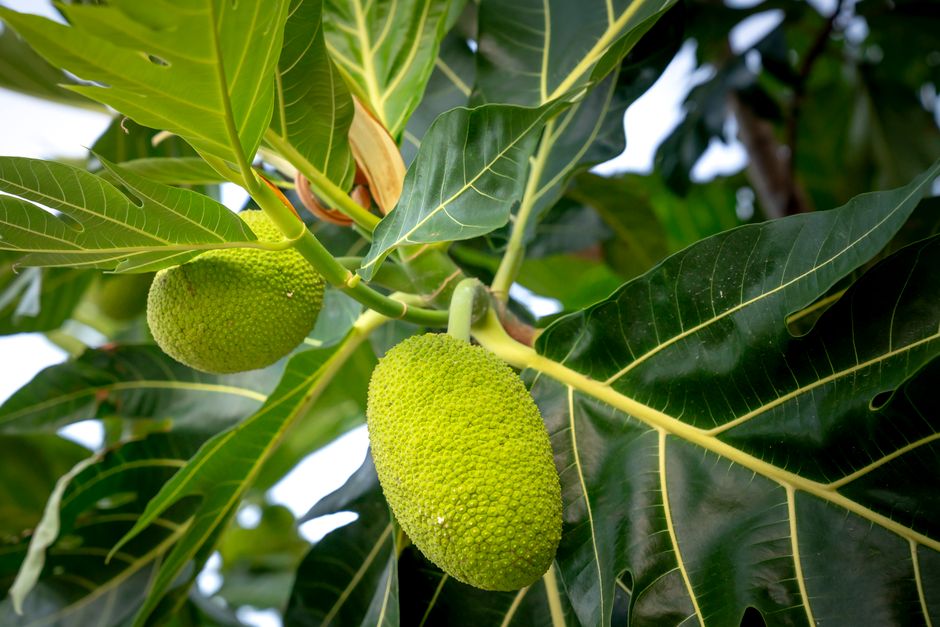
Breadfruit is ripe when the skin changes from bright green to a yellowish-green or brownish tone, the surface feels slightly soft under gentle pressure, and white sap stops leaking from the stem when picked. A ripe breadfruit also develops a sweet, fruity aroma and may show small brown spots or a slight cracking of the skin. Unripe breadfruit is hard, sticky with latex, and tastes starchy and bland — it needs cooking just like a potato.
How To Tell If Breadfruit Is Ripe And Ready To Eat
The most reliable way to judge ripeness is to combine several signs rather than relying on any single one. Color alone can mislead you because different varieties of breadfruit look different at maturity. Some stay greenish even when fully ripe while others turn yellow or brown.
Start with the skin. A ripe breadfruit has lost its bright, glossy green look. The surface becomes duller and takes on a yellowish or brownish cast. You may notice small brown patches or freckling. Some varieties develop a slight cracking or splitting of the skin near the stem as they ripen — this is a good sign, not a defect.
Press the fruit gently with your thumb. A ripe breadfruit yields slightly, like a ripe avocado or a peach that is just beginning to soften. It should not feel mushy or dent permanently. An unripe fruit feels rock hard and will not give at all.
Check the stem. Cut or break the stem and look for sap. Unripe breadfruit bleeds a thick, sticky white latex. A ripe fruit produces little or no sap. This is one of the most dependable tests.
Smell the skin. Ripe breadfruit gives off a sweet, fruity fragrance, especially near the stem end. Unripe fruit has almost no smell. Overripe fruit smells strongly sweet and fermented, like overripe bananas.
What Does Ripe Breadfruit Taste Like?
Ripe breadfruit is noticeably sweeter than unripe fruit. The flesh turns creamy or pale yellow and has a soft, custard-like texture when cooked. Many people describe the flavor as similar to a baked potato crossed with fresh bread, with hints of sweetness that intensify as the fruit ripens.
Unripe breadfruit is starchy and neutral, closer to a potato or green plantain. It absorbs other flavors well and works in savory dishes. Ripe breadfruit is sweet enough to eat as a dessert or a breakfast food. The same fruit changes character dramatically as it moves from unripe to ripe, so knowing how you plan to use it matters as much as knowing how to check ripeness.
Breadfruit is never eaten raw. Even fully ripe fruit must be cooked. The raw flesh contains latex compounds that are unpleasant and difficult to digest. Cooking breaks these down and transforms the texture completely.
How Long Does Breadfruit Take To Ripen?
Breadfruit does not ripen all at once on the tree. A single tree produces fruit over several months, and individual fruits mature at different times. From the time a fruit sets on the branch, it typically takes 15 to 19 weeks to reach full maturity, depending on the variety and growing conditions.
Once picked, breadfruit continues to ripen at room temperature. A hard, mature fruit will usually soften within 2 to 5 days on your counter. Warm, humid conditions speed this up. Cooler rooms slow it down. Do not refrigerate an unripe breadfruit — cold temperatures stop the ripening process and can damage the flesh.
If you need to slow ripening once the fruit is soft, you can move it to the refrigerator. A fully ripe breadfruit will keep for 2 to 3 days refrigerated. Beyond that, the flesh begins to break down and develop off-flavors.





Can You Eat Breadfruit Before It Is Ripe?
Yes — in fact, most of the world’s breadfruit is eaten unripe. Green, hard breadfruit is a staple food throughout the Pacific Islands, the Caribbean, and parts of Africa and Southeast Asia. It is boiled, roasted, fried, or mashed and used much like potatoes or plantains.
Unripe breadfruit has a firm, starchy texture that holds its shape during cooking. It is not sweet. It is versatile and neutral, which makes it useful in curries, stews, and soups. The key is that it must be cooked thoroughly. Raw green breadfruit is not edible.
Ripe breadfruit is a different food entirely. It is softer, sweeter, and quicker to cook. Both stages are legitimate — the right choice depends on what you are making. If you want a savory side dish, choose a firm, green fruit. If you want something sweet, wait for it to soften and develop fragrance.
What Does Overripe Breadfruit Look Like?
Overripe breadfruit has gone past the point of good eating. The skin becomes deeply brown or blackened, and the fruit feels mushy when pressed. The flesh inside turns dark, soft, and may develop a fermented, sour smell.
An overripe fruit is not dangerous in the way spoiled meat is dangerous, but it is not pleasant to eat. The texture becomes gluey and the sweetness turns cloying. Most people discard overripe fruit or use it only for composting.
One exception: some Pacific cultures intentionally ferment breadfruit as a preserved food. This is a deliberate process, not the same as leaving a fruit on your counter too long. Fermented breadfruit is a traditional dish with a distinctive sour flavor and a completely different preparation method.
How To Ripen Breadfruit Faster
If you have a hard, green breadfruit and want it ripe sooner, keep it at room temperature in a paper bag. The bag traps ethylene gas, the natural plant hormone that triggers ripening. Adding a banana or an apple to the bag increases ethylene levels and speeds the process further.
Check the fruit daily. Ripening can happen quickly once it starts, especially in warm weather. A fruit that felt rock hard in the morning can be noticeably softer by evening.
Do not use heat to force ripening. Putting breadfruit in the oven or near a direct heat source cooks the outside while leaving the inside hard. It ruins the texture and creates an uneven, unpleasant result.
Storing Breadfruit After It Ripens
Once a breadfruit is soft and fragrant, it is at its peak. Eat it within a day or two for the best flavor and texture. If you cannot use it right away, refrigerate the whole fruit. The cold slows further ripening and keeps the flesh firm for a few extra days.
Cooked breadfruit stores differently. Cooked pieces can be refrigerated for 3 to 4 days in a sealed container. You can also freeze cooked breadfruit for several months. Raw breadfruit does not freeze well — the texture breaks down when thawed.
Peeled and cut raw breadfruit browns quickly when exposed to air, just like apples or potatoes. If you are preparing it ahead of time, keep the pieces in water with a little lemon juice or vinegar until you are ready to cook.
Frequently Asked Questions
Can you eat breadfruit raw?
No. Breadfruit must be cooked before eating, whether ripe or unripe. Raw flesh contains latex compounds that are unpleasant and hard to digest.
How do you know when a breadfruit is ready to pick?
A breadfruit is ready to pick when the skin loses its glossy green shine and the fruit gives slightly under thumb pressure. The stem should also stop producing white sap when broken.
What color is a ripe breadfruit?
Ripe breadfruit ranges from yellowish-green to brownish, depending on the variety. Some varieties stay mostly green even when fully ripe, so color alone is not a reliable test.
How long does breadfruit last after picking?
Unripe breadfruit lasts 2 to 5 days at room temperature while ripening. Once fully ripe, it keeps for 2 to 3 days in the refrigerator.
