
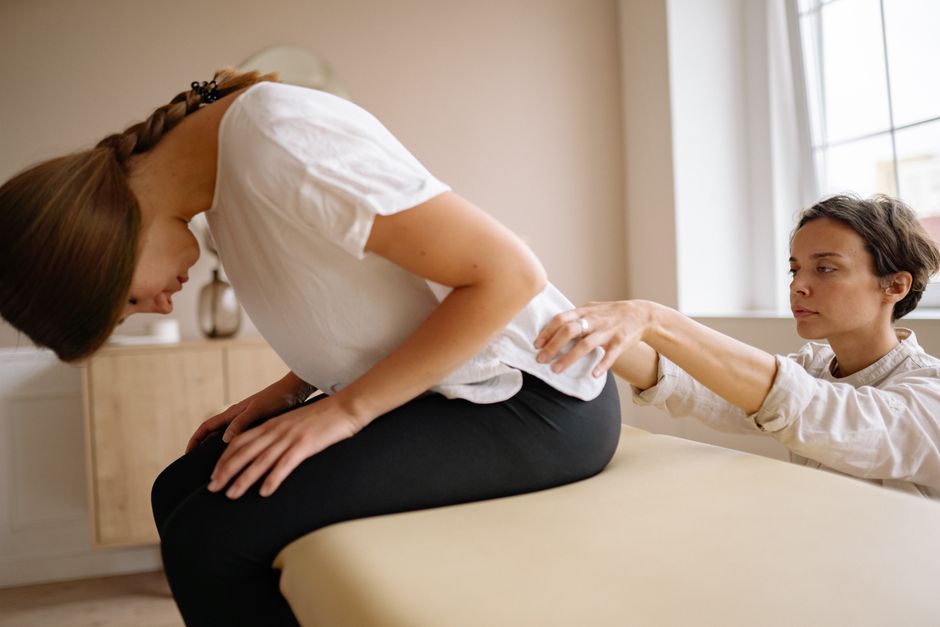
Back pain sends millions of people to doctors every year, and one of the first questions is often whether the pain comes from a muscle or from a kidney. The location, quality, and timing of the pain offer strong clues. Muscle pain usually feels like a dull ache or stiffness in the lower back that worsens with movement, while kidney pain typically sits higher and deeper, often on one side, and does not change much when you move. Fever, chills, nausea, or pain that radiates toward the groin point to a kidney problem and require prompt medical attention.
Where Exactly Is the Pain Located?
Location is the most reliable starting point. Muscular back pain follows the spine and the large muscles that flank it. You usually feel it across the lower back, from the bottom of the ribs down to the top of the buttocks. It can be on one side or both, and it often spreads across a broad area.
Kidney pain sits higher and more lateral. The kidneys lie deep in the back, just under the lower ribs, on either side of the spine. Pain from a kidney problem is usually felt on one side only, around the costovertebral angle — the spot where the ribs meet the spine. If you press firmly on that area and the pain is sharp or intense, that points toward a kidney issue rather than a muscle strain.
The depth of the pain also differs. Muscle pain feels superficial, like something in the tissue you can touch. Kidney pain feels deep, like it is coming from inside the body. Patients often describe it as a pressure or a boring ache that does not respond to massage or stretching.
Does Movement Change the Pain?
Muscle pain changes with movement. Bending, twisting, lifting, or standing up from a chair typically makes it worse. Resting or changing position often eases it. This is because the muscles are actively involved in every movement you make, and an injured or strained muscle protests when it has to work.
Kidney pain behaves differently. Movement does not usually make it worse because the kidneys are fixed organs deep in the abdomen. You can bend, stretch, and twist, and the pain stays about the same. What does change kidney pain is pressure over the area, and sometimes certain positions that compress the flank, but ordinary movement is not the main trigger.
This is not a perfect test. Severe kidney pain can make you feel so unwell that you avoid moving at all, which can be confused with muscle guarding. But as a general rule, if movement reliably worsens the pain, muscle strain is the more likely cause.
What Does the Pain Feel Like?
The quality of the pain gives another clue. Muscle pain is typically a dull ache, a cramp, or a burning sensation. It may feel like a knot or a tight band across the lower back. Some people describe it as a deep soreness similar to the feeling after an intense workout.
Kidney pain is often described as a constant, dull ache that does not ease with rest. When a kidney stone is moving, the pain can become sharp, cramping, and wave-like. This colicky pain can be severe enough to make it hard to sit still, and it frequently radiates from the flank around the side of the abdomen and down toward the groin or inner thigh.
That radiating pattern is important. Muscle pain in the back rarely travels to the groin. If your back pain wraps around your side and moves toward your lower abdomen or groin, a kidney stone is a strong possibility.
-
 How to Tell Kidney Pain from Back Pain? Easy Steps to Follow
 -
How to Tell If Back Pain is Kidney Pain? What You Need to Know
-
How to Tell Back Pain from Kidney Pain? Tips You Can Try
-
Can Lower Back Pain Be Caused by Kidney Stones? The Real Answer
-
Joint Genesis Review (2026): An Evidence-Based Analysis.





Are There Other Symptoms?
Associated symptoms often settle the question faster than the pain itself. Muscle strains do not cause fever, chills, or nausea. If you have any of those alongside back pain, a kidney infection or kidney stone is likely, and you should seek medical care.
Urinary symptoms also point toward the kidneys. Blood in the urine, cloudy urine, a strong odor, or pain or burning during urination all suggest a kidney or urinary tract problem. Frequent urges to urinate or difficulty passing urine can also accompany kidney stones or infections.
Muscle pain, on the other hand, is often linked to activity. You may recall a specific moment when you lifted something heavy, twisted awkwardly, or slept in an odd position. The pain may have started right away or built up over a day or two. That kind of timeline supports a muscular cause.
When Should You See a Doctor?
Certain symptoms require immediate medical attention. A fever with back pain is a red flag. So are chills, nausea, vomiting, or pain that is severe enough to interfere with daily function. Blood in the urine is always a reason to see a doctor.
Back pain that follows a fall, a blow, or another injury also needs evaluation. Numbness or weakness in the legs, loss of bladder or bowel control, or pain that travels down the leg below the knee may indicate a nerve or spinal problem rather than a simple muscle strain.
If you have diabetes, a history of kidney disease, or a weakened immune system, do not wait to see if symptoms improve. Kidney infections can escalate quickly in these groups. Similarly, if you are pregnant, any back pain accompanied by fever or urinary symptoms warrants prompt medical advice.
For straightforward muscle pain that follows activity and improves with rest, home care is reasonable. Over-the-counter anti-inflammatory medications like ibuprofen or naproxen can help. Gentle heat or cold packs, light stretching, and avoiding the activity that triggered the strain are sensible first steps. If the pain does not improve within a week or two, or if it worsens despite rest, see a clinician.
How Do Doctors Tell the Difference?
Clinicians use a combination of history, examination, and testing. They will ask about the onset of pain, what makes it worse, and whether you have fever or urinary symptoms. They will press on your back to check for tenderness over the kidneys and ask you to move in specific ways to test muscle function.
A urine test is quick and often decisive. It can detect blood, protein, or signs of infection in seconds. If the urine is clear and the pain responds to movement, a muscular cause becomes more likely.
Imaging is not always needed. A doctor may order an ultrasound or a CT scan if a kidney stone is suspected, or if the pain is severe and the cause is not clear. Blood tests can check kidney function and look for signs of infection. These tests are usually reserved for cases where the diagnosis is not obvious from the exam and urine testing alone.
What Conditions Mimic Kidney Pain?
Some conditions produce pain in the same region as the kidneys without involving the kidneys at all. A muscle strain in the quadratus lumborum — a deep muscle in the lower back — can feel surprisingly similar to kidney pain because of its location. This is one reason self-diagnosis has limits.
Spinal problems can also cause pain in the flank area. A herniated disc or arthritis in the spine can refer pain to the side of the back. Shingles, before the rash appears, can cause burning pain in a band across one side of the back. Rib injuries and even pneumonia can produce pain that feels like it comes from the kidney area.
Because several conditions overlap in location and quality, the safest approach is to use the clues above as a guide, not a final answer. If the pain is accompanied by fever, urinary changes, or severe discomfort, let a doctor make the call.
Frequently Asked Questions
Can kidney pain feel like a muscle strain?
Yes, early or mild kidney pain can feel like a dull ache similar to a muscle strain. The key difference is that kidney pain does not typically worsen with movement, while muscle pain usually does.
What does kidney pain feel like when you press on it?
Pressing firmly over the kidney area, just under the lower ribs on the side of the spine, usually produces a sharp or deep tenderness. Muscle pain may also be tender to pressure, but it tends to feel more superficial.
Is back pain from kidneys worse at night?
Kidney pain is usually constant and does not change much with position or time of day. Muscle pain often improves with rest and a comfortable sleeping position.
How long should I wait before seeing a doctor for back pain?
See a doctor right away if you have fever, chills, nausea, blood in your urine, or pain that is severe. For pain that seems muscular, waiting a few days with rest and over-the-counter pain relief is reasonable, but seek care if it does not improve within about a week.
