
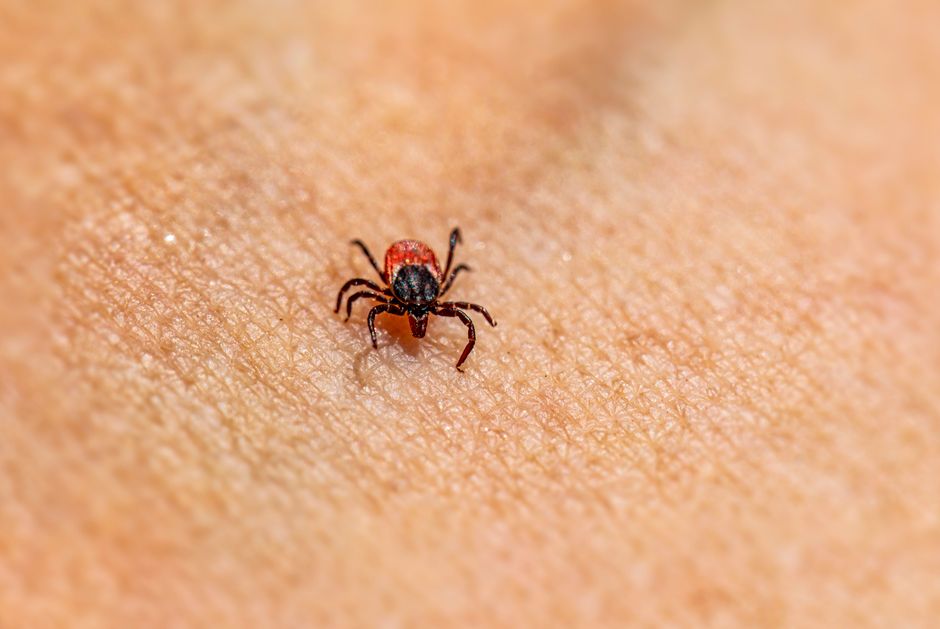
A tick bite can be easy to miss. Ticks are small, their bites are usually painless, and they often attach in places you cannot see. The most reliable way to know if a tick bit you is to find the tick still attached, but most people discover the bite after the tick has dropped off. This guide explains how to tell if a tick bit you, what the bite looks like, and when you should see a doctor.
What Does a Tick Bite Look Like?
A tick bite itself is typically a small, red, and slightly raised bump. It can look like a mosquito bite, a tiny pimple, or a minor skin irritation. Because the tick’s mouthparts are tiny, the initial wound is often no bigger than a pencil eraser.
The key difference from other insect bites is the timing. Mosquito bites itch almost immediately. Tick bites usually do not itch or hurt at all. If you notice a small red spot days after being outdoors and it never itched, a tick is a real possibility.
Some people develop a larger area of redness around the bite. This can be a normal reaction to the tick’s saliva. However, a distinctive “bullseye” rash — a red ring with a clear center — is a specific sign of Lyme disease and requires medical attention.
How To Tell If A Tick Bit You When You Cannot Find the Tick
Finding an attached tick is the only certain proof of a bite. Ticks often attach in warm, hidden areas. Check your hairline, behind your ears, under your arms, behind your knees, around your waist, and between your legs. They prefer thin skin and dark, moist places.
If you never find the tick, look for a small, dark scab or a tiny red dot that appeared after outdoor activity. Ticks can remain attached for several days before dropping off. A bite from a tick that fed and detached can leave a small puncture mark that heals into a scab within a few days.
Remember that nymph ticks — the immature stage — are no larger than a poppy seed. An attached nymph is nearly invisible. If you spent time in grassy or wooded areas and later find any unexplained small red mark, consider the possibility of a tick bite.
Signs That a Tick Was Attached for a While
A tick that has fed for more than 24 hours may leave more noticeable signs. The bite area can become more inflamed, larger, and slightly warm to the touch. This is not necessarily an infection — it is often just the skin reacting to the tick’s saliva.
If the tick carried a disease, symptoms may develop days or weeks later. These symptoms are not caused by the bite itself but by the pathogen the tick transmitted. Fever, chills, headache, muscle aches, and fatigue are common early signs of tick-borne illness. A rash that expands over several days is a specific warning sign.
The most important distinction is this: a small, itchy, healing bump is usually just a bite. A spreading rash, fever, or flu-like symptoms after a known or suspected tick exposure warrants a medical evaluation.





When to See a Doctor
You should see a doctor if you develop a rash that expands, especially a bullseye pattern. You should also seek care if you have fever, chills, headache, joint pain, or extreme fatigue within a few weeks of a tick bite or possible exposure.
Early treatment of tick-borne diseases is important. Lyme disease, anaplasmosis, and babesiosis are all treatable, but outcomes are better when treatment starts early. Do not wait for a rash to appear. Many tick-borne illnesses do not produce a rash at all.
If you find an attached tick, remove it promptly with fine-tipped tweezers. Grasp the tick as close to the skin as possible and pull upward with steady, even pressure. Do not twist or jerk the tick. Do not use petroleum jelly, heat, or nail polish to try to remove it. These methods can cause the tick to regurgitate saliva into your skin, which may increase disease transmission risk.
After removal, clean the area with rubbing alcohol or soap and water. Save the tick in a sealed bag or container. Your doctor may want to identify the species, since different ticks carry different diseases.
How Long Does It Take for Tick Bite Symptoms to Appear?
Skin irritation from a tick bite can appear within hours. Redness and mild swelling are immediate reactions to the tick’s saliva. These usually fade within a few days without treatment.
If a tick transmitted a disease, symptoms typically appear 3 to 30 days after the bite. The exact timing depends on the specific disease. For example, Lyme disease symptoms often begin 3 to 30 days after exposure. Anaplasmosis symptoms usually start within 1 to 2 weeks. Babesiosis symptoms can appear 1 to 4 weeks after the bite.
This wide range is why doctors ask about recent outdoor activity. A tick bite from two weeks ago can explain symptoms that appear today. Keep this timeline in mind if you develop unexplained fever or fatigue after spending time in tick habitats.
Are All Tick Bites Dangerous?
No. Most tick bites do not result in illness. Many people are bitten by ticks and never develop symptoms. The risk depends on the tick species, the region, and how long the tick was attached.
Transmission of most tick-borne pathogens requires the tick to be attached for a significant period. For Lyme disease, transmission is unlikely if the tick is removed within 24 hours. Other diseases, like anaplasmosis, can be transmitted more quickly, sometimes within a few hours of attachment.
This is why prompt tick checks and removal matter. The longer a tick stays attached, the higher the risk of disease transmission. Daily tick checks after outdoor activity are one of the most effective prevention strategies.
How To Prevent Tick Bites
Prevention is more reliable than detection. When walking in wooded or grassy areas, stay in the center of trails. Wear long pants and long sleeves when possible. Tuck your pants into your socks to create a barrier. Light-colored clothing makes ticks easier to spot.
Use an EPA-registered insect repellent containing DEET, picaridin, or oil of lemon eucalyptus on exposed skin. Treat clothing and gear with permethrin, which kills ticks on contact. Permethrin-treated clothing remains effective through multiple washes.
After returning indoors, check your entire body for ticks. Use a mirror for hard-to-see areas. Shower within two hours of coming indoors — this has been shown to reduce the risk of Lyme disease. Tumble dry your clothes on high heat for 10 minutes to kill any ticks that may be on them.
Frequently Asked Questions
Can a tick bite itch?
Yes, but itching is not typical. Most tick bites are painless and do not itch immediately. If a bite itches intensely within minutes, it is more likely a mosquito or other insect bite.
How long does a tick need to be attached to transmit disease?
For Lyme disease, transmission is unlikely before 24 hours of attachment. Other diseases can be transmitted in as little as a few hours. Removing any attached tick promptly is always the safest approach.
What should I do with the tick after removing it?
Place it in a sealed plastic bag or small container with a damp paper towel. Write the date on the container and keep it in the refrigerator. Your doctor may want to identify the species if you develop symptoms.
Should I see a doctor after any tick bite?
Not necessarily. If you removed the tick within 24 hours and have no symptoms, observation is reasonable. See a doctor if you develop a spreading rash, fever, headache, or muscle aches within 30 days of the bite.
