
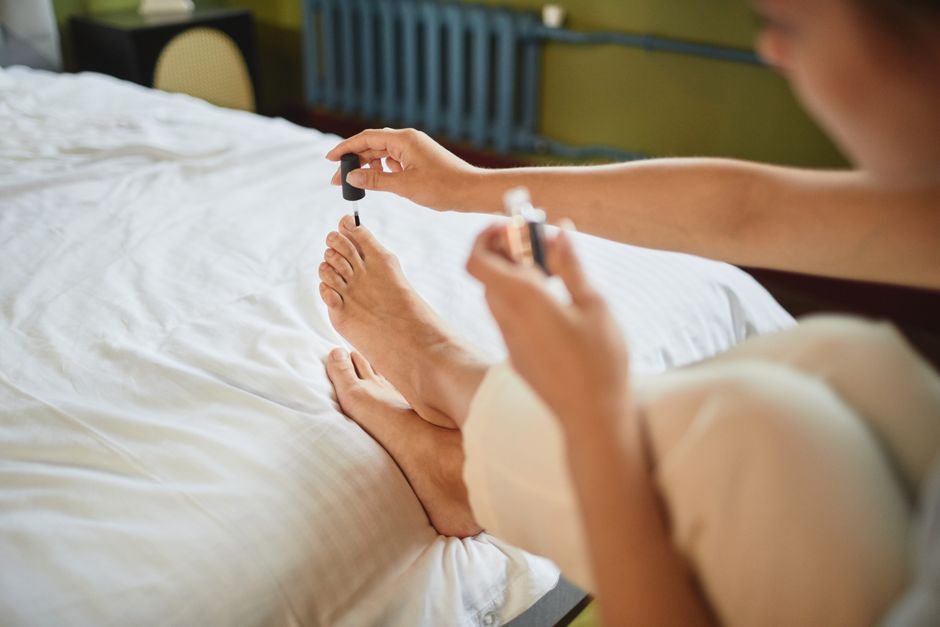
An ingrown toenail happens when the edge of the nail grows into the skin beside it. You can treat many mild cases at home with proper soaking and careful lifting of the nail edge. However, you cannot truly “take out” an ingrown toenail at home if it is infected or deeply embedded — that requires a doctor.
What Causes an Ingrown Toenail?
Most ingrown toenails start with how you trim your nails. Cutting nails too short or rounding the corners encourages the nail to grow into the skin. Wearing tight shoes or socks puts pressure on the toe and pushes the skin against the nail.
Some people inherit a natural curve in their toenails that makes them more prone to this problem. Injury to the toe, such as stubbing it or dropping something on it, can also trigger an ingrown nail. Repeated activity like running or kicking can irritate the area too.
Can You Take Out an Ingrown Toenail at Home?
The short answer is no — you should not attempt to cut or dig the nail out yourself. The nail is attached to the nail bed underneath, and the skin beside it is living tissue. Cutting into it blindly can make the problem worse.
What you can do at home is manage a mild ingrown toenail so it heals on its own. This involves softening the skin, gently lifting the nail edge, and keeping the area clean. This approach works best when the toe is not infected and the nail has not grown deeply into the skin.
If the nail is already embedded, swollen, or draining fluid, home treatment is not enough. Trying to dig it out increases the risk of infection spreading into the bone. That is a serious complication that requires medical care.
How To Take Out An Ingrown Toenail At Home: The Safe Method
For a mild ingrown toenail, the goal is not removal but relief. You want to reduce pressure and let the nail grow out naturally in the right direction. Here is the process that dermatologists and podiatrists commonly recommend.
Soak the foot. Fill a basin with warm water and add plain Epsom salt or a mild soap. Soak your foot for 15 to 20 minutes, two to three times daily. This softens the skin and the nail, making the area more manageable.
Lift the nail edge gently. After soaking, use a clean, sanitized tool to lift the corner of the nail. A cotton swab or dental floss can work better than a sharp instrument. Place a small piece of clean cotton or waxed dental floss under the nail edge to keep it lifted. This separates the nail from the skin and guides growth upward.
Keep it clean and dry. After each soak, apply an over-the-counter antibiotic ointment and cover the toe with a fresh bandage. Change the cotton or floss daily. Keep the area dry between soaks to prevent bacteria from multiplying.
Choose better footwear. Wear shoes with a wide toe box while the toe heals. Sandals or open-toed shoes are ideal if possible. Tight shoes will undo any progress you make.
Continue this routine for one to two weeks. You should see gradual improvement. If the pain worsens or the area shows signs of infection, stop home treatment and see a doctor.




What Not to Do at Home
Several popular methods for ingrown toenails are not just ineffective — they are dangerous. Avoid these completely.
- Never cut a V-shape into the nail. This old myth does not change nail growth direction. It only creates a sharp edge that can dig deeper.
- Never dig into the skin beside the nail. You can damage healthy tissue and introduce bacteria.
- Never rip or tear the nail off. This can tear the nail bed and cause permanent damage.
- Never use unsterilized tools. Dirty instruments can cause serious infections.
- Never apply chemical treatments like nail acid without a doctor. These are medical procedures that require proper training.
People with diabetes, poor circulation, or weakened immune systems should skip home treatment entirely. Even a mild ingrown toenail can become a serious problem for them. See a healthcare provider at the first sign of trouble.
When to See a Doctor
Some symptoms mean you need professional care right away. Do not wait to see if they improve on their own.
See a doctor if you notice any of these signs:
- Redness spreading up the toe or foot
- Warmth around the area
- Pus or yellow-green drainage
- Severe pain that does not improve with soaking
- Fever
- Diabetes or any condition that affects blood flow
A doctor can treat an ingrown toenail in several ways. They may lift the nail, remove part of it, or in recurrent cases, remove a portion of the nail matrix to prevent regrowth. These are simple office procedures done with local anesthesia. They are safe and effective.
Can an Ingrown Toenail Heal on Its Own?
Yes, mild cases can heal without any medical intervention. When the nail has only slightly irritated the skin and there is no infection, consistent home care often resolves the problem within one to two weeks. The body will heal the small wound once the pressure is removed.
More severe cases do not heal on their own. When the nail has pierced the skin and bacteria have entered, the wound can remain open and infected indefinitely. The body cannot push the nail out once it is embedded. Professional treatment is necessary to remove the offending portion of nail.
Recurrent ingrown toenails are common. If you have had this problem multiple times, talk to a podiatrist about long-term solutions. A minor surgical procedure can permanently fix the issue in many cases.
How to Prevent Ingrown Toenails
Prevention is simpler than treatment. Most ingrown toenails are avoidable with small changes to your routine.
Trim nails straight across. Do not curve the corners to match the shape of your toe. Use nail clippers designed for toenails, which are larger and provide more control. Cut the nail so the top edge is even with the tip of your toe.
Wear properly fitting shoes. Your toes should have room to move inside your shoes. If you can feel pressure on your toes from the sides or top, the shoes are too tight. This is especially important for athletic shoes, which should be fitted with the socks you plan to wear.
Keep your feet clean and dry. Moisture softens the skin around the nail, making it easier for the nail to pierce it. Dry your feet thoroughly after bathing, especially between the toes.
Protect your feet. If you play sports or work in environments where your toes can be injured, wear protective footwear. Trauma to the toe is a common trigger for ingrown nails.
Do Home Remedies Like Tea Tree Oil Work?
Tea tree oil and other essential oils are frequently promoted as treatments for ingrown toenails. The evidence for this is very limited. No large human studies have confirmed that tea tree oil treats or prevents ingrown toenails.
Tea tree oil does have some antimicrobial properties in laboratory settings. However, that does not mean it can resolve an ingrown nail. The core problem is mechanical — the nail is physically pressing into the skin. No oil can change that.
If you choose to use tea tree oil, never apply it undiluted to broken skin. It can cause contact dermatitis and worsen the irritation. Dilute it with a carrier oil and apply it only around the area, not directly into the wound.
The same applies to apple cider vinegar soaks, which are popular online. Vinegar has mild antibacterial properties, but soaking in warm water alone provides the same benefit for an ingrown nail. The key is the soaking and lifting, not the additive.
What Happens If You Ignore an Ingrown Toenail?
Ignoring an ingrown toenail rarely resolves it. The nail continues to grow into the skin, and the body responds with inflammation. Over time, the area can become chronically infected.
In severe cases, the infection can spread to the bone of the toe. This condition, called osteomyelitis, is serious and difficult to treat. It requires prolonged antibiotic therapy and sometimes surgery. This is rare, but it happens more often in people with diabetes or weakened immune systems.
Another risk is the development of a paronychia, an infection of the skin fold around the nail. This can become chronic and require prescription antibiotics or drainage by a doctor.
Early treatment is always better. A mild case that responds to home care in a week becomes a medical problem if left for a month. Do not wait for the pain to become unbearable before addressing it.
Frequently Asked Questions
Can I cut out an ingrown toenail myself?
No, you should not cut out an ingrown toenail yourself. Cutting into the skin or nail bed increases infection risk and can make the problem permanently worse.
How long does an ingrown toenail take to heal at home?
Mild cases typically improve within one to two weeks with consistent soaking and lifting of the nail edge. If there is no improvement after two weeks, see a doctor.
What is the fastest way to fix an ingrown toenail?
Soaking the foot in warm water and gently lifting the nail edge with clean cotton is the fastest safe home method. A doctor can provide faster relief for severe cases with a minor procedure.
Does Epsom salt help ingrown toenails?
Epsom salt in warm water helps soften the skin and nail, making the area easier to manage. The soaking itself reduces inflammation, not the salt specifically.
