
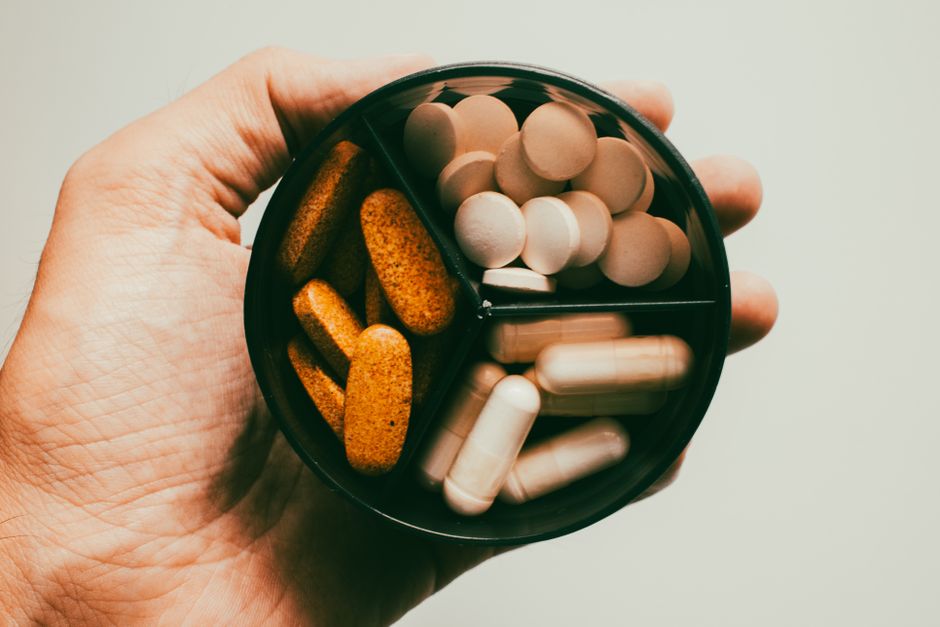
Mushroom supplements are not one thing. Reishi, lion’s mane, cordyceps, chaga, and turkey tail are different species with different active compounds, and the form you swallow matters as much as the species. If you want the best results, match the type to your goal, choose an extract that lists its active compounds, and take it consistently with a fat-containing meal if it is a fat-soluble extract. There is no single best time of day, and there is no standard dose that applies to everyone.
How To Take Mushroom Supplements For Best Results
Start with the label, not the marketing. A quality product tells you the species name, the part used (mycelium or fruiting body), the extraction method, and the concentration of key compounds. If the label only says “mushroom blend” with no species or compound data, you cannot judge what you are taking.
Three practical rules cover most of it:
- Match the species to the goal. Different mushrooms have different compounds. A product marketed for focus is not the same as one marketed for immune support.
- Take it with food if it is a fat-soluble extract. Compounds like triterpenes dissolve better with dietary fat. Water-soluble compounds do not need this.
- Be consistent. Most human studies run for weeks, not days. Sporadic use makes it hard to judge anything.
What you should not expect is a fast effect. This is not a drug. Most of the human research on mushroom supplements looks at changes over several weeks, and many of those studies are small.
Does It Matter Whether You Take Mycelium Or Fruiting Body?
It matters a great deal, and this is one of the most misunderstood points in the supplement aisle. Most mushroom supplements sold in the US are made from mycelium, not the fruiting body you would see growing on a log.
Mycelium is the root-like network of the fungus. To grow it in bulk, companies culture it on grain such as rice or oats. The problem is that the grain gets ground up along with the mycelium. That means a “mushroom” product can contain a large share of starch from the grain, not fungal tissue.
Fruiting body products use the actual mushroom. These tend to cost more and are often what the traditional use and much of the research is based on. Some products use both.
Neither form is automatically better for every purpose, and the research is not settled. But you deserve to know which one you are buying. If the label does not say, the product is usually mycelium on grain. Look for the words “100% fruiting body” or a clear statement of mycelium content if that distinction matters to you.
Which Mushroom Should You Take For Which Goal?
Different species contain different active compounds, so the goal should guide the choice. Here is a plain breakdown of what each is commonly used for and how strong the human evidence actually is.
| Mushroom | Commonly used for | Strength of human evidence |
|---|---|---|
| Lion’s mane | Cognitive function, nerve support | Small, early studies; promising but limited |
| Reishi | General wellness, sleep, stress | Small trials; mixed results |
| Cordyceps | Physical performance, energy | Some small trials; results vary |
| Turkey tail | Immune support, used alongside cancer treatment | Studied mainly as an adjunct in clinical settings |
| Chaga | Antioxidant, immune support | Mostly lab and animal data; little human research |
Read that third column carefully. For most of these, the human evidence is small or early. That does not mean the mushrooms do nothing. It means the honest position is that we do not yet have large, well-controlled trials proving benefit for most of the claims on the bottle.
Turkey tail is a partial exception. It has been studied as a supportive treatment alongside standard cancer care in some clinical settings, particularly in Asia. It is not a cancer treatment on its own, and no one should use it instead of medical care.




What Is The Right Dose And Timing?
There is no single established dose for most mushroom supplements. This is a genuine gap, not something being hidden from you. Unlike a medication with a defined therapeutic range, mushroom supplements do not have official dosing standards from regulatory bodies.
The most reliable approach is to follow the manufacturer’s suggested serving, since that reflects the concentration of their specific extract. A highly concentrated extract and a plain dried powder are not interchangeable by weight, so a gram of one is not the same as a gram of the other.
On timing: there is no strong evidence that morning versus evening changes results for most mushrooms. Two reasonable points:
- If a product seems stimulating for you, take it earlier in the day.
- If you take it with a fat-soluble extract, pair it with a meal that contains some fat.
Some clinicians suggest starting at a lower serving than the label for the first week to see how you respond, then moving up. That is common practice, not a proven protocol. If you take prescription medication, talk to your pharmacist or doctor before starting, because some mushrooms can interact with drugs.
How Long Before You Notice Anything?
Do not judge a mushroom supplement after three days. Most human studies measure changes over several weeks to a few months, and even then the effects are often modest.
A reasonable personal trial is to take a consistent serving for a set period, such as a month or two, and track something specific. Not a vague sense of feeling better, but a concrete marker: sleep quality, a workout log, or a focus rating. If nothing changes and you feel no different, you have your answer.
Be skeptical of any product that promises results in days. That timeline is not supported by the research on these supplements.
What Should You Watch Out For?
Mushroom supplements are generally tolerated by many people, but “natural” does not mean risk-free. Some people report digestive upset, and allergic reactions are possible, especially in people who react to mold or other fungi.
Three things deserve real caution:
- Medication interactions. Some mushrooms may affect blood clotting or how the body processes certain drugs. If you take blood thinners or immune-suppressing medication, check with your doctor first.
- Cancer treatment. Do not use any mushroom supplement as a replacement for treatment. If you want to use one alongside care, tell your oncology team so they can check for interactions.
- Pregnancy and breastfeeding. No clinical guidelines currently exist for mushroom supplement use in pregnancy or breastfeeding. Without established safety data, the cautious choice is to avoid them unless a doctor says otherwise.
Also watch the source. Supplements are not regulated the same way medications are. Independent testing has found that some products do not contain what the label claims. Choosing brands that publish third-party test results reduces, but does not eliminate, that risk.
Does The Form Of The Supplement Matter?
It can. Capsules, powders, tinctures, and liquid extracts deliver compounds differently, and the extraction method affects how much of a given compound ends up in the product.
Hot water extraction pulls out water-soluble compounds. Alcohol or dual extraction pulls out fat-soluble compounds like triterpenes. A product made with only one method may be missing compounds found with the other. Some quality brands use dual extraction and say so on the label.
A tincture held under the tongue is sometimes marketed as better absorbed. There is little human evidence confirming that this route works better than swallowing a capsule for these specific compounds. If a company claims superior absorption, ask what study supports it. Often there is none.
Frequently Asked Questions
What is the best time of day to take mushroom supplements?
There is no strong evidence that a specific time of day improves results for most mushroom supplements. If a product feels stimulating, take it earlier rather than close to bedtime.
Should I take mushroom supplements with food?
If the extract contains fat-soluble compounds like triterpenes, taking it with a meal that contains some fat may improve absorption. Water-soluble compounds do not require this.
How long does it take for mushroom supplements to work?
Most human studies measure changes over several weeks to a few months, so judge results over that kind of timeframe rather than days. Effects, when they occur, tend to be modest.
Are mushroom supplements safe to take every day?
Many people tolerate them, but safety data for long-term daily use is limited, and some mushrooms can interact with medications. Check with your doctor or pharmacist, especially if you take prescription drugs.
