
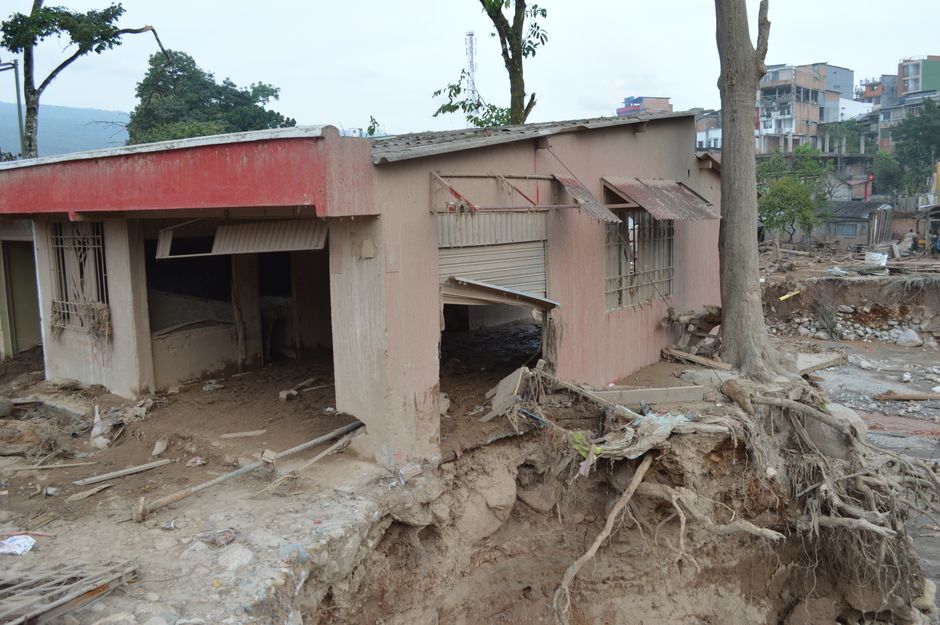
A landslide can happen with little warning, turning solid ground into a fast-moving river of mud, rock, and debris. Your best chance of survival comes down to knowing what to do before it starts and reacting correctly in the first few seconds. If you are at home, move to an upper floor away from the downhill side. If you are outdoors, get to high ground immediately and avoid valleys. If you are in a car, do not try to outrun it — abandon the vehicle and move uphill if you can do so safely.
What Causes A Landslide To Happen So Suddenly?
Landslides occur when a slope becomes too unstable to hold its own weight. Water is the most common trigger. Heavy rain, rapid snowmelt, or broken water lines saturate the ground, reducing the friction that keeps soil and rock in place.
Earthquakes, volcanic activity, and construction that cuts into hillsides also destabilize slopes. In some cases, a slope has been slowly moving for years before a sudden collapse. In other cases, a single storm pushes the ground past its breaking point within hours.
Debris flows, commonly called mudslides, are the fastest and most dangerous type. They move like wet concrete but can travel at highway speeds. They do not follow straight paths. They can suddenly change direction and pick up trees, boulders, and even cars.
How Do You Survive A Landslide While At Home?
If you are at home during heavy rain and live near a slope, your safest position is an upper floor on the side of the house facing away from the hill. Move there as soon as you hear unusual rumbling, cracking trees, or see new cracks in your walls or driveway.
Do not go into a basement or a ground-floor room on the downhill side. A landslide can push through walls and fill lower spaces with debris within seconds. An upper floor gives you a better chance of staying above the flow.
Stay inside unless the building is collapsing. Buildings offer significant protection from debris flows, which are dense but rarely crush a well-built structure entirely. If you must leave, move to the highest ground you can reach on foot.
If you are trapped inside during a slide, protect your head and neck with your arms or a sturdy object. Cover your mouth and nose to avoid inhaling dust. Most landslide-related injuries come from blunt trauma and suffocation, not from being buried deeply.
What Should You Do If You Are Outdoors When A Landslide Starts?
Move uphill and away from the path of the slide. Do not stop to gather belongings or take photos. Every second matters because debris flows can outrun a person on foot over short distances.
Head for the highest point you can reach, preferably a ridge or a hilltop. Avoid valleys, stream beds, and the bases of steep slopes. These are natural channels where debris will travel.
If you cannot outrun the slide, curl into a ball and cover your head with your arms. This protects your skull and spine from impacts. Do not try to outrun a debris flow on flat ground — it will catch you.
If you are near trees, do not climb one. Debris flows snap trees easily and carry them as projectiles. A mature tree on high ground is safe, but climbing a tree in the path of a flow is not a survival strategy.





How To Survive A Landslide When You Are In A Car
If you are driving and see a landslide or debris flow ahead, stop immediately. Do not attempt to drive through it. Debris flows are dense enough to push cars off the road and carry them for hundreds of feet.
If the slide is approaching from the side, abandon the vehicle and run uphill. Leave your car behind — it is not a safe shelter. Cars offer almost no protection from the weight of moving rock and mud.
If you are already caught in the flow, stay inside the car with your seatbelt on. Roll up the windows and cover your head with your arms. The car may roll, so brace yourself against the seat. Do not try to exit while the vehicle is moving.
Once the vehicle stops moving, assess your situation before exiting. The car may be partially buried, and the slide may still be active. If you can safely exit, move uphill immediately. If you are trapped, honk the horn or use your phone to signal for help.
Never park or sleep in a car at the base of a slope during heavy rain. This is one of the most dangerous places to be during a landslide because vehicles are easily swept away.
What Warning Signs Should You Watch For Before A Landslide?
Several signs can indicate that a slope is becoming unstable. New cracks in plaster, tile, or brickwork are common early warnings. Doors and windows that suddenly stick or jam suggest the building frame is shifting.
Outside, watch for tilting trees, leaning fence posts, or new cracks in the ground. Water seeping from the ground in new locations, or a sudden increase in stream flow, can indicate the soil is saturated.
Listen for rumbling sounds that grow louder, or the sound of trees cracking. These are often the final warnings before a slide releases. If you notice any of these signs, do not wait for confirmation. Move to high ground.
Faint rumbling that grows louder is the most reliable audible warning. Some survivors describe it as sounding like a freight train or a low-flying aircraft. If you hear this sound, act immediately.
What Should You Do After A Landslide Stops?
Stay away from the slide area. Landslides can have multiple pulses, with the second or third surge being just as dangerous as the first. The ground may remain unstable for days or weeks.
Avoid the affected area entirely, even if it looks stable. Freshly moved earth can shift again without warning. Do not walk on the debris, as it may hide deep voids or unstable pockets.
Check for injured people only if it is safe to do so. Do not enter partially collapsed structures. Call emergency services immediately and give them your exact location.
Be aware of secondary hazards. Landslides can break gas lines, down power lines, and contaminate water supplies. If you smell gas, leave the area and report it from a safe distance.
If you are trapped, do not shout continuously. Shouting wastes energy and can cause you to inhale dust. Instead, shout in short bursts or tap on a solid object. If you have a phone, call for help and keep it on silent to preserve battery.
How Can You Reduce Your Landslide Risk Before It Happens?
If you live in a mountainous or hilly area, check whether your property sits on or near a slope that has moved before. Local government offices and geological surveys often have landslide hazard maps available to the public.
Avoid building or buying a home at the base of a steep slope, near the top of a slope, or along a natural drainage channel. These are the highest-risk locations. Homes at the top of a slope are at risk from the head of the slide pulling away, while homes at the bottom face the full force of the debris.
Plant ground cover on slopes to help hold soil in place. Deep-rooted plants and grasses are more effective than shallow-rooted ground cover. Do not remove vegetation from a slope without a plan for replacement.
Redirect water away from slopes. Fix leaking pipes, keep gutters clean, and ensure downspouts drain well away from the hillside. Do not build ponds, pools, or irrigation systems near the top of a slope.
Have an emergency plan and a go-bag ready. Your plan should include a designated meeting point on high ground and a communication method that works without cell service. If you live in a high-risk area, consider purchasing landslide insurance, as standard homeowners policies typically do not cover it.
Frequently Asked Questions
Can you outrun a landslide on foot?
No, you cannot outrun a fast-moving debris flow, but you can outrun it by moving uphill and perpendicular to the slide’s path. A debris flow can travel at highway speeds, so your only chance is to get to high ground before it reaches you.
Is it safer to stay in a car or get out during a landslide?
It is safer to get out and move uphill if you have time, because cars offer almost no protection from the weight of debris. If the slide is already hitting the car, stay inside with your seatbelt on and protect your head.
What is the safest place in a house during a landslide?
The safest place is an upper floor on the side of the house facing away from the slope. Avoid basements and ground-floor rooms on the downhill side, as they are most likely to be filled with debris.
How long do landslides last?
Most landslides last between a few seconds and a few minutes, but the danger continues afterward because the ground may shift again. Multiple surges can occur over hours or days, so stay away from the affected area until authorities confirm it is stable.
