
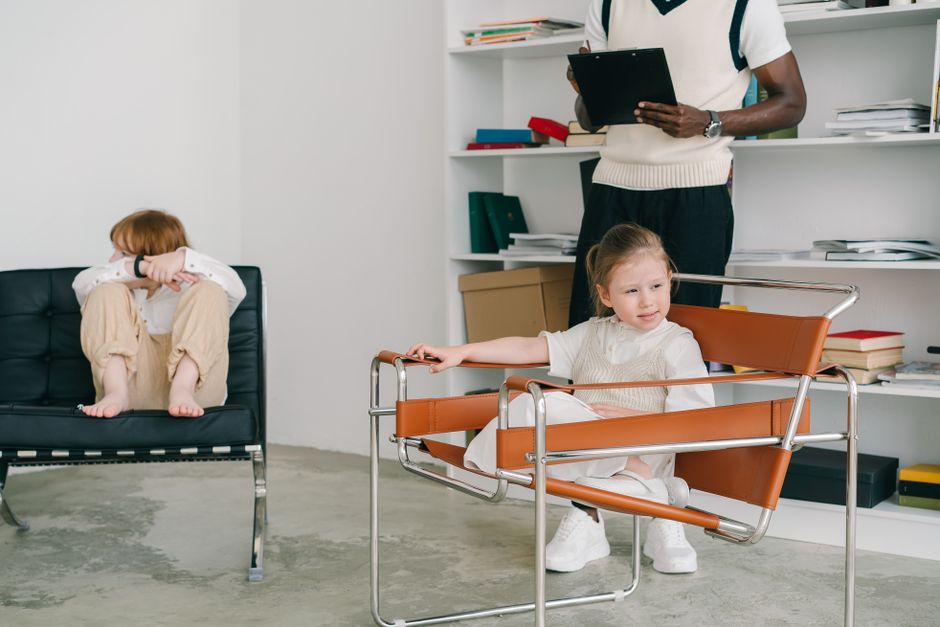
Supporting a child’s mental health in school starts with building a strong, open relationship at home. Children who feel safe talking about their feelings are better equipped to handle the social and academic pressures of the school day. Practical steps include establishing consistent routines, staying involved with teachers, and teaching simple emotional regulation skills that a child can use at their desk or in the hallway.
What Does Mental Health Support in School Actually Look Like?
Mental health support in school is not one single program. It is a combination of daily habits, adult awareness, and the physical environment a child learns in. For many children, the most powerful support comes from feeling known and understood by the adults around them.
Teachers and school staff are not mental health professionals. But they are often the first to notice changes in behavior, mood, or academic performance. When parents and teachers share observations, problems are often caught early, before they grow into larger issues.
How To Support Childrens Mental Health In School Through Daily Routines
Predictability is calming for a child’s nervous system. When a child knows what comes next, their brain does not have to work as hard to manage uncertainty. This is why consistent morning and evening routines matter so much.
Simple routines that help include:
- A set bedtime that allows for enough sleep — most school-aged children need 9 to 11 hours.
- A calm morning that is not rushed, with time for breakfast.
- A consistent place for homework, backpack, and shoes.
- Screen time limits that protect sleep and physical activity.
These routines do not solve every problem. But they create a stable foundation. A well-rested child with a full stomach is simply better able to cope with the challenges of a school day.
What Should You Say When Your Child Is Struggling?
The words you use matter. When a child says school is hard or that they hate a class, the instinct to fix the problem is strong. But children often need to feel heard before they can accept help.
Try reflecting their feelings back to them. Say something like, “It sounds like math is really frustrating today.” This validates their experience without judgment. Avoid immediately offering solutions or minimizing their feelings with phrases like “It is not that bad” or “Everyone goes through this.”
Questions that open conversation include:
- “What was the best part of your day?”
- “What was the hardest part of your day?”
- “Is there anything you wish your teacher knew?”
- “Who did you sit with at lunch?”
These questions are not about extracting information. They are about signaling that you are interested in their inner world. Over time, this builds trust.





How to Work With Teachers and School Staff
Parents and teachers are partners, not adversaries. A collaborative relationship benefits the child more than any single intervention. Reach out early, not just when there is a crisis.
When you email or meet with a teacher, be specific. Instead of saying “My child is anxious,” describe what you observe. For example, “She has trouble falling asleep on Sunday nights and often complains of a stomachache before tests.” This gives the teacher concrete information to work with.
Ask the teacher what they observe in the classroom. Children often behave differently at school than at home. A child who is chatty at home may be silent in class. A child who is calm at home may be restless at school. Both perspectives are needed to see the full picture.
Schools in the United States often have a student support team. This may include a school counselor, psychologist, or social worker. If concerns persist, ask about this team. You do not need a diagnosis to request a meeting.
Teaching Emotional Regulation Skills at Home
Emotional regulation is the ability to manage feelings in the moment. It is a skill, not a personality trait. Like any skill, it can be taught and practiced.
One of the most effective tools is simple breathing. When a child is upset, their body goes into a stress response. Slow breathing activates the parasympathetic nervous system, which calms the body down. This is not a relaxation trend — it is established physiology.
Teach your child a basic technique. Breathe in for four counts, hold for four, and breathe out for four. Practice it together when everyone is calm. If you only practice it during a meltdown, it will not work. The brain needs to associate the technique with a calm state first.
Another helpful tool is naming feelings. Research consistently shows that putting a name to an emotion reduces its intensity. A child who can say “I feel angry” rather than throwing a pencil is using a higher-level brain function. You can help by modeling this yourself. Say “I am feeling frustrated about this traffic” or “I am feeling excited about the weekend.”
When Should You Seek Professional Help?
It is normal for children to have bad days, bad weeks, or difficult transitions. It is not normal for a child to be in distress for a long period of time. Parents should trust their instincts. If you are concerned, that is enough reason to seek guidance.
Signs that professional support may be needed include:
- Mood changes that last more than two weeks.
- Withdrawal from friends or activities they used to enjoy.
- Big changes in sleep or appetite.
- Frequent physical complaints like headaches or stomachaches with no clear medical cause.
- Talk of self-harm or hopelessness — this is always an emergency, and you should seek help immediately.
Start with your pediatrician. They can rule out medical causes and refer you to a child therapist or psychiatrist. Many schools also offer counseling services, though availability varies widely by district. You can also contact your insurance company for a list of in-network providers who specialize in children.
Some parents worry that therapy means they have failed. This is not true. Seeking help is a sign of strength and good parenting. A therapist is a trained partner who can offer tools that parents may not have.
What About Bullying and Social Pressures?
Bullying can have a serious effect on a child’s mental health. If your child reports being bullied, take it seriously. Do not dismiss it as a normal part of growing up.
Document what your child tells you. Write down dates, times, and what happened. Then contact the school. Most schools have anti-bullying policies and procedures. Ask specifically what steps they will take and when you can follow up.
Social pressures are broader than bullying. Many children struggle with friendship drama, feeling left out, or the pressure to fit in. These experiences are painful but are also part of normal development. Your role is to listen, validate, and help your child problem-solve — not to fix every social situation.
How Much Screen Time Is Too Much?
Screen time is a complicated topic because it is not all bad. Children use screens for homework, social connection, and entertainment. The problem is when screens crowd out sleep, physical activity, and in-person social time.
The American Academy of Pediatrics has historically recommended consistent limits on screen time, though specific hour limits have evolved as technology has changed. The more important question is not the exact number of hours, but whether screens are interfering with essential activities. If a child is losing sleep, skipping meals, or avoiding friends because of screens, that is a problem.
Consider creating family rules around screens. Common approaches include no phones at the dinner table, no screens in the bedroom overnight, and screen-free times during homework. The specific rules matter less than consistency. Children thrive when expectations are clear and enforced calmly.
Frequently Asked Questions
How can I tell if my child is struggling with their mental health?
Look for changes in behavior, mood, sleep, appetite, or grades that last more than two weeks. Trust your parental instinct — if you are worried, it is worth talking to your pediatrician.
What should I do if my child says they are being bullied?
Listen calmly, document the details, and contact the school to ask about their anti-bullying procedures. Follow up to make sure action was taken.
Can I ask the school for a mental health evaluation?
Yes, you can request a meeting with the school counselor or student support team. In the United States, schools have processes for evaluating students who may need additional support.
Is it normal for kids to say they hate school?
Occasional complaints are normal, especially after breaks or during difficult transitions. Persistent distress, avoidance, or physical symptoms like stomachaches are signs that something deeper may be going on.
