
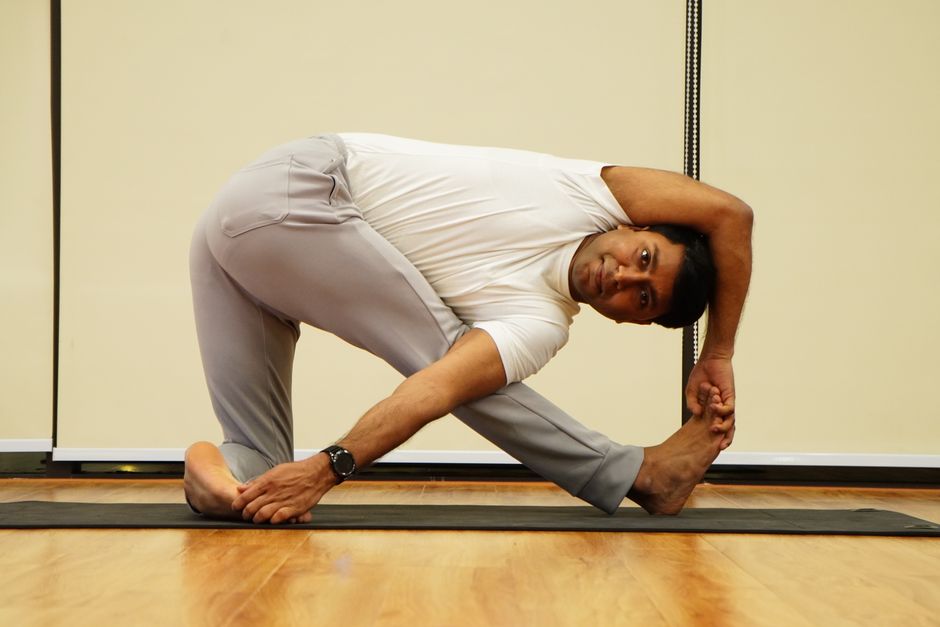
To stretch the inside of your thigh, you lengthen the adductor muscles that run from your pelvis to your inner knee. The most reliable way is a slow, controlled movement into a comfortable stretch, held without bouncing, for a short series of repetitions. You do not need special equipment. You do need to move gently, because these muscles respond better to patience than to force.
The adductors are a group of muscles most people ignore until something hurts. They help stabilize your hips, control your stride, and pull your legs together. When they get tight, you may feel it in your groin, your inner knee, or your lower back. Stretching them is simple, but doing it well takes a little know-how.
What Muscles Are You Actually Stretching?
The inner thigh is home to a group of muscles called the adductors. Their main job is to pull your leg toward the midline of your body. They also help stabilize the hip and pelvis during walking, running, and standing on one leg.
The group includes several muscles, among them the adductor longus, adductor brevis, adductor magnus, gracilis, and pectineus. They attach along the pubic and pelvic bones and run down to the inner femur and, for the gracilis, the inner knee. Because they cross both the hip and, in some cases, the knee, they affect more than one joint.
This matters for stretching. A good inner-thigh stretch usually positions the leg out to the side, which puts the adductors on stretch across the hip. Some positions also involve slight knee movement. Understanding this helps you avoid the common mistake of forcing the knee when the real target is the hip.
How To Stretch Inside Of Thigh: Expert Tips For Each Position
There is no single best stretch. Different positions reach the adductors from slightly different angles, and rotating through a few of them gives you broader coverage. Here are the most reliable options, described so you can set them up safely.
The seated butterfly stretch
Sit on the floor with the soles of your feet together and your knees falling out to the sides. Hold your feet with your hands. Sit tall, then lean forward gently from your hips until you feel a stretch in your inner thighs. Keep your back from rounding too much. Hold and breathe.
This is the most accessible inner-thigh stretch and a good starting point. If your hips are tight, place a folded towel or cushion under each knee for support rather than pressing the knees down.
The standing wide-leg stretch
Stand with your feet wider than your shoulders, toes pointing slightly out. Shift your weight to one side and bend that knee while keeping the other leg straight. You should feel a stretch along the inner thigh of the straight leg. Keep both feet flat and your torso upright. Hold, then switch sides.
This one is useful because it mimics a position your body already uses. It also lets you control the intensity by how far you shift your weight.
The side-lying leg lift stretch
Lie on your side with your back against a wall for support. Lift your top leg and rest it against the wall, or hold it with your hand, letting it rise as far as comfortable. The inner thigh of the raised leg lengthens as the leg moves away from the midline. Keep the movement slow. This is a gentler option if seated stretches feel too intense.
The frog stretch
Kneel on a soft surface and widen your knees, then sink your hips back and down while keeping your feet in line with your knees. This opens the inner thighs. Move slowly and stay within a range that feels like a stretch, not a pinch. Some people find this position demanding on the knees, so use padding and back off if you feel joint pressure rather than muscle stretch.
How Long Should You Hold A Stretch?
Hold each stretch long enough for the muscle to relax into it, but not so long that you force it. A common approach in flexibility training is to hold a static stretch for roughly 15 to 30 seconds and repeat it two to four times per muscle group. This is a general training convention rather than a strict medical rule, and different people respond differently.
The key is the quality of the hold. The first few seconds often feel tight. As you breathe and relax, the muscle usually gives a little. That gentle give is the signal you are in a productive range. Sharp pain, numbness, or a pinching feeling in the joint means you have gone too far.
Bouncing is worth avoiding. Ballistic, bouncy stretching can trigger a protective reflex that makes the muscle tighten rather than lengthen. Slow and steady wins here.





Should You Stretch Before Or After Exercise?
Both can work, but they serve different purposes. A gentle dynamic warm-up before activity prepares the muscles and joints. Longer static holds tend to fit better after exercise, when the muscles are warm and more pliable.
One point that often gets lost: prolonged static stretching right before explosive activity like sprinting or jumping may temporarily reduce power output in some people. That does not mean static stretching is bad. It means timing matters. If you are about to do something explosive, favor dynamic movement first and save the longer holds for afterward.
For general flexibility, consistency matters more than timing. Stretching a few times a week, done regularly, tends to produce more change than one long session.
Common Mistakes That Make Inner-Thigh Stretches Less Effective
Most problems with inner-thigh stretching come down to a few avoidable habits. Fixing them makes the stretch safer and more useful.
- Forcing the knees down. In the butterfly position, pressing the knees toward the floor can stress the hip joint and the inner knee. Let gravity and relaxation do the work.
- Holding your breath. Breathing steadily helps muscles release. Clenched breathing tends to keep them guarded.
- Bouncing. Quick, bouncy movements can provoke tightening rather than lengthening.
- Pushing into pain. A stretch should feel like tension, not sharp pain. Pain is a signal to ease off.
- Skipping the warm-up. Cold muscles are less forgiving. A few minutes of easy movement first helps.
There is a subtle point worth knowing. Feeling a stretch does not always mean you are stretching the muscle you think you are. In some inner-thigh positions, what you feel near the groin can involve hip joint structures as much as muscle. If a position feels like a pinch deep in the hip rather than a pull along the thigh, adjust your angle.
When Should You Be Careful With Inner-Thigh Stretching?
Inner-thigh stretching is generally low risk for healthy adults, but some situations call for caution. If you have had a groin strain or hip injury, a sharp pain during stretching is not something to push through. A pulled adductor muscle can take weeks to heal, and aggressive stretching too early can slow recovery.
People with hip conditions, recent hip surgery, or known joint problems should check with a clinician before starting a new stretching routine. The same applies if you feel pain that radiates, numbness, or a catching sensation in the joint. These are not typical stretch sensations and deserve a professional look.
Pregnant women and people with certain pelvic conditions may find some inner-thigh positions uncomfortable. No universal clinical guidelines cover stretching for every group, so individual comfort and professional advice should guide the choice.
How Often Should You Stretch For Real Flexibility Gains?
Flexibility improves with regular practice, not occasional effort. Stretching the inner thighs a few times per week, done consistently, is a reasonable general approach for most healthy adults. Some people stretch daily without problems; others do better with rest days.
The honest position is that individual response varies. Genetics, age, activity level, and injury history all play a role. Progress is usually gradual, measured over weeks rather than days. If you are stretching to support a sport or to address a specific tightness, a physical therapist can tailor a plan better than any general routine.
Frequently Asked Questions
How do you stretch the inside of your thigh at home?
Sit with the soles of your feet together and knees out to the sides, then lean gently forward from your hips until you feel a stretch in your inner thighs. Hold it steadily without bouncing and breathe throughout.
How long should you hold an inner-thigh stretch?
A common training approach is to hold each stretch for about 15 to 30 seconds and repeat it two to four times. This is a general convention rather than a strict rule, so adjust to what feels comfortable.
Is it bad to feel pain when stretching your inner thigh?
Yes, sharp pain is a sign to stop. A stretch should feel like tension or a mild pull, not pain, numbness, or a pinching feeling in the joint.
Can stretching the inner thigh help with tight hips?
It can help, because the adductors cross the hip and contribute to hip tightness. It works best alongside stretching other hip muscles and regular movement rather than as a standalone fix.
