
Kegels get all the attention, but they are not the only way to build a stronger pelvic floor. Movements that use your hips, breath, and whole body can train the same muscles that Kegels target. These approaches work best when a trained clinician has checked that your pelvic floor muscles are not already too tight.
The pelvic floor is a sling of muscle and connective tissue that sits at the base of your pelvis. It supports your bladder, bowel, and uterus, and it helps control when you urinate or pass stool. Like any muscle group, it responds to load, coordination, and practice. Kegels are one way to train it. They are not the only way, and for some people they are the wrong way.
Why would someone want to strengthen their pelvic floor without Kegels?
Kegels are hard to do correctly, and many people get them wrong. A common mistake is bearing down instead of squeezing and lifting. That pushes the pelvic floor down when you want it to lift. Some people also hold their breath or clench their buttocks and thighs, which means the pelvic floor is not doing the work.
There is a bigger issue that gets less attention. Not every weak-feeling pelvic floor is actually weak. Some people have muscles that are overactive or too tight. This is sometimes called a hypertonic pelvic floor. In that case, more squeezing can make symptoms worse. A clinician can tell the difference. That distinction matters, because the right exercise depends on it.
Others simply find Kegels boring, hard to remember, or uncomfortable. Whole-body movement gives them another route to the same muscles.
What movements train the pelvic floor without Kegels?
The pelvic floor works together with your diaphragm, deep abdominal muscles, and hip muscles. Movements that coordinate these groups train the pelvic floor as part of a system rather than in isolation. This is the idea behind what some clinicians call a whole-body or functional approach.
Here are several approaches that physical therapists and pelvic health clinicians commonly use.
- Diaphragmatic breathing. Slow breathing that expands the belly and lower ribs gently moves the pelvic floor. On the inhale, the diaphragm drops and the pelvic floor relaxes and lengthens slightly. On the exhale, both return. This coordination is the foundation for most other pelvic floor work.
- Hip hinge and squat movements. Sitting back into a squat or hip hinge asks the pelvic floor to lengthen under load. Done with good breathing, these movements build strength and control.
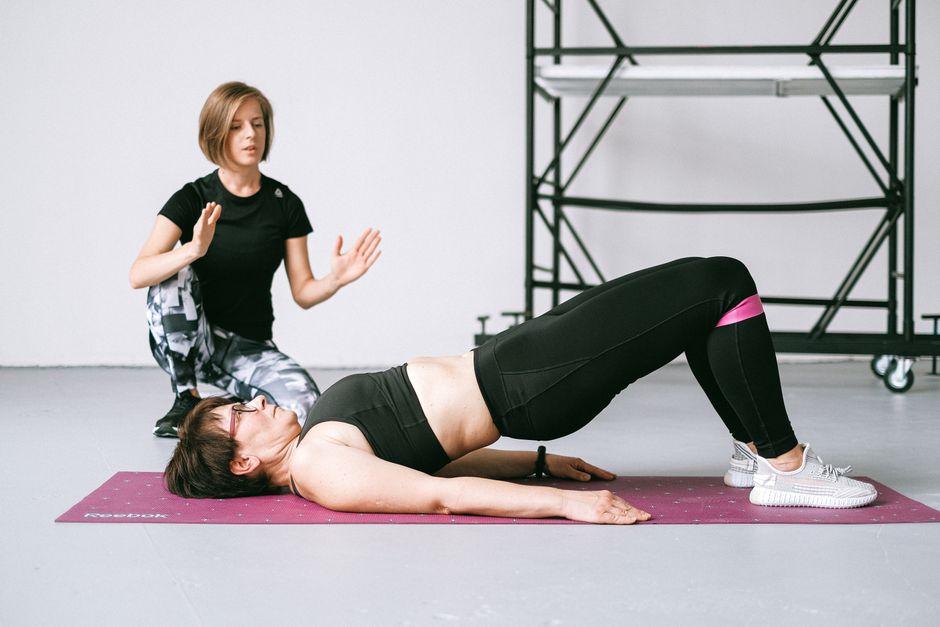
- Bridges. Lying on your back with knees bent and lifting the hips works the glutes and the back of the body. It also asks the pelvic floor to coordinate with hip movement.
- Dead bug and bird dog. These core exercises teach you to keep your trunk stable while your arms or legs move. They train the deep abdominal and pelvic muscles to work together.
- Walking and stair climbing. Regular upright movement loads the pelvic floor with every step. It is not a targeted exercise, but it is real, repeated work.
The common thread is breathing. If you hold your breath or brace hard during these movements, you can push down on the pelvic floor instead of training it to lift and control.
How does breathing connect to pelvic floor strength?
The diaphragm and the pelvic floor move together. When you breathe in, the diaphragm flattens and moves down. The pelvic floor responds by moving down and softening. When you breathe out, the diaphragm rises and the pelvic floor lifts back up.
This is why breath work is not just relaxation. It is coordination training. People who breathe shallowly into their chest, or who hold their breath when they lift or strain, can disrupt this rhythm over time.
A simple way to practice is to lie on your back with your knees bent. Place one hand on your belly and one on your chest. Breathe in slowly through your nose and let the belly hand rise more than the chest hand. Breathe out slowly and feel the belly settle. You are not squeezing anything. You are letting the system move as designed.
Once that feels natural, you can carry the same breathing into movement. Breathe out as you lift or push. Breathe in as you lower or return. This pattern helps the pelvic floor coordinate with effort instead of bracing against it.




Does posture and daily movement matter for the pelvic floor?
Yes, and this is where many people make quiet progress without any formal exercise. How you sit, stand, and move through your day loads the pelvic floor constantly.
Slumping into a deep couch or sitting for long stretches can put the pelvic floor in a shortened, compressed position. Standing with the pelvis tucked hard or the lower back overarched changes how the muscles work. Neither position is a diagnosis. They are habits that can add up.
Small changes help. Get up and move every so often. Let your ribcage stack over your pelvis when you stand. Avoid straining on the toilet, and do not hover over the seat. These are not exercises, but they reduce unnecessary downward pressure on the pelvic floor.
When should you see a pelvic health professional?
See a clinician if you have symptoms that affect your daily life. That includes leaking urine when you cough, sneeze, laugh, or exercise. It includes a frequent or urgent need to urinate, or trouble emptying your bladder or bowel. It also includes heaviness or a bulging feeling in the vagina, or pain in the pelvis.
Pelvic floor physical therapy is the standard first-line approach for many of these concerns. A trained therapist can assess whether your muscles are weak, tight, or poorly coordinated, and build a plan around what you actually need. This is not something you can reliably self-diagnose.
One point worth stating plainly. Leaking urine is common, but common is not the same as normal or unavoidable. It is a sign worth checking, not something to simply live with.
What does the evidence actually show?
The strongest evidence for pelvic floor training comes from supervised programs that include targeted muscle training, often with a clinician. Pelvic floor muscle training is well established for stress urinary incontinence in women, and clinical guidelines generally list it as a first-line option before surgery.
Whole-body and functional approaches are widely used in clinical practice. The direct evidence that they build pelvic floor strength as effectively as targeted training is more limited. Some studies suggest that programs combining breathing, core, and hip work can improve symptoms, but results vary. No large trials have confirmed that these methods match supervised Kegel training head to head.
That does not make them useless. It means the honest position is this. They are reasonable, low-risk ways to train coordination and support the pelvic floor, and they are often used alongside targeted training rather than instead of it. If you have real symptoms, a professional assessment is the most reliable path.
How To Strengthen Your Pelvic Floor Without Kegels: putting it together
Start with breathing you can do calmly and consistently. Add whole-body movement like walking, bridges, and squats with good breath control. Pay attention to posture and how you sit and stand. If symptoms appear or persist, get assessed rather than guessing.
The pelvic floor is a muscle system, not a single switch. Training it well means teaching it to work with your breath and your body, not just to squeeze harder.
Frequently Asked Questions
Can you strengthen your pelvic floor without doing Kegels?
Yes. Breathing exercises, hip and core movements, and regular walking can all train the pelvic floor. A clinician can help confirm which approach fits your muscles.
How long does it take to see results from pelvic floor exercises?
Many people notice changes over several weeks of consistent practice, though timing varies widely by person and by program. A pelvic health professional can track your progress more reliably than guesswork.
Is it bad to do Kegels every day?
Not necessarily, but daily Kegels are not right for everyone. People with tight or overactive pelvic floor muscles may worsen symptoms with extra squeezing, so an assessment first is wise.
What is the fastest way to strengthen pelvic floor muscles?
There is no single fastest method, and claims of quick fixes are not supported by strong evidence. Supervised pelvic floor training has the most consistent evidence behind it.
