
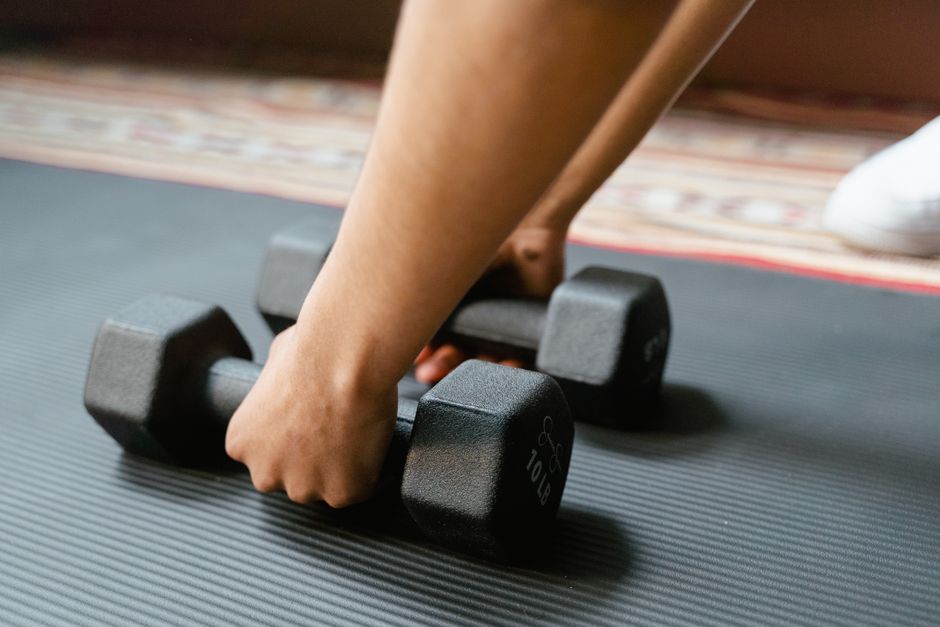
Your elbows do something most people never think about until they hurt: they transfer force between your upper arm and your hand. When you lift, push, pull, or grip, the elbow is the hinge that carries the load. Strengthening it is not about bigger arms. It is about training the muscles, tendons, and connective tissue that control the joint so it can handle that load without breaking down. Bicep curls mostly build the biceps — they do very little for the tendons on the outside and inside of the elbow, which are the structures that most often cause pain.
What Actually Makes Up Your Elbow Joint?
The elbow is a hinge where three bones meet: the humerus in your upper arm, and the radius and ulna in your forearm. Muscles attach to these bones through tendons, and those tendons are the weak link when you overload the joint too fast.
Two muscle groups matter most for elbow health. The forearm extensors attach to the bony bump on the outside of the elbow. The forearm flexors attach to the bump on the inside. These are the tissues involved in the two most common elbow problems: lateral and medial tendinopathy, often called tennis elbow and golfer’s elbow.
Tendons adapt to load slowly. They have less blood supply than muscle and they respond to training on a different timeline. This is why you can have strong biceps and still develop elbow pain from a repetitive task. The muscle got strong; the tendon did not keep up.
One clarification worth knowing: tennis elbow has nothing to do with tennis for most people. It shows up in carpenters, cooks, office workers, and anyone who grips and lifts repeatedly. The name describes the location, not the cause.
How To Strengthen Your Elbows Beyond Bicep Curls
The single most effective approach is slow, controlled resistance training for the forearm muscles, done through a full range of motion and progressed gradually. This loads the tendons directly, which is what drives them to adapt.
Two movements cover most of the ground. Wrist extension (bending your wrist backward against resistance) targets the extensor tendons on the outside of the elbow. Wrist flexion (bending your wrist forward against resistance) targets the flexor tendons on the inside. You can do these with a small dumbbell, a resistance band, or a weighted household object.
Here is what the research supports. Eccentric exercise — the phase where the muscle lengthens under load — has been studied for tendinopathy for decades. A large body of clinical research indicates that progressive loading, including eccentric-focused work, is a core part of managing chronic tendon pain. It is not a quick fix. Tendon changes take weeks to months, not days.
Grip strength training also matters. A stronger grip means the forearm muscles handle more of the load, which reduces strain on the tendon attachment points. Dead hangs, farmer’s carries, and squeezing exercises all build this.
A practical starting approach:
- Wrist extensions and flexions with light resistance, 2 to 3 sets, controlled tempo
- Slow lowering phase (3 to 4 seconds) on each repetition
- Grip work such as carries or hangs, once or twice a week
- Progress the resistance only when the current level feels easy and pain-free
No specific dose or rep scheme is universally established for elbow tendon health. The general principle from tendon research is that load must be enough to challenge the tissue but not so much that it flares pain. Some clinicians recommend working into mild discomfort; others advise staying below the pain threshold. The evidence on which approach is better is mixed.
Why Do Bicep Curls Alone Fall Short?
Curls train the biceps, which crosses the front of the elbow. That is one muscle group out of several that act on the joint. The forearm muscles that control your wrist and grip do far more work during daily activity, and they are the ones most often overloaded.
There is also a loading problem. Curls move the elbow, but they do not load the wrist or the forearm rotation that happens constantly in real life — turning a doorknob, using a screwdriver, carrying a bag. If your training never touches those positions, you build strength in a narrow range and leave the rest of the joint untrained.
This does not mean curls are useless. They build the biceps and the brachialis, and a stronger upper arm supports the whole chain. They are just incomplete on their own.





Does Elbow Pain Mean You Should Stop Training?
Complete rest is usually not the answer for tendon-related elbow pain, and it can make things worse over time by leaving the tissue deconditioned. Current clinical thinking generally favors relative rest — reducing the aggravating activity while continuing to load the tendon in a controlled way.
That said, the evidence here is not perfectly clean. Some people improve with load management and exercise. Others need more time, or other treatment. Recovery timelines vary widely, and no reliable formula predicts how long any one person will take.
Signs that you should see a clinician rather than self-manage:
- Pain that follows a specific injury, such as a fall or a sudden pop
- Swelling, bruising, or visible deformity
- Numbness or tingling in the hand or fingers
- Weakness that does not improve, or an inability to grip
- Pain that keeps getting worse despite weeks of sensible loading
Numbness and tingling can point to nerve involvement rather than a tendon problem, and that changes the whole approach. This is not something to work through on your own.
What Role Do Forearm Rotation and Grip Play?
Your forearm rotates. Turn your palm up, then down — that is pronation and supination, and it happens at the elbow and wrist together. These movements are involved in almost everything you do with your hands, and they are almost never trained directly.
Training rotation builds control through the joint and can reduce the strain that lands on the tendon attachments. A simple approach is holding a light weight and slowly rotating your forearm palm-up to palm-down, keeping your elbow tucked at your side.
Grip deserves its own mention. Grip strength is a reasonable marker of overall upper-body function, and it declines with age if you do not use it. Carrying heavy objects for distance, hanging from a bar, and squeezing a grip tool all maintain it. For older adults, maintaining grip is not just about the elbow — it tracks with broader physical function.
How Should You Progress Elbow Training Over Time?
Slowly, and with attention to how the joint responds. Tendons adapt over weeks and months, not sessions. A common mistake is adding load or volume faster than the tissue can handle, which is one of the ways tendinopathy develops in the first place.
A reasonable pattern is to add resistance or repetitions only when the current level feels comfortable and produces no lingering pain the next day. If a session leaves you sore for more than a day or two, that is a signal you moved too fast.
Consistency matters more than intensity here. Two or three short sessions a week, sustained over months, will do more for elbow resilience than one hard session followed by a week off.
There is no established timeline that applies to everyone. Some people notice improvement in a few weeks. Others take several months. The honest position is that tendon recovery is variable, and progress is not linear.
When Should You See a Professional?
See a clinician if pain persists beyond a few weeks despite sensible loading, if it interferes with sleep or basic tasks, or if you have any of the nerve-related signs listed above. A physical therapist can assess which structures are involved and guide loading more precisely than a general program can.
For most people with mild, activity-related elbow discomfort, a gradual strengthening program is a reasonable first step. For anything involving injury, nerve symptoms, or worsening pain, professional assessment comes first. Self-treatment is not appropriate for those situations.
Frequently Asked Questions
What exercises strengthen elbows besides bicep curls?
Wrist extensions, wrist flexions, forearm rotations, and grip work such as carries or hangs all load the elbow more completely than curls. These target the forearm muscles and tendons that handle most daily strain.
Can you strengthen elbows with tennis elbow?
Yes, controlled loading is generally part of managing tennis elbow, though the right amount varies by person. If pain is severe, follows an injury, or comes with numbness, see a clinician before starting a program.
How long does it take to strengthen elbow tendons?
Tendons adapt over weeks to months, not days, and timelines vary widely between people. There is no reliable formula that predicts how long any individual will take.
Is it bad to train through elbow pain?
Working into mild discomfort is a common clinical approach, but sharp pain, swelling, or nerve symptoms are reasons to stop and get assessed. The evidence on the best pain threshold during training is mixed.
