
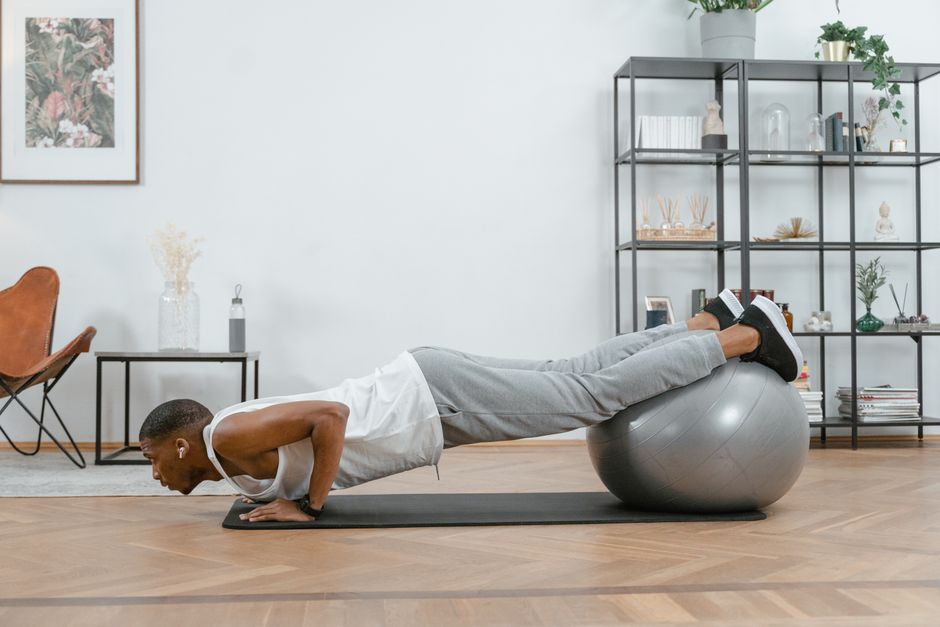
The erector spinae muscles run along your entire spine, from your skull down to your pelvis. They keep you upright and help you extend and rotate your back. Strengthening them reduces back pain risk and improves posture. The best exercises are those that work these muscles through their full range of motion with controlled resistance.
What Are the Erector Spinae Muscles?
Three columns of muscle make up the erector spinae group: the iliocostalis, longissimus, and spinalis. They sit on both sides of your spine and work together to extend your back, like when you stand up from a forward bend.
These muscles also control movement when you bend forward. They lengthen under tension to slow your descent, which is why exercises that involve both lifting and lowering are effective.
Weak erector spinae muscles are linked to poor posture and lower back pain. Research consistently shows that strengthening these muscles can reduce discomfort and improve function in people with chronic back pain.
How To Strengthen The Erector Spinae Best Exercises?
The most effective exercises target the erector spinae through their primary action: spinal extension. You need movements that take your spine from a flexed position to a neutral or slightly extended one, while holding resistance.
The best exercises are:
- Back extensions on a Roman chair or hyperextension bench
- Good mornings with a barbell or dumbbell
- Deadlifts and Romanian deadlifts
- Bird dogs for beginners or those with back pain
- Supermans for bodyweight training
Each exercise challenges the erector spinae differently. Back extensions isolate the muscles directly. Deadlifts and good mornings load them heavily while other muscles assist. Bird dogs and supermans are safer starting points for people new to training.
Back Extensions on a Roman Chair
The back extension targets the erector spinae directly with minimal involvement from other muscle groups. You position yourself face-down on the pad, hook your ankles, and hinge at your hips.
Start with your torso hanging down at about a 45-degree angle. Raise your upper body until it forms a straight line with your legs. Pause briefly at the top, then lower slowly.
Keep your neck neutral throughout. Looking up or down strains the cervical spine. Cross your arms over your chest or hold a weight plate once the movement feels easy.
Aim for 3 sets of 10-15 repetitions. Stop if you feel sharp pain or pinching in your lower back. A mild burning sensation in the muscles is normal.





Good Mornings for Strength and Stability
Good mornings load the erector spinae with a barbell on your upper back. They teach the muscles to work while your spine is under compression and your hips hinge backward.
Place a barbell across your upper traps, not your neck. Stand with feet shoulder-width apart and knees slightly bent. Hinge forward at the hips, keeping your back flat, until your torso is nearly parallel to the floor. Return to standing by squeezing your glutes and extending your hips.
Start with an empty bar or light dumbbells held at your chest. This exercise requires good form, so practice the movement pattern before adding meaningful weight.
Some people find good mornings uncomfortable in the lower back. If that happens, reduce the range of motion or switch to a different exercise.
Deadlifts and Romanian Deadlifts
Deadlifts are among the most effective exercises for the entire posterior chain, including the erector spinae. The muscles work isometrically to keep your spine neutral while your hips and legs do the lifting.
Romanian deadlifts (RDLs) put more direct tension on the erector spinae than conventional deadlifts. The movement emphasizes the hip hinge and the lowering phase, where the back muscles work hard to control spinal flexion.
For RDLs, hold a barbell or dumbbells at your thighs. Push your hips back while keeping your legs almost straight. Lower the weight until you feel a stretch in your hamstrings. Return by driving your hips forward.
These exercises require technical proficiency. Consider working with a coach if you are new to them. Poor form with heavy loads increases injury risk.
Beginner Options: Bird Dogs and Supermans
Bird dogs are a low-risk exercise that activates the erector spinae without loading the spine. Start on your hands and knees. Extend your right arm forward and your left leg backward simultaneously. Hold for 2-3 seconds, then switch sides.
This exercise also trains core stability, which supports the erector spinae during daily movements. It is appropriate for people with mild back pain or those returning from injury.
Supermans involve lying face-down and lifting your arms and legs off the floor simultaneously. They activate the erector spinae through full spinal extension. This exercise is safe for beginners but becomes easy quickly, so progress to weighted variations.
Some research suggests that bird dogs and supermans are less effective than weighted exercises for building strength. Use them as a starting point, not a long-term solution.
How Often Should You Train Your Erector Spinae?
Train the erector spinae 2-3 times per week with at least 48 hours between sessions. The muscles recover like any other muscle group and need rest to grow stronger.
If you do heavy deadlifts, you may not need separate back extension work in the same week. The erector spinae receive substantial stimulation from deadlifts alone.
For most people, 2 dedicated sessions per week produce solid results. One session can focus on heavy compound lifts like deadlifts. The other can include isolation work like back extensions.
Listen to your body. Soreness is normal, but sharp pain or pain that persists beyond 48 hours signals overtraining or poor form.
Common Mistakes That Reduce Effectiveness
Using momentum is the most common error. Swinging your torso up uses hip flexors and gravity instead of the erector spinae. Perform every rep slowly and under control.
Overextending at the top of back extensions puts unnecessary stress on the lumbar spine. Stop when your body forms a straight line. Do not arch beyond that point.
Rounding the lower back during deadlifts or good mornings shifts load away from the erector spinae and onto spinal ligaments. This increases injury risk without building muscle.
Ignoring the lowering phase wastes half the benefit. The erector spinae work hardest during controlled descent. Lower weights slowly rather than dropping them.
Neglecting core strength limits progress. Your erector spinae work with the abdominal muscles to stabilize the spine. A weak core forces the back muscles to compensate, increasing fatigue and injury risk.
When To Avoid Erector Spinae Exercises
Do not perform weighted spinal extension exercises if you have acute lower back pain, a herniated disc, or spinal stenosis. These conditions can worsen with loaded extension.
Consult a healthcare provider before starting any exercise program if you have been diagnosed with a spinal condition. They can recommend appropriate modifications or alternative treatments.
Pregnancy also changes spinal mechanics and ligament laxity. Pregnant women should avoid heavy lifting and exercises that involve deep spinal extension unless cleared by their obstetrician.
If any exercise causes radiating leg pain, numbness, or tingling, stop immediately. These symptoms can indicate nerve compression and require medical evaluation.
Progression Over Time
Start with bodyweight exercises and master the movement patterns. Once you can perform 3 sets of 15 repetitions with perfect form, add external resistance.
For back extensions, hold a weight plate against your chest. For good mornings, use a light barbell. Increase weight gradually, adding only 5-10% at a time.
Strength gains typically become noticeable within 6-8 weeks of consistent training. Posture improvements may take longer, depending on how many hours you spend sitting each day.
Combine strengthening with regular stretching of the hip flexors and hamstrings. Tight muscles in these areas pull on the pelvis and force the erector spinae to work harder.
Frequently Asked Questions
Can I strengthen my erector spinae at home?
Yes, bodyweight exercises like supermans, bird dogs, and floor back extensions work well at home. Add resistance bands or dumbbells as you get stronger.
How long does it take to see results from erector spinae exercises?
Most people notice improved strength within 6-8 weeks of consistent training. Visible muscle changes may take 3-4 months.
Are deadlifts safe for strengthening the erector spinae?
Deadlifts are safe when performed with proper form and appropriate weight. They are highly effective for the erector spinae but require technical skill, so start light and prioritize form.
Should I stretch my erector spinae after exercising?
Light stretching after exercise can help reduce muscle tension. Gentle spinal flexion stretches, like pulling your knees to your chest, can complement your strengthening routine.
