
Pelvic floor training works, and the proof is unusually strong. Studies consistently show that a structured program of pelvic floor muscle exercises can reduce urinary leakage and improve bladder control in most people who stick with it. The catch is technique. Squeezing the wrong muscles, holding your breath, or rushing through reps can stall progress for months. Done correctly, most people notice a difference within a few weeks and see meaningful change by three to six months.
What Are the Pelvic Floor Muscles and What Do They Do?
The pelvic floor is a hammock-shaped group of muscles that stretches from your pubic bone in front to your tailbone in back. It forms the base of your core and holds your pelvic organs — the bladder, and in women the uterus and rectum — in place.
These muscles do more than support organs. They control when urine and stool leave the body. They help stabilize the spine and hips during movement. They also play a role in sexual function. When they work well, you don’t think about them. When they weaken or become too tight, the problems show up fast.
Two failure modes exist, and they need opposite treatment. A weak pelvic floor leaks urine when you cough, sneeze, laugh, or lift. An overly tight pelvic floor can cause pain, urgency, and difficulty emptying the bladder or bowels. Kegels help the first problem. They can make the second one worse.
That distinction matters more than most people realize. Many assume a leaky bladder always means a weak pelvic floor. Pelvic floor physical therapists report that a meaningful share of people who come in for leakage actually have a tight, uncoordinated pelvic floor, not a weak one. For them, relaxation and coordination training come first.
How To Strengthen Pelvic Floor Muscles With Kegel Exercises
Kegels are the foundation of pelvic floor training. The exercise is simple, but the execution is where most people go wrong.
Find the right muscles first
Imagine you are sitting on the toilet and trying to stop the flow of urine midstream, or trying to hold back gas. The muscles that tighten are your pelvic floor. Men can feel the same sensation by imagining they are shortening the penis and lifting the testicles.
Do not practice by actually stopping urine flow during urination. Doing that repeatedly can interfere with normal bladder emptying. Use the stop-the-flow image only to locate the muscles once or twice.
Two common mistakes to avoid:
- Don’t squeeze your buttocks, thighs, or stomach. If your belly pulls in hard or your legs tense, you are recruiting the wrong muscles.
- Don’t hold your breath. Breathe normally throughout. Breath-holding raises pressure inside the abdomen and pushes down on the pelvic floor — the opposite of what you want.
Practice in the right positions
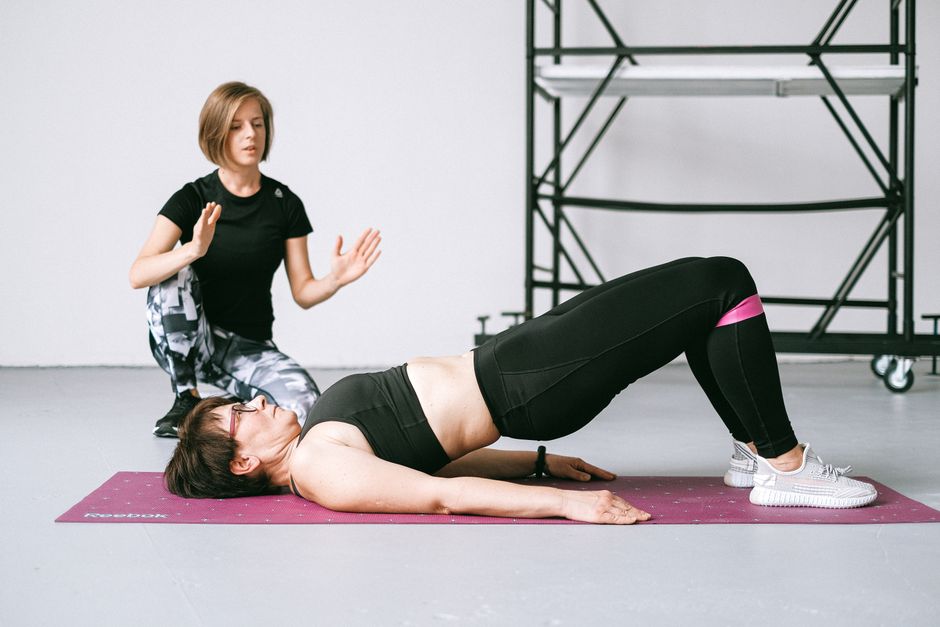
Start lying down, where gravity is on your side. Once you can do the exercise cleanly, progress to sitting, then standing, then moving. The goal is to have the muscles work automatically during real life — lifting a toddler, carrying groceries, getting off the couch.
Build a simple routine
A widely used approach: tighten the pelvic floor, hold for a few seconds, relax fully for the same amount of time, and repeat. Do a set of around 10 repetitions, three times a day. Rest for a full breath between contractions.
The relaxation phase matters as much as the squeeze. A muscle that never fully releases becomes tight and dysfunctional. If you can’t feel a clear release, that’s a sign to slow down.
Some people are told to do 100 or more Kegels a day. There is no evidence that high repetition counts produce better results, and for people with an overactive pelvic floor, they can cause harm. Consistency beats volume.
How Long Does It Take to See Results?
Expect early changes within a few weeks and meaningful improvement by three to six months. That timeline comes from clinical trials of supervised pelvic floor training for urinary incontinence, where benefits typically accumulate gradually rather than overnight.
Muscle strength follows the same rules as any other muscle in your body. You would not expect visible biceps after a week of curls. Pelvic floor muscles respond to consistent, progressive training over months.
If nothing has changed after three months of correct daily practice, the problem may not be muscle weakness. It could be technique, an overactive pelvic floor, or another condition entirely. That’s the point to see a clinician rather than push harder.





When Kegels Are the Wrong Answer
Kegels are not a universal fix, and this is where many people go wrong. If your pelvic floor is already tight or in spasm, strengthening it further can worsen pain, urgency, and leaking.
Signs your pelvic floor may be too tight rather than too weak:
- Pain in the pelvis, vagina, rectum, or tailbone
- A frequent, urgent need to urinate, sometimes with little output
- Straining to start urination or to pass stool
- Pain during sex
- Feeling like you can’t fully relax the pelvic floor
If any of these sound familiar, do not start a Kegel program on your own. Pelvic floor physical therapists are trained to assess whether the muscles are weak, tight, or uncoordinated — and the treatment differs completely depending on the answer. For a tight pelvic floor, the work is often about learning to relax and lengthen the muscles, not strengthen them.
This is also why generic “do your Kegels” advice from a magazine or app can backfire. The exercise is not complicated. Knowing whether it’s the right exercise for your body is the harder part.
Other Ways to Support Pelvic Floor Strength
Kegels are the most studied approach, but they don’t work in isolation. Several other factors influence how well the pelvic floor functions.
Manage intra-abdominal pressure
The pelvic floor sits at the bottom of your core, and everything above it pushes down. Chronic constipation, persistent heavy lifting with poor form, and a chronic cough all increase that downward pressure. Treating constipation with adequate fiber and fluids, and learning to exhale on exertion rather than hold your breath, reduces the load.
Maintain a healthy weight
Excess body weight increases pressure on the pelvic floor. Weight loss is associated with reduced urinary incontinence symptoms in some studies, though results vary by individual and by how much weight is lost. The relationship is real but not a guarantee.
Consider pelvic floor physical therapy
For anyone with persistent symptoms, working with a pelvic floor physical therapist is the most reliable path. These clinicians use internal assessment, biofeedback, and tailored exercise programs. Research consistently shows supervised training outperforms going it alone with written instructions. If you have tried Kegels for months without improvement, this is the next step, not more reps.
Know what the evidence does not support
A number of consumer devices and supplements are marketed for pelvic floor strength. Vaginal weights, electrical stimulation devices sold without a prescription, and “pelvic floor” supplements have limited or no high-quality evidence supporting them for general use. Some devices have a role in clinical settings under supervision. No study has confirmed that a supplement strengthens pelvic floor muscles.
Pelvic Floor Training During Pregnancy and After Birth
Pregnancy and childbirth are common reasons people seek pelvic floor training, and the evidence here is more nuanced than most advice suggests.
Pelvic floor muscle training during pregnancy is widely recommended and is associated with reduced urinary incontinence in late pregnancy and after delivery in some studies. Guidance from clinicians generally supports starting or continuing training during pregnancy unless a provider advises otherwise.
After birth, many people are told to “do Kegels” right away. That advice does not fit everyone. Some people after delivery have an overactive or painful pelvic floor, and early strengthening can aggravate it. A pelvic floor assessment before starting a program is reasonable, especially after a difficult delivery or if symptoms like pain or urgency are present.
No clinical guidelines currently exist for a universal postpartum pelvic floor exercise dose. What works best is individualized assessment and a program matched to what the muscles actually need.
Frequently Asked Questions
How many Kegels should I do a day?
A common starting routine is about 10 repetitions, three times a day, holding each for a few seconds and resting equally between. More reps are not better, and for some people they cause harm.
How do I know if I’m doing Kegels correctly?
You should feel a lifting and squeezing sensation inside the pelvis without your buttocks, thighs, or stomach tightening, and you should be able to breathe normally. If you are unsure, a pelvic floor physical therapist can confirm with an exam.
Can I strengthen my pelvic floor without doing Kegels?
Yes. Activities like Pilates, yoga, and targeted core work can engage the pelvic floor, and managing constipation and heavy lifting reduces strain on it. For significant leakage or pain, though, Kegels or supervised therapy remain the most studied approaches.
Should I do Kegels if I have pelvic pain?
No. Pelvic pain often signals a tight or overactive pelvic floor, and Kegels can make it worse. See a pelvic floor physical therapist for an assessment before starting any strengthening program.
