
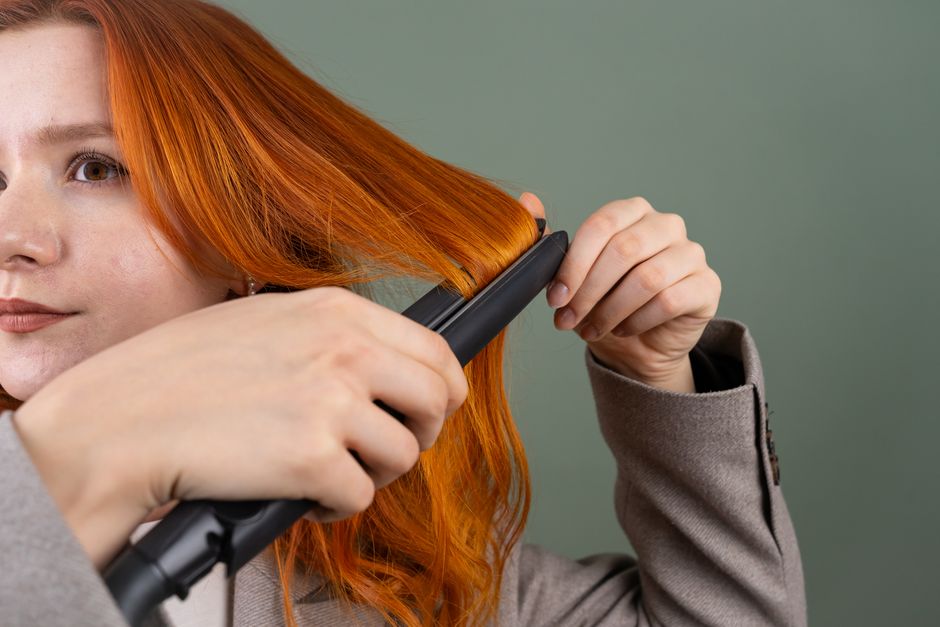
Straightening curly hair is possible without causing permanent damage, but it requires the right technique and heat protection. The key is to start with clean, dry, and completely detangled hair, use a high-quality heat protectant, and work in small sections with a flat iron set to the right temperature for your hair type.
What happens to curly hair when you straighten it?
Curly hair has a different structure than straight hair. The shape of the hair follicle is curved, and the bonds inside the hair shaft — called disulfide bonds — form at angles that create twists and curls. When you apply heat, you temporarily break these bonds. The hair becomes straight as it cools in that new shape.
This is a temporary change. Humidity, moisture, or washing will eventually return the hair to its natural curl pattern. The goal of straightening is to reshape the hair without causing so much heat damage that the curl pattern is permanently altered in a bad way.
Heat damage is real. Once the hair cuticle is burned or lifted, the hair may never curl the same way again. That is why technique and temperature matter more than the tool itself.
How to prepare curly hair before straightening
Preparation is the most important step. Rushing this part is the most common mistake people make. Your hair must be completely dry before any heat touches it. Even a little moisture inside the hair shaft will turn to steam inside the hair and cause bubbles — this is called bubble hair and it weakens the hair permanently.
Start with a gentle shampoo that removes buildup but does not strip your hair of all moisture. Follow with a lightweight conditioner. Avoid heavy oils or thick creams before heat styling because they can burn onto the hair and create a sticky residue that is hard to remove.
Apply a heat protectant spray or serum evenly through your hair. This is not optional. Heat protectants work by coating the hair shaft and absorbing some of the heat before it reaches the inner layers. Without it, the temperature inside the hair can exceed the set temperature of the flat iron.
Let your hair air dry or use a blow dryer with a concentrator nozzle on low heat. If you blow dry, use a brush to gently stretch the hair as it dries. This pre-straightening step reduces how many passes you need with the flat iron later.
What temperature should you use for straightening curly hair
There is no single temperature that works for everyone. It depends on your hair thickness and how much heat it can tolerate. Using too high a temperature is the fastest way to damage curly hair.
| Hair Type | Recommended Temperature Range |
|---|---|
| Fine or damaged curly hair | 250°F to 300°F |
| Medium or normal curly hair | 300°F to 350°F |
| Thick or coarse curly hair | 350°F to 400°F |
Stay within these ranges. Temperatures above 400°F can cause immediate damage to most hair types. If you need more passes at a lower temperature, that is safer than fewer passes at a very high temperature.
Some flat irons have adjustable temperature settings. If yours does not, check the maximum temperature listed on the product. Many non-adjustable irons run at 400°F or higher, which is too hot for most curly hair types.





Step-by-step technique for straightening curly hair
Work in small sections. This is the single most important technique for getting straight results without damaging your hair. A section should be about half an inch wide and no thicker than the width of the flat iron plates. If you take larger sections, the heat does not penetrate evenly and you will need multiple passes.
Clamp the flat iron at the root near the scalp. Glide it down the hair shaft slowly and smoothly. One slow pass is better than three fast passes. The speed matters — too fast and the heat does not have time to reshape the bonds. Too slow and you risk burning the hair.
Do not go over the same section more than twice. If you need more passes, your section is too large or your temperature is too low. Going over the same hair repeatedly causes cumulative heat damage that shows up as frizz and breakage weeks later.
Work from the bottom layers of your hair upward. Use clips to hold the top sections out of the way. This ensures every section gets equal attention and you do not miss spots.
How to keep curly hair straight after straightening
Once your hair is straight, the main enemy is moisture. Humidity in the air can cause the hydrogen bonds in your hair to reform, which brings back waves and frizz. A lightweight anti-humidity serum or a silicone-based finishing spray can help seal the hair cuticle and block moisture.
Do not touch your hair after straightening. The natural oils from your hands can transfer to your hair and weigh it down or cause the hair to re-curl at the ends. Let the hair cool completely before you style or move it.
Sleep on a silk or satin pillowcase. Cotton pillowcases create friction that can rough up the hair cuticle and cause frizz overnight. A loose braid or a pineapple-style ponytail can also help preserve the straight shape while you sleep.
Avoid exercise or activities that cause heavy sweating on the same day. Sweat introduces moisture and salt that can undo the straight style. If you must exercise, use a sweatband or a dry shampoo before and after.
Can you straighten curly hair without heat
Yes, but the results are different from heat straightening. Heat-free methods are gentler on the hair but they do not produce the same pin-straight look. If you want to reduce curl without heat, there are several approaches.
Blow drying with a round brush on cool or low heat can stretch curls without high temperatures. This works best on wavy or loose curly hair. Tight curls may require more tension and time.
Roller sets or wrapping the hair around the head while damp and letting it dry completely can create a stretched, smooth look. This method works best on hair that is already somewhat relaxed or fine.
Chemical straightening treatments like keratin treatments or relaxers permanently alter the hair structure. These are not heat-free in the moment but they reduce the need for daily heat styling. They also carry their own risks, including hair breakage and scalp irritation.
There is no heat-free method that gives the same straightness as a flat iron on tight curls. That is the honest trade-off. If you want perfectly straight hair, some form of heat or chemical treatment is usually required.
Common mistakes when straightening curly hair
Using a dirty flat iron is a common mistake. Product buildup on the plates can snag the hair and cause uneven heat distribution. Clean your flat iron after every few uses with a damp cloth while the plates are cool.
Straightening wet or damp hair is dangerous. Water inside the hair shaft turns to steam and causes internal damage. The hair may look fine at first but will become brittle and prone to breakage over time.
Skipping heat protectant is the most avoidable mistake. Even one pass without protectant can cause cumulative damage that shows up as split ends and frizz. This is widely claimed though strong evidence is limited on exactly how much damage occurs per pass, but the consensus among trichologists is clear — do not skip it.
Using a flat iron with dirty or damaged plates can snag and break hair. Ceramic or tourmaline plates are generally recommended because they heat evenly and glide smoothly. Metal plates can have hot spots that burn the hair.
How often can you straighten curly hair safely
There is no universal safe frequency because it depends on your hair health, the temperature you use, and how well you protect the hair. As a general guideline, once a week is reasonable for most people with healthy curly hair. Straightening more than once a week increases the risk of heat damage.
Some people straighten their hair every day and their hair still looks healthy. This is rare and usually only possible with very fine hair that does not require high heat. For most curly hair types, daily straightening leads to visible damage within a few months.
If you straighten regularly, pay attention to the ends of your hair. Split ends and white dots along the hair shaft are signs of heat damage. Once these appear, the only fix is a haircut. No product can repair broken hair bonds.
Frequently Asked Questions
How do you straighten curly hair without damaging it?
Use a heat protectant every time and keep the flat iron temperature within the safe range for your hair type. Work in small sections and never pass over the same hair more than twice.
What is the best flat iron for curly hair?
A flat iron with adjustable temperature and ceramic or tourmaline plates is best for curly hair. Look for plates that are at least one inch wide so you can cover sections evenly.
Can I straighten my curly hair if it is damaged?
It is not recommended to apply heat to already damaged hair because it can cause further breakage. Focus on deep conditioning and trimming the damaged ends first before attempting to straighten.
How long does straightened curly hair last?
Straightened curly hair typically lasts until the next wash or until it is exposed to high humidity. With proper sleeping protection and anti-humidity products, it can last two to three days.
