
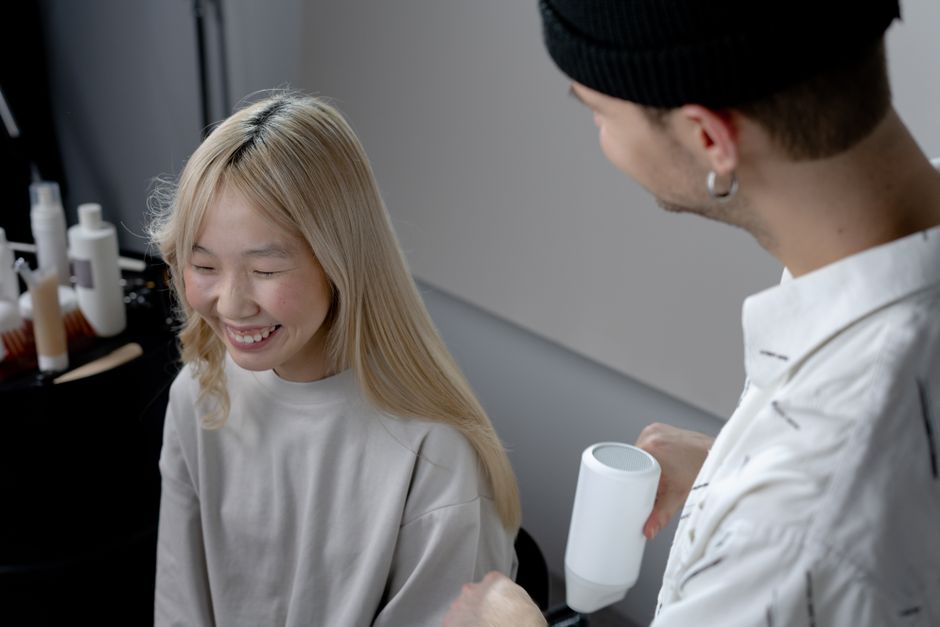
If you are deciding between blow drying and straightening your hair, the honest answer is that neither method is entirely risk-free, but blow drying with proper technique is generally less damaging than using a flat iron. Heat damage occurs when the internal structure of the hair shaft breaks down, and flat irons reach much higher temperatures directly on the hair strand. That said, a blow dryer used incorrectly—too hot, too close, or on damp hair—can cause its own type of damage. The real difference comes down to heat intensity, moisture loss, and how each tool affects the hair’s protective outer layer.
What Actually Happens to Hair When You Apply Heat?
Hair is made of a protein called keratin. Each strand has an outer layer, the cuticle, which acts like a shield. When heat is applied, the cuticle lifts and moisture inside the hair shaft begins to evaporate. If the heat is too high or applied too long, that moisture loss becomes permanent until new hair grows in.
Both blow dryers and flat irons cause this process. The difference is the temperature and the contact time. A flat iron applies direct heat at 350°F to 450°F (about 175°C to 230°C) directly to the strand. A blow dryer, even on high heat, typically delivers air at much lower temperatures to the hair surface, especially when the nozzle is kept moving. Lower heat with less direct contact means less structural damage over time.
However, blow drying has a hidden risk that flat irons do not. Hair is weakest when it is wet. The water inside the hair shaft causes the protein structure to swell and become fragile. If you blow dry soaking wet hair aggressively, you can cause the cuticle to crack or lift. This is called hygral fatigue, and it leads to frizz, dullness, and breakage.
Is Blow Drying Better Than Straightening Hair for Daily Use?
For daily styling, blow drying is the safer choice. Using a flat iron every day exposes your hair to repeated high-heat contact, which compounds damage quickly. Over time, daily flat ironing can cause split ends, thinning along the shaft, and a brittle texture that is hard to repair.
Blow drying daily is also not ideal, but the risk profile is different. The primary danger with repeated blow drying is heat and mechanical stress from brushing. If you use a round brush and pull hard while the hair is hot, you can stretch the hair past its elastic limit, causing breakage. But with a heat protectant and a moderate heat setting, most people can blow dry several times a week without significant long-term harm.
One important clarification: blow drying does not straighten hair the way a flat iron does. It smooths and shapes, but for naturally curly or coily hair, blow drying alone will not produce a pin-straight result. If your goal is bone-straight hair, you will need a flat iron at some point. If your goal is smooth, polished hair with less damage, blow drying is the better option.
What Temperature Is Safe for Each Method?
Heat protectant products are not optional when using either tool. They form a barrier that reduces moisture loss and helps the cuticle lie flat. But even with a protectant, temperature matters.
For blow dryers, most dermatologists and hair researchers recommend using the medium or low heat setting whenever possible. High heat on a blow dryer is rarely necessary for drying hair. It mainly speeds up the process, but it increases the risk of moisture loss and cuticle damage. Keeping the nozzle about 6 inches away from the scalp and moving it continuously reduces the risk of burning the hair or skin.
For flat irons, the safe range depends on hair type. Fine or damaged hair should be styled at the lowest effective temperature, usually around 300°F (about 150°C). Thick or coarse hair may require higher settings, but exceeding 400°F (about 200°C) increases the risk of irreversible damage. Some research suggests that temperatures above 450°F can melt the hair’s protein structure entirely.
There is no universal safe temperature that applies to all hair types. The best approach is to start low and increase only if the style does not hold.



Does Blow Drying Cause Frizz More Than Straightening?
Frizz happens when the cuticle is lifted and moisture from the air enters the hair shaft, causing it to swell unevenly. Both blow drying and flat ironing can cause frizz if done incorrectly, but the mechanisms differ.
Blow drying causes frizz when the airflow is directed against the direction of the cuticle, or when the hair is moved around too much while damp. The cuticle is like roof shingles—it lies flat in one direction. Drying with the airflow pointing downward, from root to tip, helps the cuticle stay flat. Drying with the nozzle pointing upward or moving the hair in all directions lifts the cuticle and creates frizz.
Flat irons can also cause frizz, but usually from heat damage over time. When the cuticle is repeatedly damaged, it no longer lies flat. This leaves the hair rough and prone to absorbing humidity. A flat iron may make hair look smooth in the moment, but if used too hot or too often, it creates chronic frizz that no product can fully fix.
For people with naturally curly or wavy hair, blow drying with a diffuser attachment is often recommended. A diffuser spreads the airflow over a larger area, reducing the force of the air on the hair. This helps maintain curl pattern and reduces frizz compared to a concentrated nozzle.
Which Method Causes More Breakage?
Breakage is the result of weakened hair snapping under stress. Both methods can cause it, but they do so in different ways.
Flat irons cause breakage through heat damage. When the hair is overheated, the protein bonds break. The hair becomes brittle and snaps easily, especially at the ends. This type of breakage is often not visible immediately. It appears weeks later as split ends and short, broken strands around the crown.
Blow drying causes breakage through mechanical stress. The combination of wet, fragile hair and vigorous brushing or combing is a leading cause of hair breakage. If you pull a brush through tangled, wet hair while blow drying, the hair will stretch and snap. This is why detangling before drying is critical.
Some studies suggest that using a flat iron on dry hair causes less breakage than brushing wet hair, even though the heat is higher. This is because dry hair is stronger than wet hair. However, this comparison is misleading. The flat iron damage is cumulative and invisible at first, while blow drying breakage is often immediate and easier to prevent.
How to Minimize Damage With Either Method
You can reduce the risk of damage significantly by following a few consistent practices.
First, always use a heat protectant. Look for products that contain silicones or polymers, which coat the hair and reduce moisture evaporation. These are not a cure-all, but they provide a measurable protective effect.
Second, never use a flat iron on damp or wet hair. The water inside the hair shaft turns to steam when heated, which can cause the hair to bubble and break from the inside. The hair must be completely dry before any straightening tool touches it.
Third, limit the number of passes. One slow, smooth pass with a flat iron is better than three quick passes. Each pass adds more heat exposure. For blow drying, keep the dryer moving and do not hold it in one spot for more than a few seconds.
Fourth, consider your hair’s condition. If your hair is already damaged, chemically treated, or color-treated, it is more porous and absorbs heat faster. This means you should use lower temperatures and less frequent styling. Damaged hair does not recover from heat damage; it must grow out.
Finally, give your hair regular breaks from heat. Even one or two heat-free days per week allows the hair to rebalance moisture and reduces cumulative stress.
Does Hair Type Change the Answer?
Yes, hair type matters a great deal. Fine hair has a smaller diameter and reaches damaging temperatures faster than thick hair. If you have fine hair, a blow dryer on high heat or a flat iron above 300°F can cause damage quickly. Thick or coarse hair can tolerate higher temperatures because the larger strand dissipates heat more slowly.
Curly and coily hair is structurally different. The cuticle is more easily lifted, and the hair is naturally drier because oils from the scalp do not travel down the curl as easily. For this hair type, blow drying with a diffuser on low heat is generally gentler than flat ironing. Flat ironing curly hair requires high heat to break the curl pattern, which increases the risk of damage.
There is no one-size-fits-all answer. The best method for you depends on your hair’s thickness, texture, and current condition. Someone with fine, straight hair may find that a low-temperature flat iron is less damaging than a high-heat blow dryer. Someone with thick, curly hair may find the opposite.
What About Air Drying?
Air drying is often presented as the safest option, but this is not entirely accurate. Leaving hair wet for long periods can cause the hair shaft to swell and weaken, especially for people who sleep on wet hair or keep it tied up while damp. The longer the hair stays wet, the more stress the cuticle experiences.
Some research suggests that air drying is gentler than any form of heat drying for most hair types. However, for very thick or long hair, air drying can take hours, which means the hair remains swollen and fragile for an extended time. In this case, a low-heat blow dry may actually be less damaging than hours of air drying.
The safest approach is to gently towel dry or air dry until the hair is about 70-80% dry, then finish with a blow dryer on low heat. This reduces both the time the hair stays wet and the total heat exposure.
Frequently Asked Questions
Is blow drying or straightening worse for your hair?
Flat ironing is generally worse because it exposes hair to much higher direct heat, which breaks down the protein structure faster. Blow drying causes less heat damage but can cause breakage if done on wet hair with aggressive brushing.
Can I blow dry my hair straight without a flat iron?
Yes, but the result depends on your hair type. Using a round brush and pulling the hair taut while directing the airflow downward can smooth the hair, but it will not produce the same pin-straight result as a flat iron on naturally curly or coily hair.
What temperature should I use to straighten hair without damaging it?
For fine or damaged hair, stay around 300°F (about 150°C). For thick or coarse hair, you can go higher, but staying below 400°F (about 200°C) reduces the risk of irreversible damage.
Is it better to air dry or blow dry hair?
Air drying is gentler for most hair types, but leaving very thick hair wet for hours can also cause damage. A practical approach is to air dry until mostly dry, then finish with a blow dryer on low heat.
