
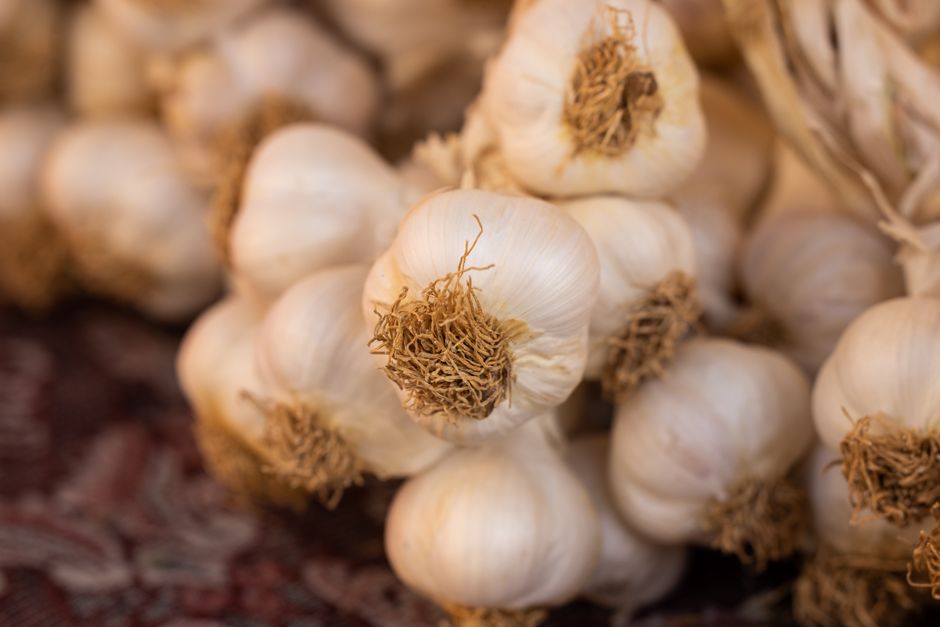
Garlic bulbs keep best in a cool, dark, dry place with good airflow, ideally between 55°F and 65°F (about 13°C to 18°C) with humidity around 50 to 60 percent. Stored this way, cured bulbs can stay firm and flavorful for several months. The two biggest enemies are moisture, which invites mold and rot, and warmth, which makes garlic sprout or dry out.
How long your garlic lasts depends less on tricks and more on two things: whether the bulbs were cured properly and where you keep them. Get those right and you rarely need to think about it again.
Why Does Garlic Need Curing Before Storage?
Freshly harvested garlic is not ready for long storage. Curing is the drying step that turns a moist, living bulb into one that can sit for months without spoiling.
When garlic comes out of the ground, the bulb still holds a lot of moisture, and the outer layers are tight and damp. Curing lets that moisture escape slowly through the wrapper leaves and the neck where the stalk was cut. As the bulb dries, the papery skin tightens and forms a protective layer. The neck dries down completely, which closes off the main entry point for mold and rot organisms.
Curing usually takes a few weeks in a warm, dry, airy spot out of direct sun. Many growers hang the whole plant or lay bulbs in a single layer on a screen. You know curing is done when the outer skins are dry and papery and the neck is completely dry, not soft or green. If you bought garlic at a store or farmers market, it has almost certainly been cured already, so you can move straight to storage.
Skipping curing, or cutting the stalks too early, is one of the most common reasons homegrown garlic rots within a few weeks instead of lasting months.
What Is the Best Place To Store Garlic Bulbs at Home?
The best spot is cool, dark, dry, and well ventilated. A pantry shelf, a cellar, or a garage cabinet works well in many homes. The goal is steady conditions, not a perfect number.
Temperature matters more than most people realize. Garlic held near room temperature will slowly sprout and lose flavor over a few months. Garlic kept cold and dry lasts longer, but there is a catch with refrigerators that trips up a lot of people.
Avoid these common storage spots:
- The refrigerator crisper drawer — the damp, cold environment can encourage sprouting and mold once the bulb is out of its cured state, and moisture is the bigger problem.
- Above the stove or near the dishwasher — heat and steam shorten shelf life fast.
- Under the sink — plumbing leaks and humidity create exactly the damp conditions garlic hates.
- Sealed plastic bags or airtight containers — trapping moisture around the bulbs invites rot.
- Direct sunlight — warmth and light push garlic toward sprouting.
Airflow is the quiet hero here. Garlic does best when air can move around each bulb. That is why a mesh bag, a wire basket, or a shallow open tray beats a closed jar. If you want to keep garlic in a container, choose one that breathes.
How To Store Garlic Bulbs So They Last for Months
Good storage comes down to keeping bulbs whole, dry, and separated from moisture. Follow these steps and most cured garlic will hold up well for months.
Start with healthy bulbs. One soft or moldy bulb can spread problems to the ones touching it, so sort through your garlic and remove any that are already damaged. Leave the papery skins on. Those wrappers are part of the protection.
Keep bulbs whole if you plan to store them long term. Once you break a bulb apart or peel a clove, its shelf life drops sharply. A peeled clove has lost its protective skin and will dry out or grow mold within days in the fridge, not months.
Give each bulb room. Pile garlic no more than a couple of layers deep, and let air circulate. A mesh bag hung in a cool pantry, a wire basket on a shelf, or a shallow cardboard box with holes punched in the sides all work well.
Check on your stash every few weeks. Pull out any bulb that feels soft, looks discolored, or shows fuzzy mold. Removing problem bulbs early protects the rest. This one habit prevents most disappointing garlic losses.





Should You Refrigerate or Freeze Garlic?
Refrigeration is a mixed bag for whole bulbs, but freezing is a reliable option once you are ready to use garlic rather than store it whole.
For whole cured bulbs, a cool pantry usually beats the fridge. The refrigerator’s moisture and the temperature swings that happen each time the door opens can push garlic to sprout or grow mold. There is a well-known exception: some people refrigerate garlic briefly, and cold treatment is actually used in agriculture to encourage garlic to sprout for planting. That is a clue that cold and damp together work against long-term storage of eating garlic.
Freezing is different. Freezing does not keep garlic in bulb form well, because the texture breaks down on thawing. But it is an excellent way to store peeled cloves or chopped garlic for cooking. Peel the cloves, chop or leave them whole, and freeze them in a sealed bag or container. Frozen garlic keeps for many months and goes straight into the pan without thawing. The flavor holds up well for cooking even though the raw texture does not.
If you have more garlic than you can use before it sprouts, freezing or drying is a better plan than watching it decline on the shelf.
How Long Does Stored Garlic Last?
Properly cured garlic stored cool and dry commonly stays good for several months, and some varieties last longer than others. Softneck varieties, the kind most often sold in grocery stores, tend to store longer than hardneck types, which have a shorter window before they dry out or sprout.
A few things shorten that timeline:
- Warm storage temperatures, which speed up sprouting.
- High humidity, which encourages mold and rot.
- Bulbs that were not fully cured.
- Damaged or already-soft bulbs mixed in with healthy ones.
Watch for the signs that garlic is past its prime. Green shoots pushing out of the top mean it is sprouting. Soft, mushy, or brown spots mean rot. A hollow or papery-light bulb has dried out. Sprouted garlic is not dangerous to eat, but the flavor turns sharper and more bitter, and the texture gets tough. Moldy or soft garlic should be discarded.
Can You Store Garlic in Oil or Other Ways?
Storing garlic in oil is a popular idea and a genuinely risky one. Garlic in oil can support the growth of Clostridium botulinum, the bacteria behind botulism, because oil creates the low-oxygen environment these bacteria need. Homemade garlic-in-oil mixtures are a known botulism risk and should be kept refrigerated and used within a few days, not stored at room temperature for weeks.
If you want shelf-stable garlic in oil, the safe route is a commercially prepared product, which is acidified to prevent bacterial growth. For home use, treat any garlic-in-oil mixture as a short-term refrigerated item, not a pantry staple.
Other storage methods have their own trade-offs. Drying or dehydrating garlic and grinding it into powder removes the moisture that spoils fresh bulbs, so it keeps for a long time in a sealed container away from heat and light. Pickling in an acidic brine is another option that changes the flavor but extends shelf life when done with tested recipes. Each of these changes the garlic, so they are best thought of as ways to preserve a surplus rather than ways to store bulbs.
What About Garlic That Has Already Sprouted?
Garlic that has sprouted is still safe to eat, but it will not store any longer. The sprout is the bulb using its own stored energy to grow, which is why the flavor shifts and the texture softens.
Once a bulb sprouts, use it soon rather than trying to store it further. You can cut out the green shoot if you find it bitter, or cook the whole thing. The sprouted garlic will not keep well, so plan to use it in the next week or two.
Frequently Asked Questions
How long does garlic last in storage?
Properly cured garlic kept cool, dark, and dry commonly lasts several months, with softneck varieties generally storing longer than hardneck types. Warmth and moisture shorten that time considerably.
Should garlic be stored in the fridge?
Whole cured bulbs usually do better in a cool, dry pantry than in the refrigerator, where moisture and temperature swings can cause sprouting or mold. The fridge is a better fit for peeled or chopped garlic you plan to use soon.
Can you store garlic in olive oil at room temperature?
No. Garlic in oil can support the growth of Clostridium botulinum bacteria, so homemade garlic-in-oil should be refrigerated and used within a few days, not stored at room temperature.
What temperature is best for storing garlic bulbs?
A cool, dark spot between about 55°F and 65°F with moderate humidity and good airflow is ideal. Steady conditions matter as much as the exact number.
