
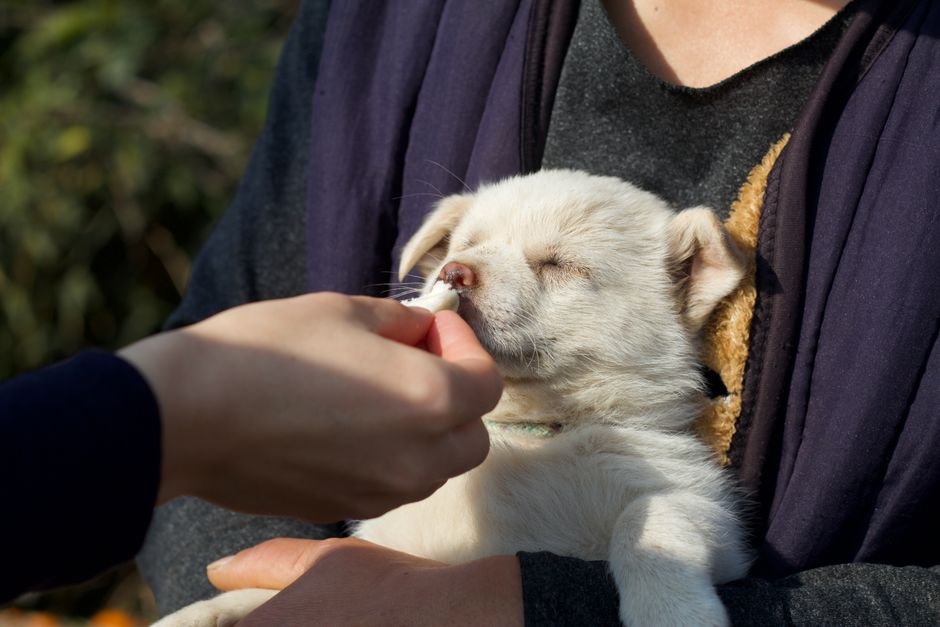
Puppy diarrhea is messy, stressful, and often happens at 2 a.m. Most cases clear up within 24 to 48 hours with simple home care, but puppies dehydrate faster than adult dogs, so you need to act quickly and watch closely. The first steps are to stop feeding for 12 hours, offer water, and then introduce a bland diet like boiled chicken and white rice. You should call your vet immediately if the diarrhea contains blood, your puppy is vomiting, lethargic, or very young — under 12 weeks — because these can be signs of a serious infection or a swallowed object.
Why Do Puppies Get Diarrhea So Easily?
Puppies explore the world with their mouths. They taste grass, dirt, rocks, and anything else they can reach. This alone can upset a young digestive system.
Their immune systems are also still developing. A puppy’s gut is not fully mature until around 6 months of age. That means the balance of good and bad bacteria in the intestines is fragile. Small changes in diet, stress, or even a new environment can tip that balance and cause loose stools.
Another common cause is a sudden change in food. If you switch brands or flavors too quickly, the digestive tract reacts. Most vets recommend transitioning over 7 to 10 days by mixing old and new food in gradually increasing amounts.
How To Stop Puppy Diarrhea: First Steps At Home
If your puppy is otherwise acting normal — playful, eating, drinking — you can try home care for 24 to 48 hours. The goal is to rest the gut and rehydrate.
Start with a short fast. Withhold food for 12 hours, but never withhold water. Water is essential to prevent dehydration. After the fast, offer a bland diet in small, frequent meals.
A common bland diet is boiled, skinless chicken breast and plain white rice. Boil the chicken until fully cooked, shred it finely, and mix it with plain rice in a 50/50 ratio. Feed small portions — about a quarter of the puppy’s normal meal size — every 4 to 6 hours.
Plain canned pumpkin (not pumpkin pie filling) can also help. It contains soluble fiber, which can firm up stools. Give a small amount — about a teaspoon for small puppies, a tablespoon for larger ones — mixed into the food. Some research suggests pumpkin helps with mild diarrhea, but it is not a cure for infections.
Probiotics designed for dogs may help restore gut bacteria. Choose a product made specifically for puppies rather than a human supplement. The evidence for probiotics in acute puppy diarrhea is mixed, but many veterinarians consider them safe and potentially helpful.
What To Feed A Puppy With Diarrhea
After the 12-hour fast, the bland diet is your best option. Stick to it for 2 to 3 days. If the stool begins to firm up, you can gradually mix in the puppy’s regular food.
Avoid dairy, fatty foods, and treats. These can make diarrhea worse. Also skip raw diets during an upset stomach — the digestive system is already stressed, and raw food introduces more bacteria that the gut may not handle well right now.
Keep meals small. A full stomach can trigger the digestive reflex and cause another round of loose stool. Feed 3 to 4 small meals per day instead of one or two large ones.
If the diarrhea stops, transition back to normal food over 2 to 3 days. Start with 25% regular food mixed with 75% bland food, then 50/50, then 75/25, and finally 100% regular food.

How To Keep Your Puppy Hydrated
Dehydration is the biggest risk with puppy diarrhea. Puppies lose water rapidly, and severe dehydration can be fatal within 24 to 48 hours in very young puppies.
Always have fresh, clean water available. Watch for signs of dehydration: dry gums, loss of skin elasticity (gently pinch the skin on the back of the neck — if it doesn’t snap back quickly, that’s a warning sign), sunken eyes, and lethargy.
You can offer an electrolyte solution made for puppies, such as those sold at pet stores. Do not give human sports drinks — they contain sugar and sodium levels that are not appropriate for dogs. If your puppy is not drinking enough on its own, call your vet. They may recommend subcutaneous fluids, which means fluids injected under the skin, to rehydrate quickly.
When To See A Vet For Puppy Diarrhea
Some situations require immediate veterinary attention. Do not wait 24 hours if any of these apply:
- Blood in the stool — bright red blood or black, tarry stool
- Vomiting along with diarrhea
- Lethargy or weakness
- No interest in food or water
- Diarrhea lasting more than 48 hours
- Puppy is under 12 weeks old
- Known exposure to toxins or swallowed objects
Blood in the stool can indicate parvovirus, a severe and often fatal viral infection. Parvovirus is highly contagious and spreads through contact with infected feces. Puppies who are not fully vaccinated are at highest risk. If you suspect parvo, call your vet immediately.
Another concern is intestinal parasites. Roundworms, hookworms, and giardia are common in puppies and cause diarrhea. Your vet can test a stool sample and prescribe deworming medication if needed.
Foreign objects are also possible. Puppies swallow things they shouldn’t — toys, fabric, bones. If the object blocks the intestine, your puppy may vomit, have abdominal pain, and stop passing stool entirely. This is a surgical emergency.
Can You Give Puppy Medication For Diarrhea?
Do not give human anti-diarrheal medications to puppies. Drugs like loperamide (Imodium) and bismuth subsalicylate (Pepto-Bismol) can be toxic to dogs. They can cause serious side effects, especially in young puppies.
Some veterinarians prescribe medications for specific causes of diarrhea. Metronidazole is sometimes used for bacterial or parasitic infections. But this is a prescription drug — you should never give it without a vet’s direction.
The safest approach is to let the gut rest and heal with a bland diet and hydration. If the diarrhea persists or worsens, a vet visit is the right next step.
Preventing Puppy Diarrhea In The Future
Prevention starts with routine veterinary care. Puppies need a series of vaccinations starting around 6 to 8 weeks of age, with boosters every 3 to 4 weeks until about 16 weeks. These vaccines protect against parvovirus, distemper, and other serious diseases.
Deworming is also routine. Most puppies are born with roundworms or pick them up from their mother’s milk. Your vet will recommend a deworming schedule based on your puppy’s age and risk.
Keep your puppy’s environment clean. Pick up feces immediately in the yard. Wash food and water bowls daily. Avoid dog parks and high-traffic dog areas until your puppy is fully vaccinated.
Feed a high-quality puppy food appropriate for your puppy’s age and size. Sudden diet changes are a common trigger, so always transition slowly.
Stress can also cause diarrhea. Moving to a new home, meeting new people, or traveling can upset a puppy’s stomach. Give your puppy time to adjust and keep routines as consistent as possible.
Frequently Asked Questions
How long does puppy diarrhea usually last?
Most mild cases resolve within 24 to 48 hours with home care. If diarrhea lasts longer than 48 hours, contact your vet.
Can I give my puppy rice water for diarrhea?
Yes, rice water — the liquid left after boiling plain white rice — can help soothe the stomach and provide some hydration. Offer it cool in small amounts between meals.
Is scrambled egg good for a puppy with diarrhea?
Plain, unseasoned scrambled eggs are a good source of protein and can be part of a bland diet. Avoid adding butter, milk, or salt.
What does parvovirus diarrhea look like?
Parvovirus often causes severe, foul-smelling diarrhea that may contain blood. It is usually accompanied by vomiting, lethargy, and loss of appetite, and requires immediate veterinary care.
