
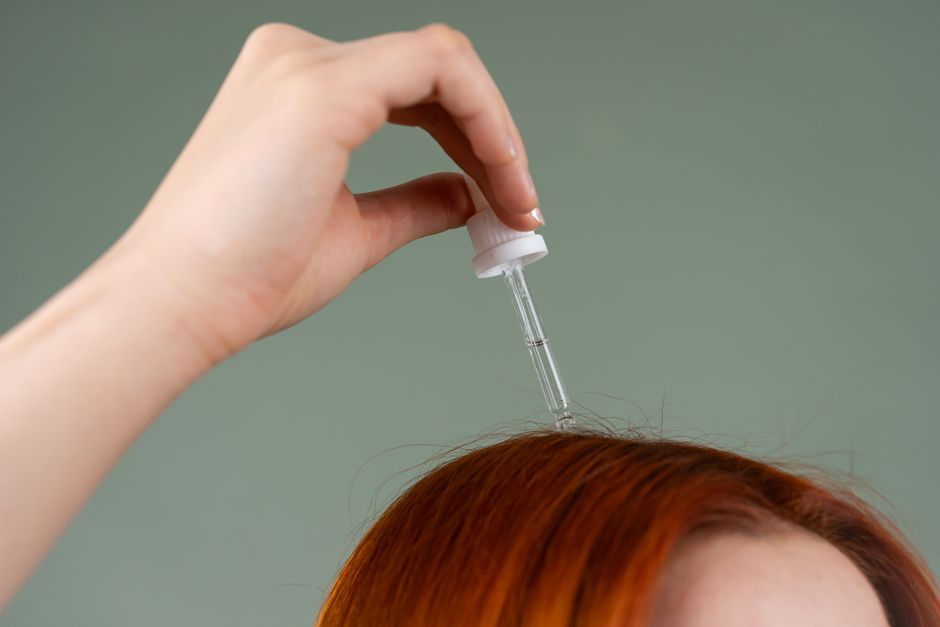
Perimenopause hair loss is one of the most common complaints women bring to their doctors during the menopausal transition, and it is also one of the most misunderstood. The short answer: you cannot “stop” the hormonal shift driving it, but you can slow the shedding, support regrowth, and rule out other causes that are often treatable. The most effective approach combines a proper diagnosis, treatment of any underlying deficiency or thyroid problem, and — for suitable candidates — medications that are actually approved for hair loss.
Why Does Perimenopause Cause Hair Loss?
Hair growth depends on a delicate hormonal balance, and perimenopause disrupts it in several ways at once.
Estrogen and progesterone both decline during the transition, but they do not decline at the same rate. Estrogen tends to fall further and faster than testosterone, which means the relative ratio of androgens (male-type hormones) to estrogen shifts. Androgens shorten the growth phase of the hair cycle, a process called miniaturization, where individual follicles produce thinner, shorter hairs over time. This is the same mechanism behind male pattern baldness, which is why some women in perimenopause notice a widening part or thinning at the crown rather than uniform shedding.
Progesterone also plays a role. It is thought to have some anti-androgen effect, and its decline may allow androgens to act more freely on the follicle.
On top of the hormonal picture, perimenopause often brings poor sleep, higher stress, and sometimes changes in diet or absorption of nutrients. All of these can compound hair shedding. It is rarely one single factor — it is usually several overlapping ones.
Is It Perimenopause or Something Else?
Before assuming hormones are the cause, a doctor should rule out other explanations. Several conditions produce identical shedding and are treatable.
The most common ones include:
- Iron deficiency — even without anemia. Low ferritin (stored iron) is a well-established contributor to hair shedding in women.
- Thyroid disorders — both hypothyroidism and hyperthyroidism cause diffuse hair loss, and thyroid problems become more common in this age group.
- Telogen effluvium — a temporary shedding triggered by illness, surgery, severe stress, or rapid weight loss. It usually appears two to three months after the trigger.
- Medications — some blood pressure drugs, antidepressants, and hormonal treatments can contribute.
- Androgenetic alopecia — female pattern hair loss, which can begin or accelerate in perimenopause.
- Nutritional deficiencies — low vitamin D and low zinc have both been linked to hair loss, though the evidence for supplementation helping is mixed.
A basic workup typically includes a complete blood count, ferritin, thyroid stimulating hormone, and sometimes vitamin D and zinc. This is not optional. Treating a deficiency that turns out to be the real driver is far more effective than treating hormones that are not the main problem.
What Actually Helps Perimenopause Hair Loss?
There is no single fix, but several approaches have real evidence behind them.
Minoxidil is the most studied topical treatment for female hair loss. It is available over the counter as a 2% or 5% solution or foam. It works by prolonging the growth phase of the hair cycle and widening the follicle. It does not correct hormones, but it can slow loss and support regrowth in many women. Results typically take several months to appear, and hair loss usually resumes if the treatment stops. The 5% concentration is generally considered more effective than 2% for women, though it can cause more scalp irritation and sometimes unwanted facial hair growth.
Spironolactone is a prescription diuretic that also blocks androgen receptors. It is widely used off-label for female pattern hair loss, particularly when there is evidence of androgen excess. Some clinicians consider it a first-line option; the evidence base is moderate but not as strong as for minoxidil. It requires monitoring and is not safe in pregnancy.
Oral minoxidil at low doses has gained attention in recent years. It appears effective for some women who do not respond to topical treatment, but it is a prescription medication with cardiovascular effects and requires medical supervision. This is not a self-treatment option.
Hormone therapy may help some women, particularly if hair loss is accompanied by other significant perimenopausal symptoms. However, the evidence that systemic hormone therapy specifically reverses hair loss is limited and mixed. It is not typically prescribed for hair loss alone.
Low-level laser therapy devices have some supporting evidence for androgenetic alopecia, though results are modest and the quality of studies varies.





What About Supplements and Diet?
If a deficiency is present, correcting it can help. If it is not, supplements are unlikely to do much.
Iron is the clearest example. If ferritin is low, iron supplementation under medical guidance can reduce shedding. The target ferritin level for hair regrowth is debated, and some clinicians aim higher than the standard anemia threshold. This should be managed by a doctor, because excess iron is harmful.
Vitamin D and zinc deficiencies have been associated with hair loss in some studies, but it is not established that supplementing in the absence of deficiency improves hair growth. The evidence is mixed.
Biotin is heavily marketed for hair, but in people who are not deficient — which is most people — there is no good evidence it helps. Biotin deficiency is rare. High-dose biotin can also interfere with certain lab tests, including thyroid and cardiac tests, which is a real safety concern.
Protein intake matters. Hair is made of protein, and very low-protein diets or rapid weight loss can trigger shedding. A balanced diet with adequate protein, iron, and overall calories supports normal hair cycling.
There is no diet that has been shown to reverse perimenopausal hair loss on its own.
What Makes Hair Loss Worse?
Several common habits and conditions can accelerate shedding or make regrowth harder.
- Tight hairstyles — constant tension can cause traction alopecia, which can become permanent if continued.
- Aggressive chemical treatments and heat — these damage the hair shaft and can worsen the appearance of thinning.
- Crash dieting and rapid weight loss — a well-known trigger for telogen effluvium.
- Untreated thyroid disease or anemia — both keep the hair cycle disrupted.
- Chronic high stress and poor sleep — both are associated with increased shedding, though the exact mechanisms are not fully worked out.
- Smoking — associated with earlier and more severe hair thinning in some studies.
Stopping a treatment that is working — like minoxidil — will usually lead to loss of the gained hair within a few months. This is not a sign the treatment failed. It is how the medication works.
When Should You See a Doctor?
See a doctor if the shedding is sudden, patchy, accompanied by scalp itching, burning, or scaling, or if you notice bald patches. These patterns suggest something other than typical perimenopausal thinning and need a different evaluation.
Also see a doctor before starting any prescription treatment, and before using high-dose supplements, especially if you take other medications or have any chronic condition.
Hair loss is emotionally difficult, and it is reasonable to want answers. The most useful first step is a proper workup. Many women find that correcting an iron or thyroid issue reduces shedding significantly. Others need a medication like minoxidil to see improvement. Some do not respond to any treatment, and that is an honest limitation of what current medicine can offer.
How Long Does It Take to See Improvement?
Hair grows slowly. The scalp grows about half an inch per month under normal conditions. Any treatment that works will take at least three to six months before you notice a real difference, and often longer.
Shedding may actually increase in the first few weeks of minoxidil use. This is a known and temporary effect as old hairs are pushed out to make room for new ones. It is not a reason to stop.
Consistency matters more than anything. Treatments that are stopped and restarted rarely produce stable results.
Frequently Asked Questions
Does perimenopause hair loss grow back?
Some of it can, especially if the cause is a correctable deficiency or a temporary trigger like stress or illness. Hair lost to androgen-driven miniaturization is less likely to fully return without treatment.
Is biotin actually helpful for perimenopause hair loss?
No good evidence shows biotin helps hair growth in people who are not deficient, and deficiency is rare. High-dose biotin can also interfere with certain lab tests.
Can hormone replacement therapy stop hair loss?
The evidence is mixed, and hormone therapy is not typically prescribed for hair loss alone. It may help some women whose hair loss is tied to other significant perimenopausal symptoms.
How long before minoxidil works?
Most women need at least three to six months of consistent use before seeing meaningful change. Early shedding is common and usually temporary.
