
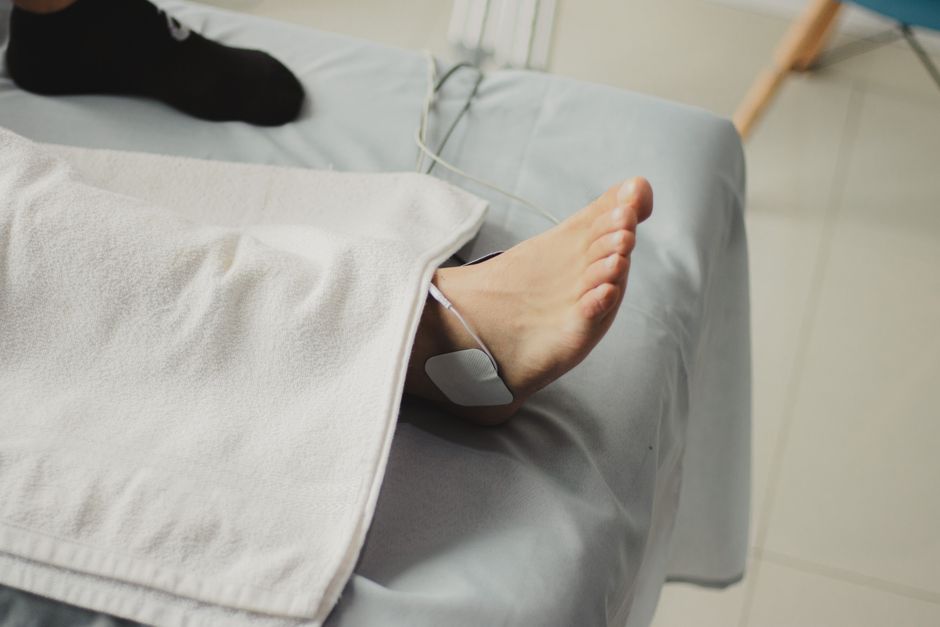
Waking up to a locked, painful foot is a common and frustrating experience. The most effective immediate relief is to gently stretch the calf and foot muscles, often by pulling your toes up toward your shin, and then to warm the area. While occasional cramps are usually harmless, frequent or severe episodes can signal an underlying issue that needs a doctor’s attention.
What Causes Foot Cramps At Night?
The exact cause of a nighttime foot cramp is often unclear, but the mechanism is well understood. A cramp is a sudden, involuntary, and sustained muscle contraction that does not relax. In your foot and calf, this most often happens in the small muscles that control your toes or the larger calf muscles that point your foot downward.
Several factors are known to contribute to this misfiring of the nerves and muscles.
- Nerve dysfunction: Nerves that are compressed or irritated can send abnormal signals to muscles, triggering a cramp. This is common in conditions like diabetes or lumbar spine issues.
- Muscle fatigue: Overusing muscles during the day, especially from standing on hard surfaces or new exercise, can make them more prone to cramping at night.
- Electrolyte imbalance: Low levels of certain minerals in the blood, such as potassium, calcium, or magnesium, can disrupt normal muscle function. This is a more common cause in people taking diuretics (“water pills”) or with certain medical conditions.
- Dehydration: Not drinking enough fluids can concentrate your blood and electrolytes, contributing to muscle irritability.
- Medications: Some drugs, including certain diuretics, statins, and asthma medications, list muscle cramps as a potential side effect.
- Pregnancy: Foot and leg cramps are very common in pregnancy, particularly in the second and third trimesters, though the exact reason is not fully understood.
For many people, no single cause is found. This is called idiopathic nocturnal cramps. They are more common with age, but they are not an inevitable part of getting older.
How To Stop Foot Cramps At Night: Immediate Relief
When a cramp strikes, you need to act fast to break the contraction. The goal is to gently force the muscle to lengthen and relax.
Here is what to do:
- Stretch the muscle: Sit up in bed and straighten the affected leg. Point your toes up toward your head, using your hand to gently pull your foot back. You should feel a strong stretch in your calf. Hold it. This is often the fastest way to stop the cramp.
- Stand up: If you can, stand and put your weight on the cramped foot. The pressure can help the muscle release.
- Massage the area: Use your hands to firmly knead and rub the cramped muscle in your foot and calf.
- Apply heat: A warm compress, a heating pad, or a warm bath can help relax the muscle. Some people find that alternating heat and cold works better for them.
The cramp should ease within a few seconds to a couple of minutes. If it does not, or if the pain is severe, seek medical attention.
How Can You Prevent Foot Cramps At Night?
Prevention focuses on addressing the likely triggers. What works for one person may not work for another, so it may take some trial and error.
Stretching before bed is one of the most commonly recommended strategies. A simple calf stretch can be done by standing facing a wall, placing your hands on the wall, and stepping one foot back with the heel flat on the floor. Hold for 30 seconds and repeat on the other side.
Stay hydrated throughout the day. Water is best. If you are sweating heavily, a drink with electrolytes may be helpful, but for most people, a balanced diet provides enough minerals.
Check your footwear. Wearing shoes with good arch support during the day can reduce muscle fatigue. Avoid wearing high heels or shoes with poor support for long periods.
Consider your diet. Eating foods rich in potassium (like bananas, potatoes, and spinach), calcium (dairy, leafy greens), and magnesium (nuts, seeds, whole grains) supports normal muscle function. However, there is no strong evidence that taking supplements prevents cramps in people who are not deficient.
Review your medications with your doctor. If a medication is suspected, never stop taking it on your own. Your doctor may be able to adjust the dose or switch to a different drug.
Some research suggests that certain medications, such as vitamin B complex or specific muscle relaxants, may help in some cases, but the evidence is mixed and they are not universally effective. Always talk to your doctor before starting any new treatment.





When Should You See A Doctor About Nighttime Foot Cramps?
Occasional cramps are usually not a cause for concern. You should see a doctor if:
- Cramps are frequent and disrupt your sleep most nights.
- They cause severe pain or last for a long time.
- You notice muscle weakness, numbness, or a loss of sensation in your feet.
- You have swelling, redness, or warmth in the affected area.
- They start after a new medication or a change in dose.
- You have other symptoms like unintentional weight loss or fatigue.
These could be signs of an underlying condition such as peripheral artery disease, nerve damage (neuropathy), or a thyroid disorder. A doctor can evaluate you and run tests if needed.
What Is The Difference Between A Cramp And Restless Legs Syndrome?
People often confuse cramps with restless legs syndrome (RLS), but they are different. A cramp is a sudden, hard, and painful muscle tightening that you can see and feel. RLS causes an overwhelming urge to move your legs, usually accompanied by uncomfortable sensations like creeping or crawling. The urge is often relieved by movement. While both can happen at night, they are distinct conditions with different treatments.
Can Dehydration Or Low Magnesium Really Cause Cramps?
Dehydration and low magnesium are frequently mentioned as causes, but the evidence is not as clear as it is often presented. Dehydration can contribute to muscle cramps, especially during or after intense exercise, but it is less likely to be the sole cause of nighttime cramps in otherwise healthy people.
Magnesium deficiency is rare in healthy people who eat a balanced diet. Some studies suggest that magnesium supplements may help prevent cramps in pregnant women, but the results are mixed. For most people, taking magnesium for nighttime cramps has not been proven effective in large, high-quality trials. If you suspect a deficiency, your doctor can test for it.
Similarly, low potassium or calcium can cause cramps, but this is usually seen in people with specific medical conditions or those taking certain medications, not in the general population. Eating a healthy diet is the best way to maintain normal levels.
Are There Any Home Remedies That Actually Work?
Many home remedies are passed down, but few have strong scientific backing. Here is an honest look at a few:
- Pickle juice: Some small studies suggest that drinking a small amount of pickle juice can quickly relieve exercise-associated cramps. The mechanism is not fully understood, and it has not been well-studied for nighttime cramps. It is not a proven treatment.
- Tonic water: The quinine in tonic water was once used for cramps, but the U.S. Food and Drug Administration (FDA) has warned against using quinine for this purpose due to serious side effects. Tonic water contains much less quinine than prescription doses, but it is still not recommended as a remedy.
- Mustard: Like pickle juice, mustard is a folk remedy for cramps. There is no reliable evidence that it works.
- Magnesium oil or lotion: These are marketed for cramps, but there is no evidence that magnesium is absorbed through the skin in amounts that would affect muscles.
The most reliable home strategy remains stretching and hydration. If those do not help, talk to your doctor.
Frequently Asked Questions
What is the fastest way to stop a foot cramp at night?
The fastest way is to stretch the calf muscle by pulling your toes up toward your shin while keeping your leg straight. This forces the muscle to lengthen and usually stops the cramp within seconds.
Can low magnesium cause foot cramps at night?
Low magnesium can cause muscle cramps, but true deficiency is rare in healthy people. Some studies suggest supplements may help pregnant women, but for most people, the evidence that magnesium prevents nighttime cramps is weak.
When should I worry about foot cramps at night?
You should see a doctor if cramps are frequent, severe, or come with numbness, weakness, or swelling. These could signal an underlying nerve or circulation problem.
Are foot cramps at night a sign of something serious?
Most nighttime foot cramps are harmless and not a sign of serious disease. However, frequent cramps can sometimes be linked to conditions like diabetes, peripheral artery disease, or thyroid issues, so it is worth getting them checked if they persist.
