
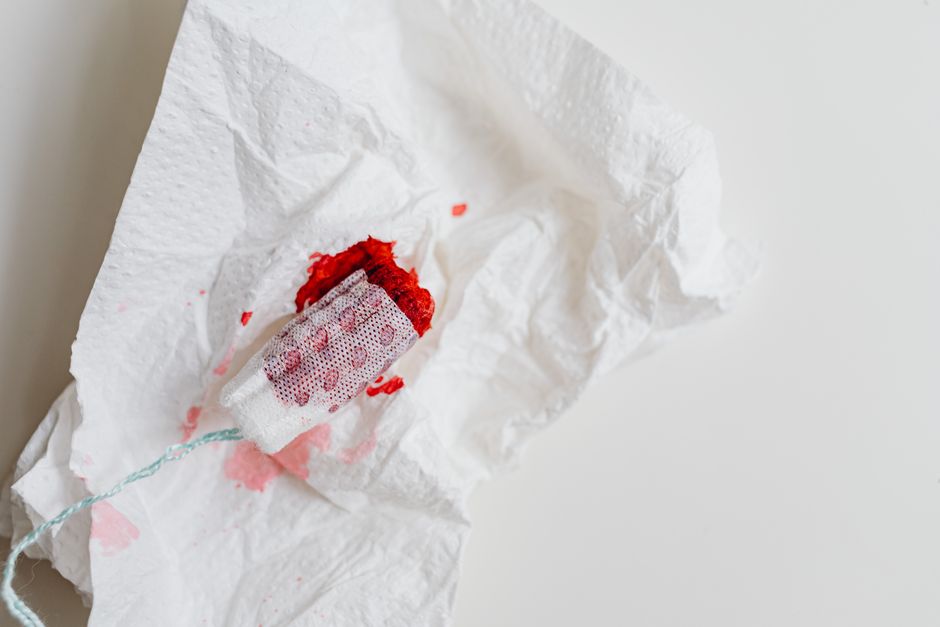
Breakthrough bleeding is unexpected bleeding that happens between scheduled periods or while you are taking hormonal birth control. You cannot stop it instantly on your own, because the cause has to be identified first. The fastest safe step is to contact a clinician who can determine why it is happening and, if appropriate, adjust treatment. If bleeding is heavy, soaking through a pad or tampon every hour, or comes with dizziness or chest pain, seek emergency care.
Most breakthrough bleeding is not dangerous. It is common, especially in the first few months of a new hormonal method. But “common” does not mean “ignore it.” Any new or unusual bleeding deserves a medical look, because a small number of causes need prompt treatment.
What Counts as Breakthrough Bleeding?
Breakthrough bleeding is any vaginal bleeding that occurs outside your expected menstrual period. It can be light spotting, a brownish discharge, or a heavier flow that resembles a period.
The term is most often used for bleeding that happens while you are using a hormonal birth control method. That includes the pill, the patch, the ring, the implant, the injection, and hormonal intrauterine devices. It can also describe bleeding between periods in people who are not using hormones.
Doctors sometimes separate two patterns:
- Spotting — a few drops of blood, not enough to need a pad or tampon.
- Breakthrough bleeding — enough blood to require protection.
The distinction matters mainly for tracking. Both patterns get evaluated the same way.
How To Stop Breakthrough Bleeding Immediately
There is no home remedy that reliably stops breakthrough bleeding within minutes or hours. Anyone who tells you otherwise is guessing. What actually works depends entirely on the cause, and only a clinician can identify that.
That said, some situations have clear, established responses:
- If you recently started a hormonal method: irregular bleeding in the first few months is expected. It usually settles as your body adjusts. Do not stop the method on your own without talking to your prescriber.
- If you missed pills or were late with a dose: follow the instructions that came with your method, and use backup contraception if directed. A clinician or pharmacist can confirm the right steps.
- If bleeding is heavy or you feel faint: this is not a wait-and-see situation. Seek urgent care.
- If you are postmenopausal: any vaginal bleeding after menopause needs prompt medical evaluation. This is not a “watch it” symptom.
What you should not do is double up on hormonal pills to “stop” the bleeding unless a clinician specifically tells you to. That approach is sometimes used in specific clinical settings, but it is not a general self-treatment and can cause problems.
Why Does Breakthrough Bleeding Happen?
The most common reason is a mismatch between your body and your hormone dose. Hormonal birth control works partly by keeping the lining of the uterus thin and stable. When hormone levels shift even slightly, that lining can shed unevenly, producing bleeding.
Common triggers include:
- Starting a new hormonal method
- Missing or delaying doses
- Switching between brands or methods
- Vomiting or diarrhea, which can reduce absorption of pill hormones
- Taking certain medications that interact with hormones
- Smoking, which affects how the body processes some hormones
Bleeding can also come from causes unrelated to hormones. These include infection, cervical or uterine polyps, fibroids, thyroid problems, and — less commonly — precancerous or cancerous changes in the uterus. This is why persistent bleeding is never dismissed without evaluation.
One point that gets missed: bleeding does not automatically mean your birth control is failing. Most breakthrough bleeding on a hormonal method is not a sign of pregnancy. But if pregnancy is possible, a test is the only way to know.





When Should You See a Doctor?
See a clinician if breakthrough bleeding lasts more than a few cycles, gets heavier, or appears alongside other symptoms. Do not wait months hoping it resolves.
Get medical attention promptly if you have:
- Bleeding so heavy you soak through a pad or tampon every hour for several hours
- Large blood clots
- Dizziness, weakness, or fainting
- Severe pelvic pain
- Fever or unusual discharge
- Bleeding after menopause
- Bleeding during pregnancy
Bleeding during pregnancy is a separate situation with its own causes and urgency. It should always be evaluated rather than managed at home.
What Might a Doctor Do?
Treatment depends on what is found. There is no single fix, and anyone promising one is oversimplifying.
Possible steps include:
- Reviewing your medication list for interactions
- Checking how you have been taking your method and whether doses were missed
- Testing for pregnancy, infection, or thyroid problems
- Doing a pelvic exam or imaging such as ultrasound
- Adjusting the hormone dose or switching methods
Sometimes the answer is simply time. If you started a new method recently, a clinician may recommend continuing it for a few more months to see whether the bleeding settles. This is common practice. It is not a guarantee that it will stop, and the evidence on exactly how long to wait varies by method.
If a polyp, fibroid, or other structural cause is found, treatment may involve removing it. If infection is found, antibiotics are used. If a precancerous change is found, that requires its own management plan.
Does Changing Your Birth Control Help?
Switching methods can reduce breakthrough bleeding for some people, but it does not work for everyone. Different methods have different bleeding profiles, and the same method can affect two people differently.
Some general patterns are well established. Progestin-only methods, including the implant and the injection, are more likely to cause unpredictable bleeding than combined methods. Combined pills with a steady hormone dose tend to produce more predictable cycles for many users.
That said, individual response varies enough that no one can promise a specific method will stop your bleeding. A clinician can help you weigh the trade-offs. Do not switch methods on your own without guidance, especially if you rely on the method for contraception.
Can You Prevent Breakthrough Bleeding?
You cannot prevent all of it, because some irregular bleeding is a normal response to hormonal changes. But you can lower your odds of the avoidable triggers.
- Take your pill at the same time every day.
- Set a reminder if you tend to forget doses.
- Follow the instructions for missed doses exactly.
- Tell your prescriber about every other medication and supplement you take.
- Keep track of bleeding patterns so you can describe them clearly at your appointment.
Tracking matters more than most people realize. A simple log of when bleeding happens, how heavy it is, and what else is going on gives a clinician real information to work with. Memory alone is unreliable for this.
What Does Not Work
A few popular ideas do not hold up.
There is no evidence that drinking more water, taking vitamin C, or eating specific foods stops breakthrough bleeding. These are common suggestions online, but no clinical research supports them for this purpose.
Doubling up on birth control pills without medical guidance is risky and not a general solution. It is used in narrow clinical situations, not as a home fix.
Waiting indefinitely is also not a plan. If bleeding continues past a few cycles, it needs evaluation. “It’s probably nothing” is not a diagnosis.
Frequently Asked Questions
How do I stop breakthrough bleeding immediately?
You cannot reliably stop it on your own, because the cause has to be identified first. Contact a clinician, and seek emergency care if bleeding is very heavy or you feel faint.
Is breakthrough bleeding a sign of pregnancy?
It can be, but most breakthrough bleeding on birth control is not caused by pregnancy. A pregnancy test is the only way to know for certain.
How long does breakthrough bleeding usually last?
With a new hormonal method, irregular bleeding often settles within the first few months, though this varies by method and by person. If it continues beyond a few cycles, see a clinician.
Should I stop my birth control if I have breakthrough bleeding?
Do not stop it on your own, especially if you rely on it for contraception. Talk to your prescriber first, since stopping suddenly can raise your risk of pregnancy.
