
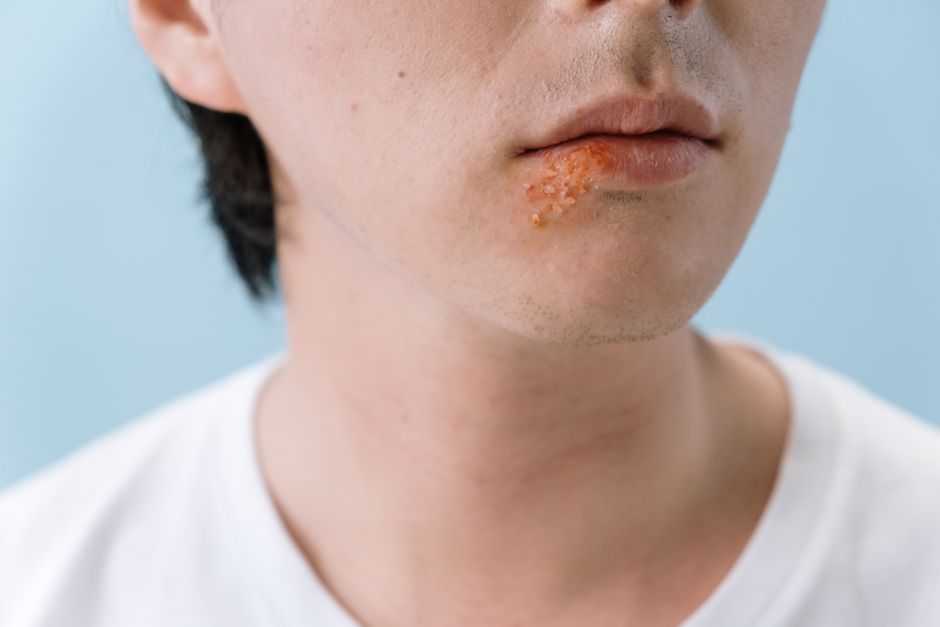
You feel that familiar tingle on your lip and know what is coming. A cold sore is about to appear. The good news is you can stop it or at least make it much shorter and less painful. Start treatment at the first sign of that tingling or burning sensation. Antiviral medications work best when you use them early. Over-the-counter creams with docosanol can help too. Keep the area clean and avoid touching it. These steps give you the best chance to stop a cold sore before it fully develops.
What Exactly Triggers a Cold Sore Outbreak?
A cold sore comes from the herpes simplex virus type 1, or HSV-1. Most people carry this virus. The CDC estimates that about 50 to 80 percent of adults in the United States have HSV-1. Once you catch it, the virus stays in your body forever. It hides in nerve cells near your cheekbone. Most of the time it does nothing.
Something has to wake it up for a cold sore to form. Common triggers include stress, illness, fatigue, sun exposure, and hormonal changes. A fever or a cold can activate the virus. That is why people sometimes call them fever blisters. Sunburn on your lips is another well-known trigger. Even dental work or a minor injury to the lip area can set it off.
Research published in the Journal of General Virology has shown that the virus reactivates when your immune system is distracted or weakened. Knowing your personal triggers helps you predict when an outbreak might happen. If you know sun exposure triggers yours, you can use lip balm with SPF. If stress is your trigger, you can focus on managing that. This is not about avoiding every trigger perfectly. It is about being ready to act fast when you feel that first sign.
How To Stop A Cold Sore at the First Tingle
The moment you feel that tingling, itching, or burning sensation on your lip, you have a narrow window to act. This is called the prodrome stage. It usually lasts a few hours to a day. This is when treatment is most effective. If you wait until you see a blister, you have already missed the best chance to stop it entirely.
Prescription antiviral medications are the strongest option. Your doctor can prescribe valacyclovir or acyclovir. Research published in the Journal of Antimicrobial Chemotherapy found that taking valacyclovir at the first sign can stop the cold sore from forming in some people. In others, it cuts the healing time by a day or more. You take a high dose for one or two days. This works because the medication stops the virus from replicating.
If you cannot get a prescription, over-the-counter docosanol cream is a solid alternative. Docosanol is sold under the brand name Abreva. Studies show it can shorten healing time by about half a day to a full day if applied at the first tingle. It works by preventing the virus from entering healthy skin cells. Apply it five times a day as directed. It is not as strong as prescription pills, but it is better than doing nothing.
Some people use lysine supplements or creams at the first sign. This is widely claimed though strong evidence is limited. A few small studies suggest lysine may help prevent outbreaks in people who get them frequently. The evidence for stopping an outbreak once it starts is weaker. If you try lysine, do not expect it to work as well as antiviral medication.
What Treatments Actually Shorten a Cold Sore?
Once a blister has formed, you cannot make it disappear instantly. But you can speed up healing and reduce pain. Antiviral medications still help even if you start them after the blister appears. They just work less dramatically than when started early. The typical course is 7 to 10 days of treatment.
Over-the-counter options include creams with lidocaine or benzocaine for pain relief. These do not kill the virus but they numb the area. Zinc oxide cream can also help. A study in the journal Dermatology found that zinc oxide cream applied at the first sign reduced the duration of cold sores. It also helped with healing time when applied after blisters formed.
Cold compresses can reduce swelling and pain. Apply a clean cloth soaked in cold water for 10 minutes a few times a day. Do not use ice directly on the skin. Keep the area moisturized with a gentle lip balm to prevent cracking. Cracking can lead to bleeding and secondary bacterial infection.
There is a lot of hype about essential oils like tea tree oil or peppermint oil for cold sores. Some people report that these help. The evidence is mostly from lab studies, not human trials. Tea tree oil has antiviral properties in a petri dish. Whether it works on a real cold sore on your lip is less clear. If you try it, dilute it with a carrier oil. Undiluted essential oils can burn your skin and make the sore worse.
| Treatment | Best Time to Start | What the Evidence Shows |
|---|---|---|
| Prescription antivirals (valacyclovir, acyclovir) | At first tingle | Can stop outbreak or shorten healing by 1-2 days |
| Docosanol cream (Abreva) | At first tingle | Shortens healing by about 1 day |
| Lysine supplements | Daily for prevention | Limited evidence; may help some people |
| Zinc oxide cream | At first sign or after blister | Reduces duration and helps healing |
| Cold compresses | After blister forms | Reduces pain and swelling; no antiviral effect |
| Essential oils (tea tree, peppermint) | At first sign | Weak evidence; risk of skin irritation |



What Should You Avoid When You Have a Cold Sore?
Do not pick at or pop the blister. This is the most common mistake people make. The fluid inside the blister is full of active virus particles. Popping it spreads the virus to other parts of your lip and to your fingers. It can also introduce bacteria and cause a secondary infection. That makes the sore last longer and increases the chance of scarring.
Avoid kissing anyone while you have an active cold sore. The virus spreads through direct contact. The CDC reports that most people with HSV-1 got it during childhood from a kiss or shared utensil. Do not share cups, towels, lip balm, or razors. The virus can survive on surfaces for a few hours. Wash your hands after touching your lip.
Stay out of the sun or use lip balm with SPF 30 or higher. Sun exposure is a known trigger and can make an existing outbreak worse. UV light damages the skin and can reactivate the virus even more. If you are prone to cold sores, daily SPF on your lips is a simple prevention habit.
Some people try home remedies like toothpaste, nail polish remover, or alcohol on the sore. These do not work. They can irritate the skin and delay healing. Alcohol might dry out the blister temporarily but it damages healthy skin cells around it. Stick with treatments that have evidence behind them.
Can You Prevent Cold Sores From Coming Back?
If you get cold sores frequently, you have options for prevention. Frequent means more than six outbreaks per year. Some doctors prescribe daily suppressive therapy with a low dose of antiviral medication. This is not a cure but it reduces how often outbreaks happen. Research in the New England Journal of Medicine found that daily valacyclovir reduced outbreak frequency by about 70 to 80 percent in people with frequent recurrences.
Lifestyle changes can help too. Managing stress is one of the most effective things you can do. High stress levels suppress your immune system and give the virus an opportunity to reactivate. Regular exercise, adequate sleep, and good nutrition support immune function. There is no magic diet that prevents cold sores, but a balanced diet helps your body fight off reactivation.
Identify your personal triggers and plan around them. If you know you get a cold sore every time you get a cold, keep antiviral medication on hand. Ask your doctor for a prescription you can fill ahead of time. That way you can start treatment the moment you feel the tingle. Having medication ready removes the delay of calling the doctor and going to the pharmacy.
Some people report that lysine supplements taken daily help prevent outbreaks. The evidence is mixed. A review of studies in the journal Alternative Medicine Review found that lysine may reduce outbreak frequency in some people but not all. It is safe to try at typical doses of 1000 to 3000 mg per day. Just do not expect it to work as reliably as prescription medication.
Common Misconceptions About Cold Sores
One big myth is that cold sores are the same as canker sores. They are not. Cold sores are caused by a virus and appear on the outside of your mouth, usually on the lips. Canker sores are small ulcers inside the mouth and are not caused by HSV-1. They require different treatments. Putting cold sore cream on a canker sore will not help.
Another misconception is that only people with weak immune systems get cold sores. Not true. The virus is extremely common. Many healthy people get outbreaks. Your immune system keeps the virus dormant most of the time. A temporary dip in immunity from stress or illness is enough to trigger an outbreak. It does not mean your immune system is failing.
Some people believe that once the blister scabs over, it is no longer contagious. This is not accurate. The virus can still be present in the scab and the skin around it. You are contagious until the skin has fully healed and looks normal again. This usually takes 7 to 10 days from the first tingle. Continue to avoid kissing and sharing items until the area is completely healed.
There is also a persistent belief that you can cure HSV-1. As of 2026, there is no cure. The virus stays in your nerve cells for life. Treatments manage symptoms and reduce outbreaks. They do not eliminate the virus. Be skeptical of any product that claims to cure herpes. It is not real.
Frequently Asked Questions
Can you stop a cold sore once it starts?
You can stop it from fully forming if you start antiviral treatment at the first tingle. Once the blister appears, treatment can shorten healing time but will not make it disappear instantly.
What is the fastest way to get rid of a cold sore?
Prescription valacyclovir taken at the first sign is the fastest option. It can stop the outbreak or cut healing time by about two days.
Does ice help a cold sore?
Ice can reduce pain and swelling but will not kill the virus. Use a cold compress for 10 minutes at a time for comfort.
Can toothpaste dry out a cold sore?
Toothpaste can irritate the skin and delay healing. It is not a recommended treatment and has no evidence supporting its use.
