
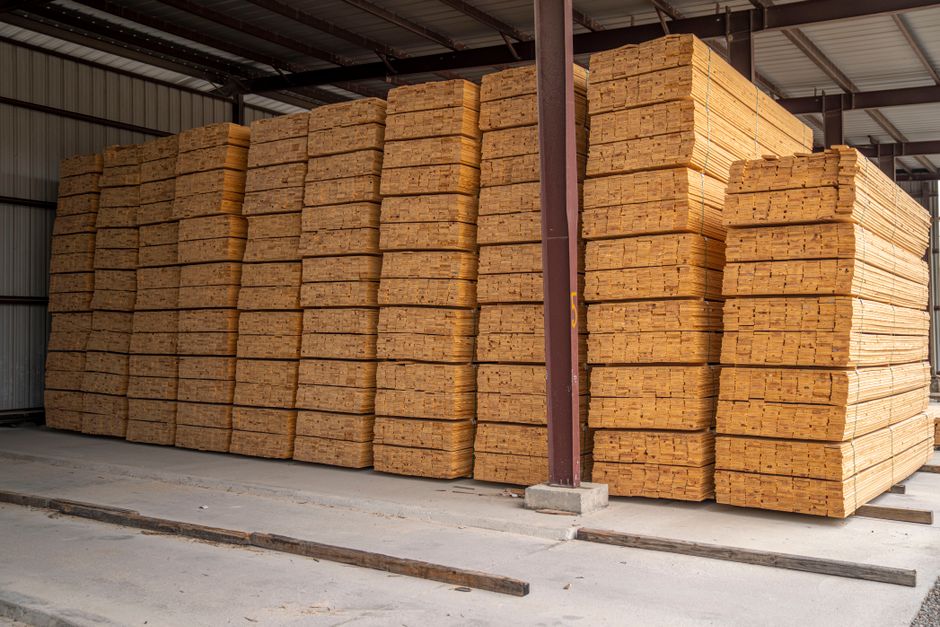
Stacking lumber with interlocking rows means placing each layer perpendicular to the one below it, so the pieces cross rather than sit parallel. The alternating direction locks the stack together, spreads the weight evenly, and lets air move through the pile. Done correctly, it keeps boards straighter and drier than any parallel stack.
How To Stack Lumber With Interlocking Rows Safely
The core method is simple. Lay a first row of boards side by side. Lay the second row across the first at a right angle. Repeat, alternating direction with every layer. That crossing pattern is what “interlocking” refers to.
This is not just a storage habit. Wood moves as it takes on and releases moisture. A board resting flat on another board traps moisture between them. Cross-stacking breaks that contact and lets air reach every face.
The technique also matters for safety. A stack where every row runs the same direction can slide as a unit. Crossed rows resist that because each layer is braced by the one beneath it.
Here is the sequence that works:
- Set three or four sturdy supports on level ground, spaced evenly under where the lumber will sit.
- Lay the bottom row of boards flat across the supports, running the long way.
- Lay the next row perpendicular to the first, so the boards cross.
- Continue alternating direction for every layer.
- Keep each row tight against its neighbors. Gaps let boards sag and twist.
- Cap the top with a flat, heavy layer or a sheet of plywood to spread load and shed water.
Keep the pile low. A stack that is wider than it is tall is far more stable than a tall narrow one. If you need height, build two shorter stacks rather than one tall one.
Why Does Alternating Direction Actually Help?
Two things happen when rows cross. Weight spreads across more contact points, and air can circulate through the gaps between layers.
When boards run parallel and sit flush, the weight of the pile concentrates along the same lines in every layer. Those lines compress. The boards directly under them take more load than the rest, and the stack can lean or settle unevenly. Crossing the rows redistributes that load across the width of the stack instead of concentrating it.
Airflow works the same way. Moisture that cannot escape stays between boards. Trapped moisture is the main driver of mold, stain, and rot in stored lumber. Cross-stacking opens channels so moving air can carry that moisture away.
There is a second, less obvious benefit. Wood shrinks and swells differently along its length than across its width. When you cross layers, the movement of one row is partly restrained by the row above it sitting at 90 degrees. That restraint is not perfect, but it reduces warp compared with a stack where every board is free to cup or bow in the same direction.
What Supports Should Go Under the Stack?
Get the lumber off the ground. Ground contact wicks moisture straight into the bottom boards and invites rot and insects. This is the single most important step and the one most often skipped.
Use pressure-treated 4x4s, concrete blocks, or commercial lumber racks as the base. Space them close enough that the bottom row does not sag between them. A common failure is supports placed too far apart, which lets the bottom layer bow and throws off every row above it.
Level the supports. A stack built on uneven ground settles unevenly, and once it starts to lean, correcting it means taking the whole pile apart. Check with a level before you lay the first board.
Keep the whole pile a few inches clear of the ground. Air needs to move underneath as well as through the sides.





Does the Wood Need Stickers Between Rows?
For lumber you intend to dry or store long-term, yes. Stickers are thin strips of dry wood placed between layers to hold them apart and let air move horizontally through the stack. They are the standard approach in air-drying lumber.
Place stickers directly above the supports below, in straight vertical columns. If stickers are staggered, the weight above them is not carried down to the ground and boards can bow between them. Spacing them evenly across the length and width keeps the stack flat.
Use dry, uniform stickers of the same thickness. Wet stickers can transfer moisture and stain into the boards they touch. Mixing thicknesses creates uneven layers and defeats the purpose.
For short-term storage of construction lumber you plan to use soon, plain cross-stacking without stickers is often fine. For anything you are drying or keeping for months, stickers matter.
How Do You Keep the Stack From Falling Over?
Most lumber stack accidents come from a pile that was too tall, on ground that was not level, or left unsecured against wind and bumps.
Keep the height modest. A low, wide stack is stable. A tall, narrow one is not, no matter how carefully you interlock the rows.
If the pile sits outdoors, cover the top only. A cover draped over the sides traps moisture and defeats the airflow you built the stack to create. A sheet of plywood or a tarp weighted on top, leaving the sides open, sheds rain while letting the lumber breathe.
Do not let anyone climb on the stack. Lumber piles shift, and a collapse can cause serious injury. If you need to reach the top, use a ladder beside the pile, not the pile itself.
In windy areas, brace the ends or run a strap over the top. A stack that has stood for weeks can still go over in a strong gust.
Common Mistakes That Ruin a Stack
Several errors show up again and again, and each one undermines the whole method.
- Boards placed directly on the ground, wicking moisture into the bottom layer.
- Rows with gaps instead of tight contact, letting boards sag and twist.
- Stickers staggered instead of stacked in vertical columns.
- The stack built taller than it is wide.
- A tarp covering the sides, trapping moisture inside.
- Supports spaced too far apart, so the bottom row bows.
Each of these is easy to avoid at the start and hard to fix later. Once a stack has settled out of true, the only real fix is to take it down and rebuild it.
One more point worth stating plainly. Interlocking rows help, but they do not make lumber immune to movement. Wood will still shrink, swell, and shift with changes in humidity. Good stacking slows that down and keeps it even. It does not stop it.
Frequently Asked Questions
How do you stack lumber with interlocking rows?
Lay each row perpendicular to the row below it so the boards cross, and keep each row tight against its neighbors. Alternate direction with every layer and build on level, raised supports.
Should I use stickers between layers of lumber?
Yes for lumber you are drying or storing long-term, because stickers hold layers apart so air can move through the stack. For construction lumber you will use within weeks, plain cross-stacking is often enough.
Can I cover a lumber stack with a tarp?
Cover the top only and leave the sides open. A tarp draped over the sides traps moisture and cancels out the airflow the stack was built to create.
How tall should a lumber stack be?
Keep it wider than it is tall for stability. If you need more capacity, build two low stacks rather than one tall one.
